






5 min readJul 28, 2026 08:32 PM IST
As a truncated Indian contingent vies for glory in Glasgow, India’s table tennis players look on ruefully.
The sport is one of nine disciplines, omitted from the 2026 Commonwealth Games (CWG) roster, and has historically enjoyed rich medal hauls at this event – a rarity for it at comparable or larger-scale competitions.
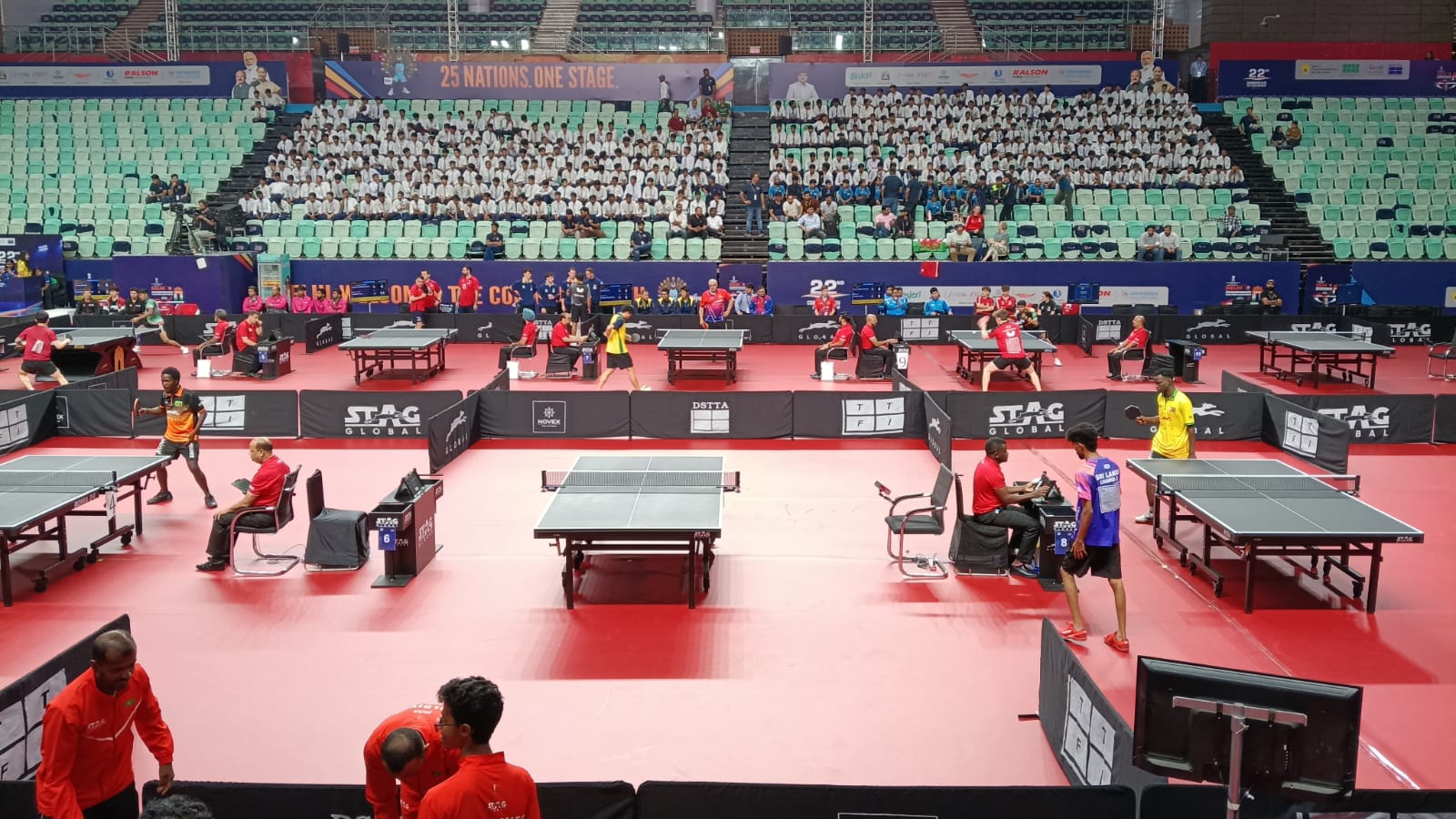
To assuage that disappointment, the Commonwealth Table Tennis Championships have been revived at Delhi’s Thyagraj Stadium alongside the CWG. Six out of the eight editions have been in India, with the previous one held in Cuttack in 2019.
The fact that Commonwealth TT’s chairperson (Vivek Kohli), president (Dushyant Chautala) and secretary general (Mahinder Pal Singh) are all Indians might have something to do with that.
The response so far has been lukewarm despite free entry. The Delhi government organised an elaborate opening ceremony, but the crowd mostly comprised school students on mandated excursions and thinned soon after. Matches are being watched by a smattering of students and tournament officials, much like the 2013 edition in the capital.
Filling the gap
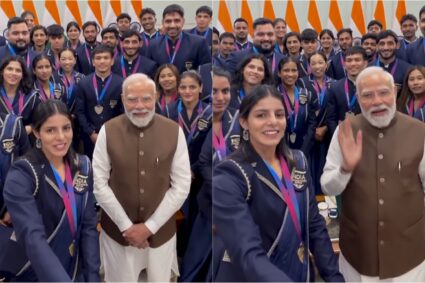
Hours after facing off in the UTT final in Goa, Manush Shah and Syndrela Das donned India tracksuits in Delhi. Quadri Aruna, the Grand Old Man of Nigerian TT who was not part of the UTT roster this season, made the same Goa-Delhi trip.
Manush and Syndrela were not needed for the ties against Zimbabwe and Maldives respectively, which were both wrapped up in less than an hour. Manav Thakkar, Harmeet Desai and Payas Jain sped to straight-game wins, and so did Sutirtha Mukherjee, Yashaswini Ghorpade and Swastika Ghosh.
Story continues below this ad
But the men got an early reality check from Malaysia, suffering a shock 1-3 defeat in the evening tie. Manav, Manush, and Harmeet each lost a match to opponents ranked outside the world’s top 200, and though the result may not affect the hosts’ progress to the medal rounds, they would now be wary of complacency as the top seeds. The same could hold for the second-seeded Indian women, as they saw the top-billed Singapore surviving a scare before edging Sri Lanka 3-2.
The preliminary group stage, featuring 21 men’s and 16 women’s teams, will be followed by a second phase where the top two teams from each of the four groups will advance. The group leaders will enter the semi-finals, while the rest will play classification rounds for places. This format ensures each country plays at least six ties, underscoring the goal of international exposure over an elite knockout system.
Singles world No. 40 Manush has not yet been a part of CWG for India, and he was looking forward to doing that. His senior teammate G Sathiyan was also “very disheartened” with the news. “When it was announced, everyone was really, really sad. Table tennis in Commonwealth Games has always been very close to the heart. It has been a stepping stone to where we are now,” Sathiyan said.
It all started at CWG, the 33-year-old added. “Winning those medals led to the next Asian Games success. Now we’re aiming at the Olympic Games and the world level.”
Story continues below this ad
Achanta Sharath Kamal, India’s leading CWG medal-winner, similarly felt the players were deprived of a big opportunity. “When you bag those medals, you get a lot of confidence, you get the right recognition. It’s tougher to win medals at the Asian Games in TT,” Sharath told The Indian Express.
With Manav and Manush rising to number two in men’s doubles and several women paddlers also shining, the Khel Ratna awardee said the Commonwealth Games “would have helped us give that boost, as it did in 2018.”
Nevertheless, it was a situation beyond anyone’s control, Sharath acknowledged, as the hosting rights changed from Melbourne to Glasgow with only 10 of 19 sports included.
On the positive front, playing in front of a home crowd could help build the momentum for the Asian Games. “Winning is a good habit to have, and at the Commonwealth Championships, you have the possibility to do that,” Sharath said.
Story continues below this ad
“For all the players, it will be a good hunting ground. They can continue to prepare and do well, which will also give them confidence for the Asian Games.”
Sathiyan felt that the Championships happening at the same time as CWG was apt. “To have the same team which is going to be there at the Asian Games is good. We’ll have great team bonding, team spirit. We’ll be participating in multiple events as well. So it’s good preparation for the Asian Games.”
Until TT is guaranteed a return to the Games at Ahmedabad 2030, Indian paddlers will have to make do with the Championships.
