

Trump says he’d rather make a deal than continue Iran attacks: 10 points

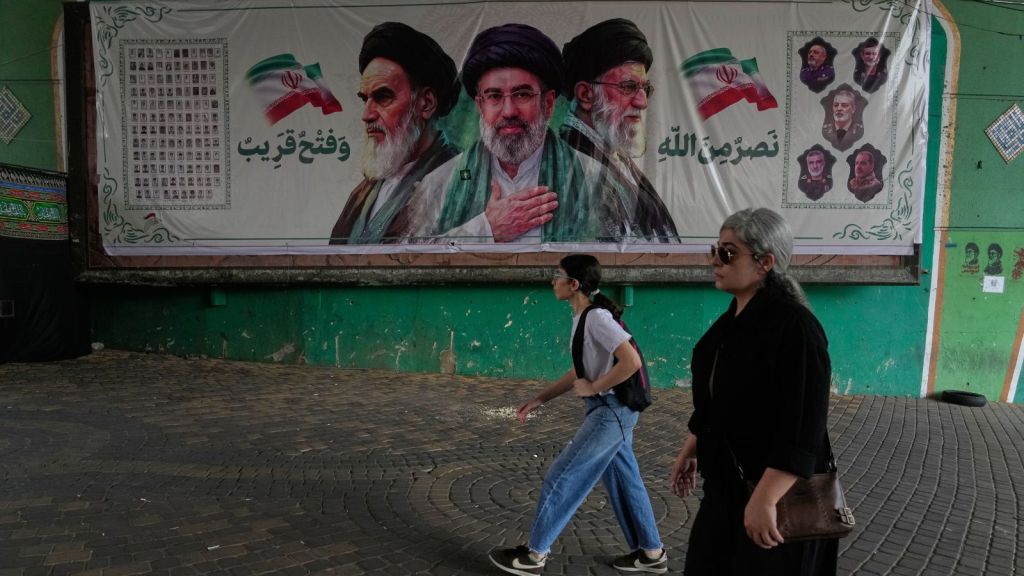
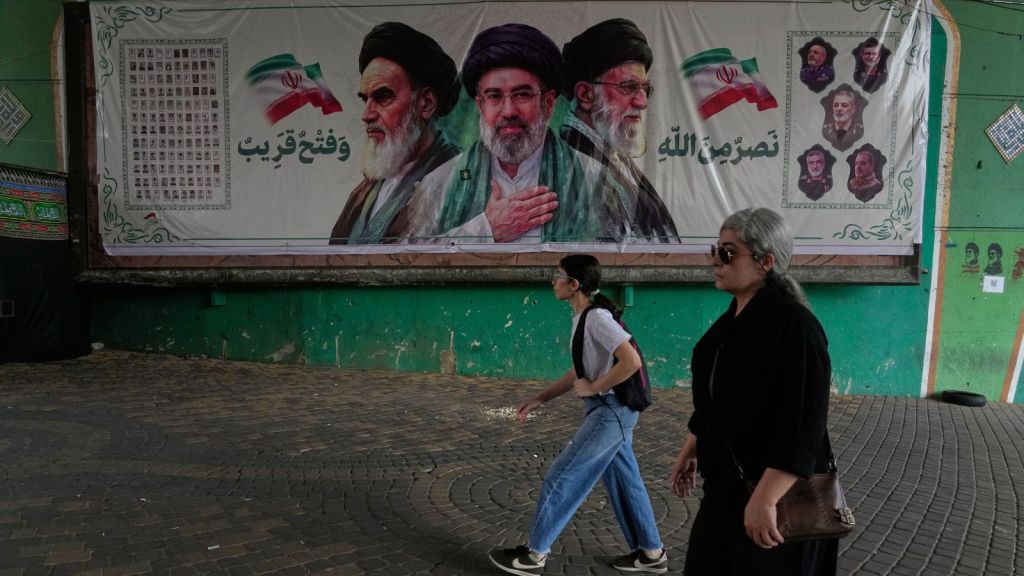 Women walk past a banner showing portraits of the late Iranian revolutionary founder Ayatollah Khomeini, left, Supreme Leader Ayatollah Mojtaba Khamenei, center, and the late Supreme Leader Ayatollah Ali Khamenei, who was killed in the US and Israel strike. (Photo: AP)
US President Donald Trump has said talks with Iran will begin on Monday, a day after he called off a planned attack and set off a slide in oil prices. Iran, meanwhile, has made clear the Strait of Hormuz will not return to its pre-war status.
Here is where things stand now:
1. Trump confirms Monday talks
Trump told reporters aboard Air Force One that negotiations with Iran would begin on Monday afternoon, though he did not say where or who would take part. Asked if there was a deadline for Iran to reach an agreement, he declined to answer directly.
2. Why Trump says he’s holding back
- Trump said, Donald Trump (@POTUS) says, “I prefer to reach an agreement with Iran. I’m not looking to kill people.”
(Source: White House YT)
(Full video available on PTI Videos – https://t.co/n147TvrpG7) pic.twitter.com/gkFflHBxL2
— Press Trust of India (@PTI_News) August 3, 2026
3. Iran says Hormuz won’t return to pre-war status
Iranian Foreign Ministry spokesperson Esmaeil Baghaei said Iran and Oman are working on a clear mechanism for safe shipping through the Strait of Hormuz that fully respects Iran’s sovereignty, but stressed the strait will not return to how it was before the war.
He said these are strictly bilateral talks between the two coastal states and do not concern anyone else. Baghaei added that following incidents involving bases used by the US, Iran has received calls from Britain, Bulgaria, and Ukraine saying they do not want to be part of the war against Iran.

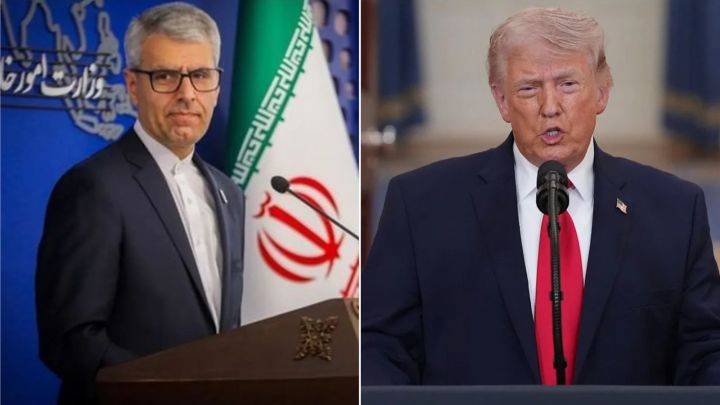
Iran’s Foreign Ministry spokesperson Esmaeil Baghaei (left) and United States President Donald Trump (right). (File Photo/AP) He described the goal as finding a route that was “neither the northern route nor the southern route”, one that respects both sides’ interests. He stressed this route agreement does not mean the strait itself would reopen.
4. Why the Saudi call mattered
Trump said his decision to hold off on strikes was heavily shaped by a call with Saudi Crown Prince Mohammed bin Salman. He said going ahead “would have been disastrous for them”, adding that Saudi Arabia did not want the attack either, believing a deal was close.
Story continues below this ad
5. Israel’s position on Iran’s nuclear programme
- Israel’s energy minister Eli Cohen said Israel and the US are closely coordinating on regional security.
- He said Israel would act if Iran tries to revive its nuclear or missile programmes, deal or no deal.
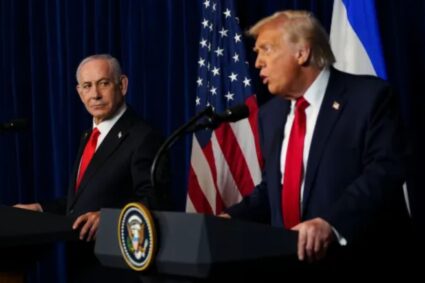
- Trump and Israeli Prime Minister Benjamin Netanyahu met earlier in the week to discuss options, including diplomacy and force.
- Iran continues to deny it is seeking a nuclear weapon.
6. Oil prices fall sharply
Oil prices dropped by about $4 a barrel on Monday following Trump’s announcement. Brent crude slid more than 4.6 per cent to $83.85, while US crude fell by a similar amount to $80.66 a barrel.
Both benchmarks had jumped more than 20 per cent last month as fighting escalated and tanker attacks near Oman deterred shipping through the Gulf.
7. Why analysts remain cautious
IG market analyst Tony Sycamore said the key question is whether this becomes a repeat of the previous week, with hopes of a deal fading if Iran continues to leverage its control over the strait, including through further tanker or base attacks.
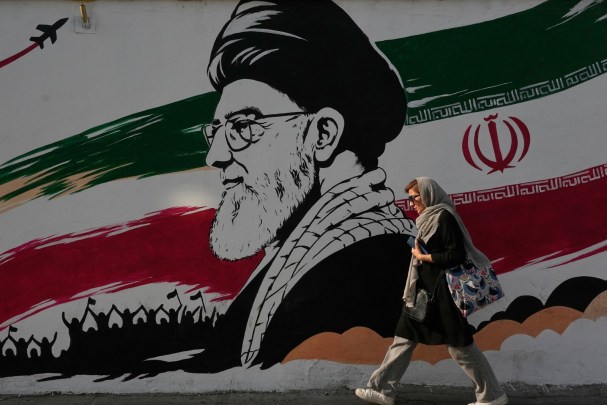
A woman walks past a mural depicting a portrait of the late Iranian Supreme Leader Ayatollah Ali Khamenei, who was killed in the US and Israel strike. (AP Photo) 8. What is happening with tanker traffic
- Two tankers carrying Strait of Hormuz also slowed, with only 10 vessels passing on Saturday, down from 19 on Friday.
- Britain’s maritime trade body reported three more tanker attacks since Saturday.
9. OPEC+ adds to the supply picture
On Sunday, OPEC+ approved a production increase of around 188,000 barrels a day from September, completing the unwinding of an earlier round of voluntary output cuts.
Story continues below this ad
However, ongoing export disruptions from the Gulf, Russia and Kazakhstan, caused by the Iran and Ukraine wars, have meant that most of this year’s monthly OPEC+ increases have stayed largely on paper, with limited real impact on the market so far.
10. Which tankers are involved
Shipping data identified some of the vessels moving through the region despite the risks. The Suezmax tanker Lesvos, carrying about 1 million barrels of Strait of Hormuz carrying 1.4 million barrels of Qatari crude, while the VLCC Rotterdam Energy exited with 2 million barrels of Das crude. None of the companies involved responded immediately to requests for comment.
(With inputs from Reuters and AP)