





For Craig Fulton and his team, the year so far has been about fighting one battle after another, on and off the field.
Be it the star players being dropped on disciplinary grounds, seniors being ‘forced’ into retirement, a string of defeats before a sharp recovery, or the controversial change of jersey colour that has overshadowed the build-up to the World Cup, which begins on August 15.
In two separate interviews with The Indian Express, conducted before India’s saffron jersey was unveiled, Fulton reflects on navigating those challenges, why he may field a different group in the first leg of next year’s Pro League, the composition of the World Cup squad and his expectations from the tournament.
Excerpts.
How tough have the last six months or so been, managing all the external issues?
Yeah, it’s been difficult. It’s been very difficult from Cape Town (gummy bears disciplinary issue) through till now. There’s been a lot of distractions and noise. And it’s just reminded me again, okay, stay in your lane and focus on what you can control.
How tough is it to do that?
Yeah, it’s just how it happens sometimes. I think challenges are good because you really see what kind of character you have in the group, in your staff and in your environment; and who’s ready to go, ‘All right, this is not like us. This is where we were not good.’
We put in conversations and agreements that we’d never get into this situation again. And that’s the lesson. If I said everything was hunky-dory and we never have a problem, then I’d be lying to you.
You’ve always got that simple saying: 10 per cent of life is what happens to you, 90 per cent of life is how you react. Something happens and derails this phase. What do you do? You get tested in all your strategies, all your values, and then you’ve got to bounce back again.
Story continues below this ad
I think this has been a really good thing for us because it happened at a time that wasn’t great, but it wasn’t the World Cup or the Asian Games. If there’s one thing we’ve taken from it, it’s that we’ve learnt a lot about ourselves and I think we’re now in a better place.
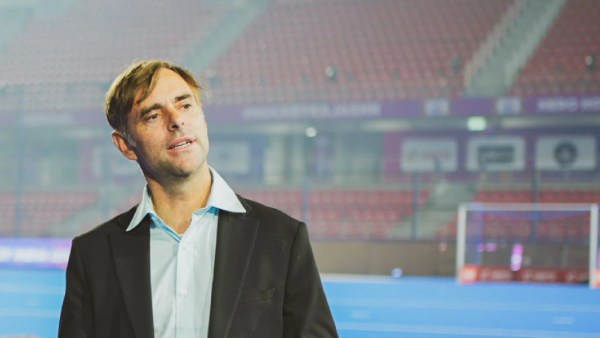 India head coach Craig Fulton. (FILE photo)
What was the toughest part? Dealing with it yourself or ensuring the players didn’t go off track?
I just think with lots of players, lots of staff and lots of moving parts, things can slip through the cracks. You end up in a situation that wasn’t great, and now you’ve got to go for it. So it’s just about keeping everything really tight, really committed and open.
What did you learn about yourself and the players during this testing period?
Story continues below this ad
Just don’t take anything for granted. If you start assuming things are great and always at the level you want them to be, then something happens and you go backwards. Sometimes things go out of control. But we’ve got to stick together and we’ve got to make this work.
What did you think of PR Sreejesh’s comments on the performances?
No comment.
The Pro League this season has been a mixed bag. What was the harshest criticism you received?
When we play post-Hockey India League, it’s a double-edged sword. It’s really good for the youth and the exposure of Indian players because the Hockey India League is a great initiative for the future of Indian hockey. But if we play a full Pro League programme five days later, it doesn’t give us the right balance because all our Indian players have just played in the Hockey India League. There’s not much we can do about it because of the window.
Story continues below this ad
It’s not an excuse. It’s just about managing it better going forward. We’d probably use a different group in the first block and then bring the seniors into the second block. The Hockey India League is very good for hockey in India. But we have to balance it better with who’s fresh and who’s able to continue playing because it’s a six-week block. It’s like a full-on tournament. Then you come back and play straight away in the Pro League. So it’s not the easiest.
Is it harsh, then, that people judge you and the team only by the results?
And rightfully so, because it’s international hockey and you want your team to do well. You want to win everything.
But I’d like to be judged, like I said, after I have a training block. Every other team has their league and they train during the week. So there are lots of contact points with the group. Then you build a programme for six, eight or 12 weeks before you play a tournament. Fortunately, we’ve been able to do that now.
Story continues below this ad
You got a solid training block before the Netherlands and England leg of the Pro League. Were you happy with how things went?
If you look at the last few games we played, we got results in all of them against top opposition.
We learnt a tough lesson in the second Germany game (lost 2-1), where we know we could have got back-to-back results against them. We were 37 seconds away from a result and then we lost the game. So I’m glad that happened then because it helped us put a few things right.
Then, against the Dutch, we finished strongly, which was important. Even though we were 3-1 up, they made it 3-2, but we were still able to finish the game. I’m glad that happened because it was a great exercise, a proper test match, and we were able to do it well.
Story continues below this ad
Coming across to England, there was always a lot of expectation around the Pakistan game. We were a bit rusty in the first game (won 4-3), did well and then let them back in. But we hit our straps nicely in the second game (won 7-1) and were a lot more efficient.
I think the travel between Amsterdam and London caught up with us in the first game. The longer we were there, the more settled we became.
The two games against England (2-2 and 0-0) were tough. They’re great opposition and they’re in our pool at the World Cup. They learnt a lot about us, we learnt a lot about them, and I think it’s going to be a humdinger when we play each other at the World Cup.
What’s the thinking behind the World Cup squad? There’s a lot of talk about balancing the World Cup and the Asian Games.
Story continues below this ad
We’ve gone with quite a lot of experience in defence and midfield. We can always fill in from midfield if anything happens in the striker line. It’s super difficult to take strikers and put them back into midfield, or midfielders and put them back into defence. So we didn’t go that route. We have a well-balanced and experienced defence and midfield group that has operated well over the last few tournaments, starting from the Olympics.
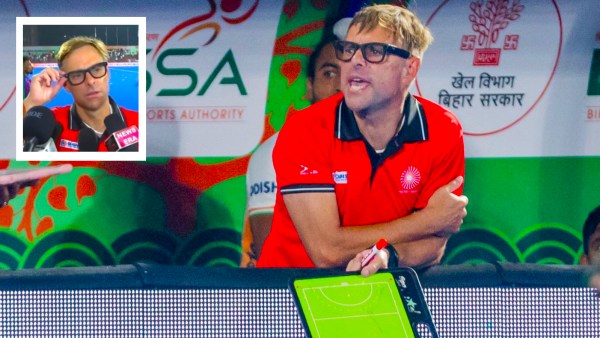 Craig Fulton (PHOTO: Hockey India)
You have experienced players like Manpreet, Hardik and Harmanpreet alongside some younger players. How have they fitted in?
It takes time. It’s not an easy transition.
We’ve transitioned seven guys out of the national squad over the last 18 months and brought in some younger, talented players for the future, but that doesn’t mean they’re ready.
Any time you have a strong team culture… the gym takes time to get used to, the conditioning takes time, the hockey takes time and then the connections within the group take time because everyone’s from different environments, speaks different languages and then it’s senior versus junior. You wait until they’re respectful enough that they can play, and then it’s like, okay, now we build that chemistry. That’s what we’re busy with at the moment.
Story continues below this ad
Lastly, what would count as a good World Cup for you?
A podium finish would make us happy because I don’t think we performed the way we could have in the February and March block. Now we’ve nailed things down a bit, and I think we’ll be much closer to the way we want to perform. There’s a beautiful history with the World Cup. It’s the 50th anniversary. If you look back at the last two or three World Cup campaigns, they’ve been difficult. So we want to start well in the pool, get out of the pool and play in those playoff positions. That’s where we want to be.
Our ranking at the moment is eighth. So what’s realistic? Should we play the quarterfinals? Yes. What happens after that? We’re not really ranked to do anything after that, and that’s great for us. That’s exactly where we want to be. Our planning is good. I think we’ll peak at the right time.
