




Saina Nehwal had other plans, but Indian badminton’s revival in the mid-2000s might well have come from Assam. Not via Haryanvi Hyderabad. Krishna Dekaraja had the giddy jump, the power smash and the glamour, but perhaps not the elite grit — or a coach like Pullela Gopichand. She faded as Saina emerged, and Assam, with its latent badminton history through Dipankar Bhattacharya, kept looking for its next star.
So Ashmita Chaliha grew up in an atmosphere that understood the fundamentals of badminton, but was also seduced by its flash.
Circa 2005, everybody wanted to play with the flair of Taufik Hidayat. Ashmita saw that flair and fell in love with the sport. But she didn’t grow up practising the persistence needed to back up the passion and panache. In 2026, though, the 26-year-old who has played long enough for the love of the sport has finally got serious.
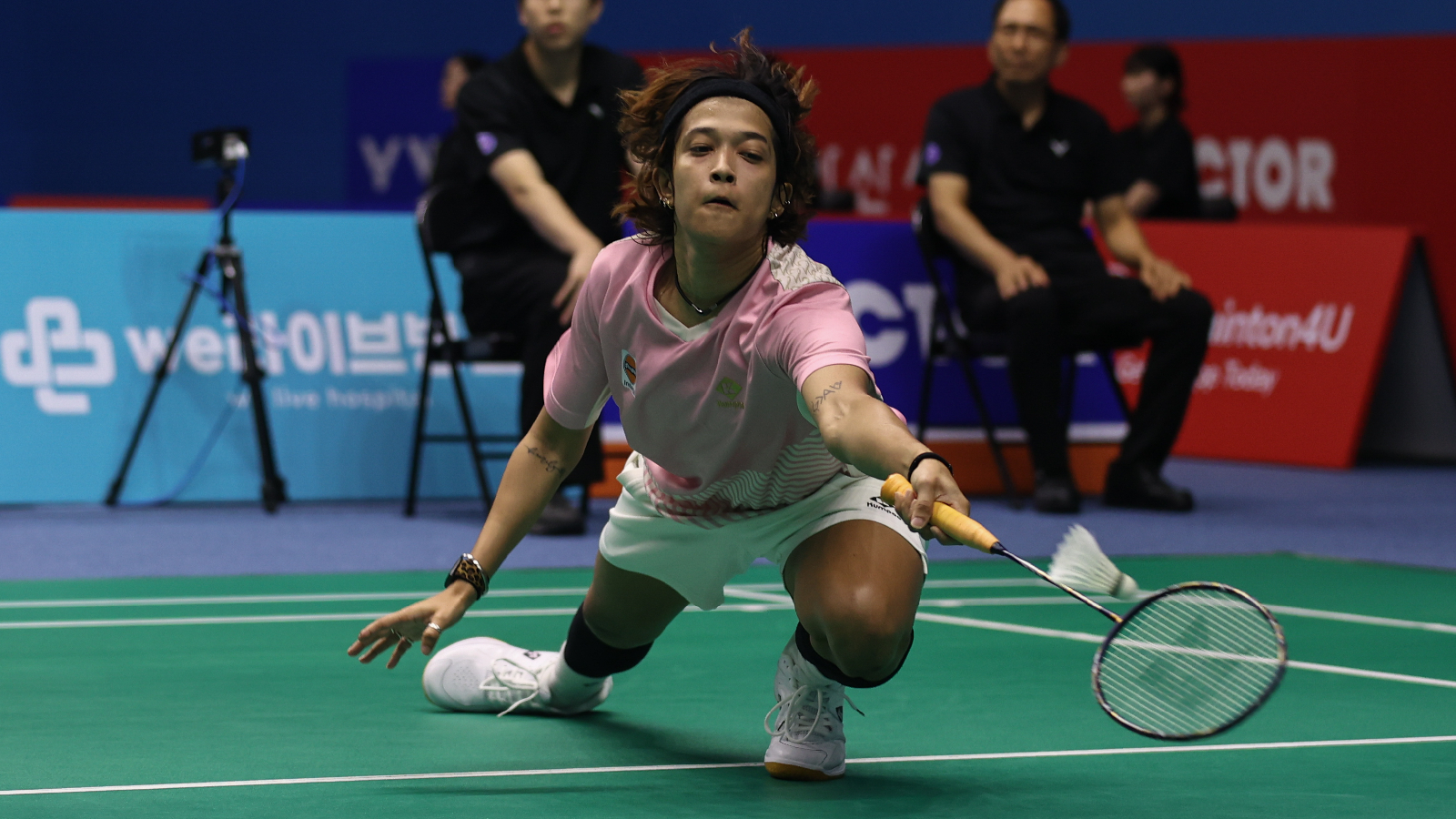
On Sunday, at the Yi Sun-sin Gymnasium in Asan, Ashmita wowed the Koreans, defeating China’s Han Qian Xi 14-21, 21-14, 21-14 in the final of the Super 300 Korea Open. “I’m hungry for more titles,” she declared immediately, keen to make up for lost time.
Like her glamorous predecessor, Ashmita could have disappeared when injury troubles struck. Two years ago, her knee meniscus tore in Korea, and she returned on crutches. The beautiful southpaw game, built around round-the-head strokes and deception, could have fizzled out — just as Krishna’s career flatlined after she out-jumped six-footers with ease.
ALSO READ | From crutches to a final, Ashmita Chaliha completes the Korean cycle
But Ashmita persisted.
Her reflex defence, the quick-whirring arms that summon returns at a fast-forward clip, and an ability to grit it out have resurrected her career at 26.
Story continues below this ad
She doesn’t play for money or fame. Coming from a well-heeled family and bright enough to excel in whichever vocation she chose, her life was otherwise sorted. But her parents, while remaining supportive, instructed her to become independent with travel and handling her finances after sponsors backed out when she was 25.
So she moved back from Bengaluru to Guwahati and lives at the National Centre of Excellence hostel, working to hone her game. In coach Park Tae Sang, she found a natural motivator, someone willing to swamp her with support.
It helped her bounce back. Like against Han.
Ashmita had a chunky 9-5 lead in the first game. Her round-the-head straight smash had left the Chinese looking clueless. But she retains one weakness: her forehand flank defence. Han exploited it to go on a six-point spree and then all the way to the first game. “One hand on the trophy for the Chinese,” the commentator ventured, expecting Ashmita to fade.
She didn’t. He didn’t know. Besides, there were still two games to play.
Story continues below this ad
From top seed Hina Akechi to Indian attacker Rakshitha Sree Ramraj, Ashmita had already shown she could bounce back. More importantly, she had learned to pause her errors — previously the single biggest drain on her determination.
The turning point came midway through the second game. She was marginally ahead at 10-8. Ashmita’s jump smashes are well known. Her low pickups on full-stretch dives, though, are sensational. But it wasn’t on the dive that she scored.
She barely got the shuttle back as the Chinese predictably hacked the next return with speed rather than smarts. Ashmita curved back into position, getting upright, and struck out her hand while still recovering from the dive.
It was reflex. It was courage. It was plain, vrooming talent — the sort Koreans dig in video games and in their badminton, too. The shuttle whizzed past the Chinese, much to the local fanbase’s glee.
Ashmita was a hit in Korea.
Story continues below this ad
Over the next two games, the World No. 50 was aided by the drift, which helped cut down her errors, while she kept the winners coming at a steady stream. She course-corrected to maintain a five-point buffer and increasingly moved to the cross-court side from her overhead smash.
Ashmita’s deception from the round-the-head position is terrific. She can send the shuttle down the line or deep cross-court with the same action, much like Akane Yamaguchi. It completely boggled the Chinese World No. 35, who is 24.
Ashmita’s game has always been Top 20 quality. What she severely lacked was consistency, and then the terrible injury set her back. Semi-final appearances in Macau and Malaysia earlier in the year had pointed to good signs, but they weren’t enough.
Back from injury, she has rebuilt her confidence. She has also grown in maturity, repairing a game blighted by casual shot selection. She becomes the third Indian after Devika Sihag and Tanvi Sharma to win a Super 300 title, and Ashmita will enter the Top 40 for the first time in her career.
Story continues below this ad
It is a late blooming, but a success long overdue for the supremely talented southpaw, arguably the most attacking Indian shuttler since Saina and PV Sindhu.
The path to the title has had plenty of mishaps besides the big knee boo-boo. Jumping out of the wrong train from Orleans to Paris. Losing funding as her ranking collapsed to 200. Struggling to find hairpins on court after growing her hair long.
It has been one big adventure.
At the Korea Open, she had a shorter bob and a firm headband to keep the hair off her eyes — and her eyes firmly on the title. Han might have had “one hand on the trophy”, as the commentary box mused. Ashmita waltzed away with it.
