
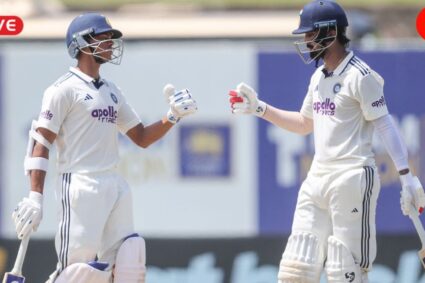

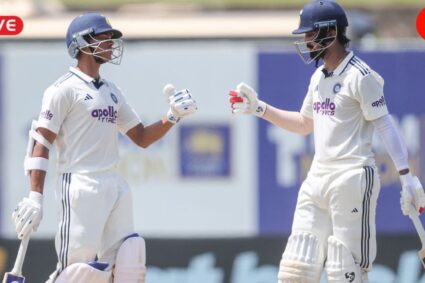


Over the past week, recurring fitness concerns ahead of the Sri Lanka tour forced India’s national selectors back into the domestic First-Class system, rewarding two workhorses, aged 33 and 29, with their maiden Test call-ups.
Yet, the Duleep Trophy squads that were announced this week suggest that the season-opening domestic tournament is becoming increasingly detached from India’s Test selection pipeline. Picked by selectors from 32 major state associations in five separate meetings, the zonal selections expose a disconnect with the priorities of the national selectors.
A lack of national oversight, shifting leadership across the zones, contrasting selection philosophies and an informal quota-based system have again diminished the Duleep Trophy’s value as a bridge to the Test side. The prevailing system was installed after several state associations complained to the BCCI that the selectors were ignoring performers in domestic cricket, a board official told this daily.
“The national selectors wanted to try those they felt had the potential to play for India A or India, even if they hadn’t played Ranji Trophy. But the associations felt that the selectors if they wanted to try those players, then they should pick them for India A. The state and selectors were at loggerheads,” he explained.
So it was decided that the zonal committee would pick the Duleep Trophy teams while the national selectors would chalk out the A squad. “If a national selector wants to try any player they straightaway pick them for India A. If any national selector has a good equation with state selectors, they put in a word with them for particular players,” a BCCI official said.
Of the 75 players initially picked in the North, South, East, West and Central zones for the domestic season-opening tournament, only six have represented India in Tests. Of them, pace veteran Mohammad Shami has not featured in a Test for three years, while Karun Nair, 34, and Shardul Thakur, 35, have slipped out of India’s plans since mid-2025.
Former Indian selector Saba Karim, who represented East Zone on the national panel between 2012 and 2016, said the Duleep Trophy currently serves two purposes: winning the tournament and identifying players for the India A and the Test team.
Story continues below this ad
“Although the selectors have shut the door on him now, Shami could still get back into the team based on one great performance or season. Even for Shardul, for that matter,” said Karim.
Karim, however, observed that the presence of national selectors from each zone could improve the quality of the Duleep Trophy selections. “During my term as a national selector, the person who belongs to that particular zone would chair the meeting for zonal selections. I am not sure whether that is happening now. It isn’t mandatory, but the presence of national selectors creates a very healthy kind of an environment,” Karim told The Indian Express.
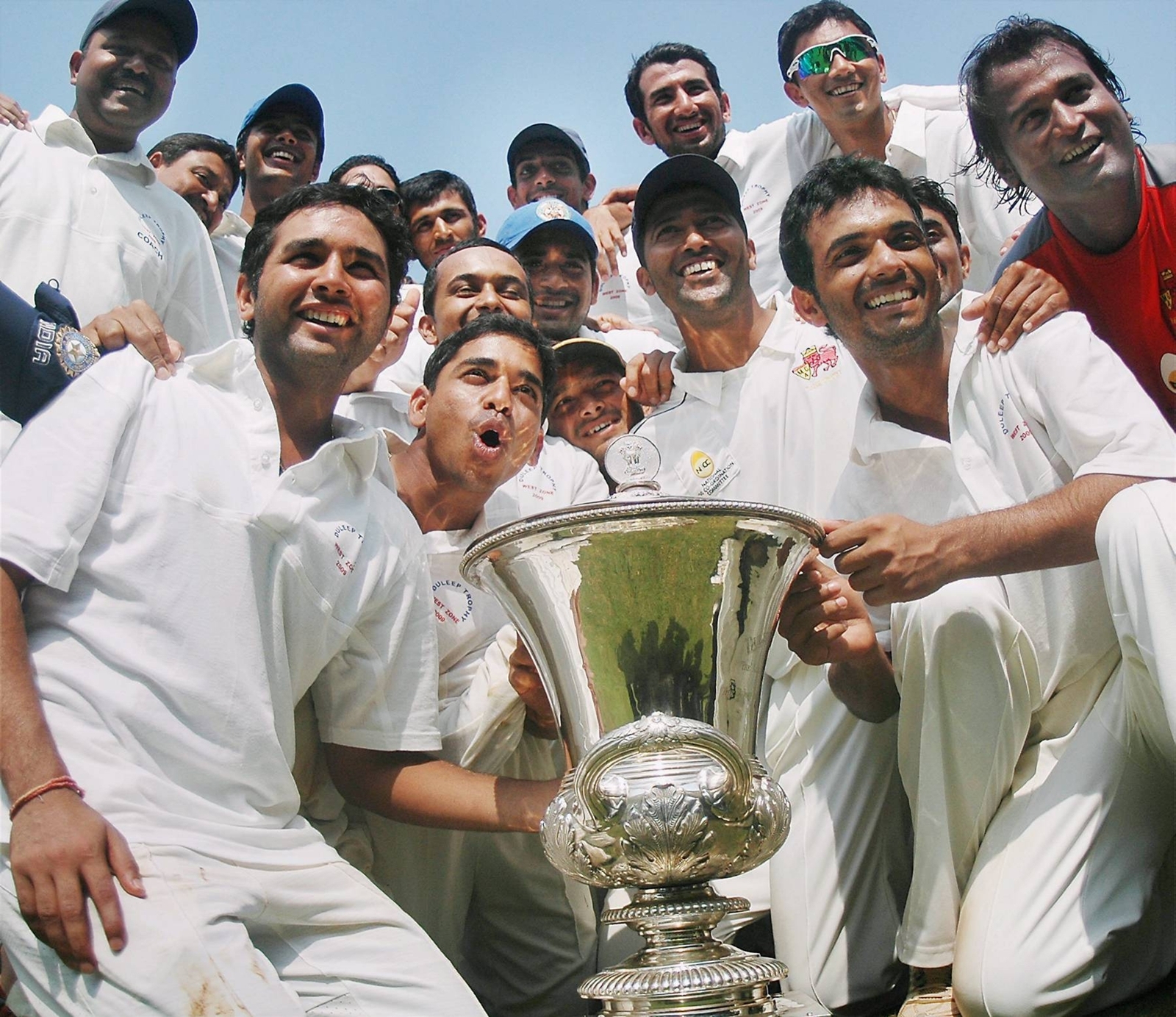 West Zone players after winning the 2009 Duleep Trophy. (PTI File Photo)
Central Zone selector from Madhya Pradesh, Suhail Ansari, confirmed that the national selectors “have not intervened” in the zonal selections. It marks a swift departure from a project undertaken two seasons ago during the 2024-25 Duleep Trophy when Ajit Agarkar’s national panel announced four squads – ‘A’, ‘B’, ‘C’ and ‘D’ – to align domestic selection more closely with the national set-up.
Central Zone have picked a squad that largely rewards continuity from last year’s title-winning campaign. “We do not know about other zones. Our selection has been based entirely on those players who have performed. We won the championship last time, and we have got very good youngsters who have played for India in the recent past or are still playing,” MP selector Ansari told The Indian Express.
Story continues below this ad
Meanwhile, the West Zone continue to rely on their established names — nine of the 15 hail from Mumbai and Maharashtra — with five internationals in Ruturaj Gaikwad, Prithvi Shaw, Sarfaraz Khan, Shardul, and Tushar Deshpande. The trend extends to the East Zone, where 11 players from Bengal and Jharkhand dominate the squad.
Selection pitfalls
The zonal selection pitfalls are highlighted by the seasonal cycle in the South Zone, which includes Karnataka, Tamil Nadu, Andhra, Hyderabad, Kerala, Pondicherry, and Goa.
An insider, who was part of the South Zone selection meeting held on August 1, revealed to this newspaper that selections were typically based on the performance of the teams in the previous Ranji season and certain “spots” reserved for each state association.
In the squad picked in Hyderabad and chaired by the Andhra Cricket Association (ACA) secretary Sana Sathish Babu, seven of the 15 players came from Andhra and Hyderabad. This is up from three players from the region last year, when the selections were dictated by Kerala’s run to the final (four players) and the venue of the meeting (Pondicherry), which contributed two players.
Story continues below this ad
It was also decided during the meeting that national players from the South, who have not expressed unavailability for the semi-final starting on August 30 in Bengaluru, were unanimously omitted from selection.
These variations have come at the expense of team balance. Seven middle-order batters were named alongside only one specialist opener in the 15-member squad. The only representative from Kerala is MD Nidheesh, the seamer who racked up 28 wickets last season. At 35, Nidheesh is unlikely to be viewed as a long-term Test option despite his performances. Karnataka bowler Vidwath Kaverappa is the only other specialist pacer in the side. Meanwhile, Mumbai-born Pondicherry seam all-rounder Aman Khan earned a berth despite taking only nine wickets across two First-Class seasons.
Andhra batter Ricky Bhui is understood to have earned a berth primarily because of his part-time wicket-keeping credentials. Retaining his spot in the South Zone squad, Bhui averages 24 in his last 20 innings across two Ranji seasons. “His performances have been poor, but he was picked in the form of a back-up keeper only because Andhra made the quarter-finals,” a South Zone official told The Indian Express on condition of anonymity.
“We see that the West has continued to pick senior players like Shardul who have already played for India. Our intention in the South is different in that we look at the players from the previous Ranji season,” the official added.
Story continues below this ad
Complex metrics
An over-reliance on the previous Ranji season can overlook sustained First-Class excellence, especially from players whose teams exited early, and bear little resemblance to the metrics used by India’s national selectors.
For instance, Tamil Nadu spinner R Sai Kishore was omitted despite collecting 97 wickets in the last three Ranji seasons. His tally of 20 wickets last season trailed Hyderabad’s Tanay Thyagarajan (27) and Andhra’s Tripurana Vijay (24), costing him his place despite being the second-highest wicket-taker (97) across the zone over the last three seasons.
Averaging over 60 for 1285 runs in the last three seasons, Baba Indrajith is another questionable omission. Featuring in five matches last season, Indrajith hit 401 runs at 66.20 average.
Across the last three seasons, only two South Zone batters have scored more runs at a higher average than Indrajith — a reminder that the qualities currently rewarded in the Duleep Trophy are not necessarily the qualities valued by the national selectors.
(Inputs from Devendra Pandey)
