





4 min readNew DelhiAug 15, 2026 11:30 AM IST
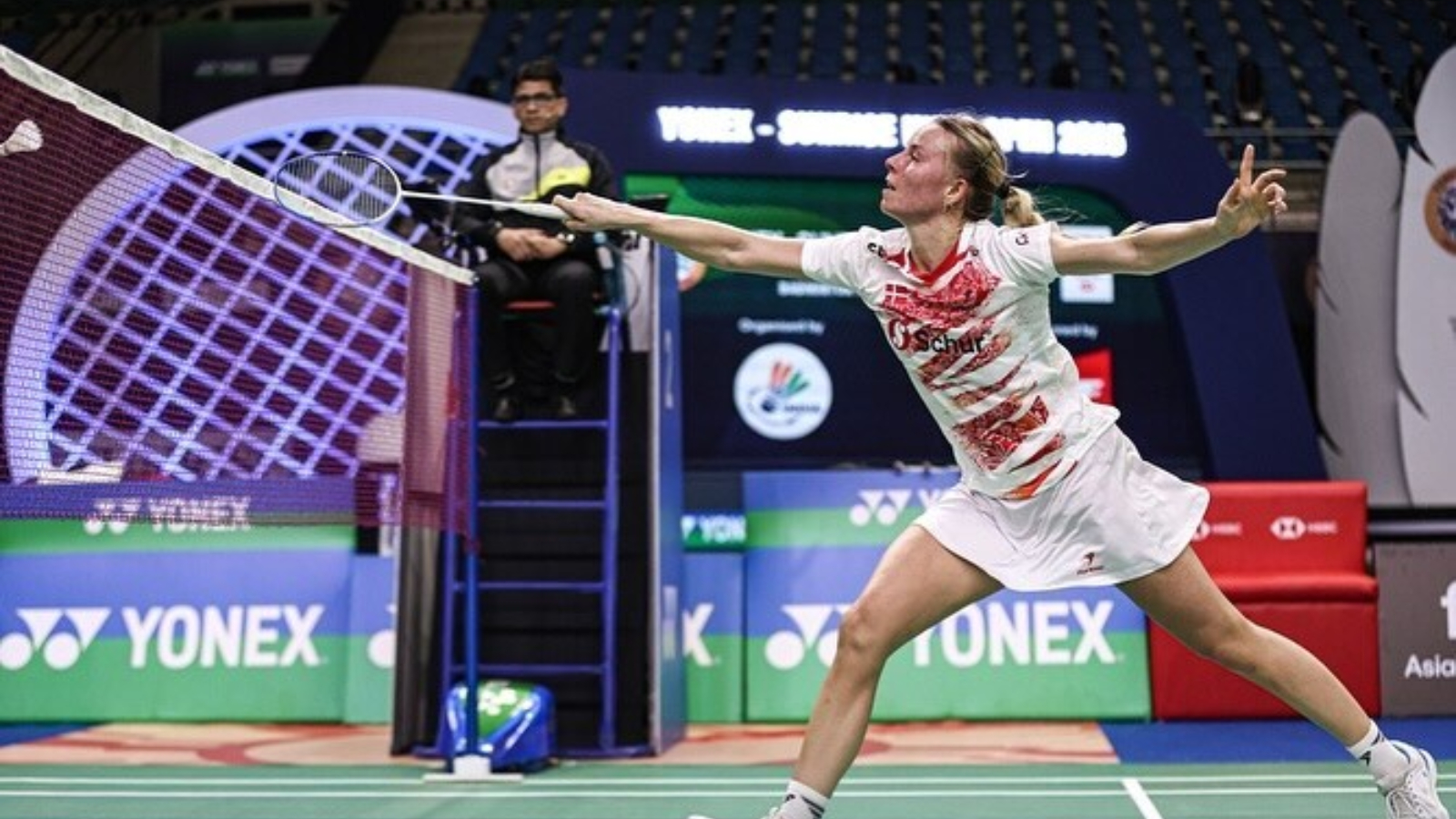
It wasn’t just India at the India Open. Vocal critic and shuttler Mia Blichfeldt, who flagged deficiencies in the organisation of January’s event in Delhi, is also taking on the Badminton World Federation on matters concerning women shuttlers, through a body she started called the Women’s Badminton Collective (WBC). Her first coup: getting Chinese star Huang Dong Ping, the 2021 Tokyo Olympics mixed doubles champion and three-time World Championship medallist, to speak about the tricky dynamics of mixed doubles given women’s menstrual cycles.
“If there was one rule I would urge the BWF to change, and take the opportunity to make badminton women-friendly, it’s to factor in that women have periods,” the Tokyo gold medallist told WBC. “Sometimes we need to use the washroom, and that becomes cumbersome because of the short break permitted. It happened to me at the Sudirman Cup,” she said. “It also happened to the Scottish player, Kirsty Gilmour,” she added, pointing to an issue that tests women athletes both mentally and physically.
There are no dedicated toilet breaks in badminton, but players can seek permission to use the washroom in the 60-second interval at the 11-point break, or the 120 seconds after every 21-point set.
ALSO READ | Why PV Sindhu at World Championships is a nightmare for Chinese stars
While the rules will need to be debated and reconsidered by the World body, the Delhi organisers have brought in their own small but important measure, one that factors in the reality of periods. “Every women’s washroom, be it for athletes, lineswomen, officials or spectators, will be equipped with sanitary napkins kept in an open tray for such emergencies,” a Badminton Association of India spokesperson said, adding they wanted to get rid of the stigma and accept it as a reality of every woman’s life.
India has already taken criticism from January’s India Open and turned it into unusual solutions, from monkey-whisperers hired to shoo away the rhesus monkeys that throng the stadium’s neighbourhood. But badminton is still working through this particular issue via a trans-national conversation, in this case led by Asian powers India and China, and European powerhouse Denmark.
Dong Ping added nuance to the argument, particularly around the dichotomy of mindset mixed doubles demands. “As an athlete in mixed doubles, I don’t distinguish between men and women on court. For what we are competing, there’s no man or woman, only winning matters. But we have to admit we are physiologically different. In mixed doubles, as the lady on the court, there will be situations for the two of us, her and her woman opponent, that aren’t the same as for men, because sometimes we play on periods. The toilet-break rules are rigid, and need flexibility,” she told the WBC.
Story continues below this ad
Blichfeldt was at the centre of an Indian heartbreak once before, denying Saina Nehwal a third World Championship medal when a contentious line call, on a court without television review, went in her favour at a crunch point. Earlier this year in India, she had voiced strong reservations about the playing and practice conditions at January’s India Open.
Dong Ping is top-seeded at the Delhi Worlds with partner Feng Yanzhe, in pursuit of their first gold as a pairing. “Women in badminton are about strength, resilience and tenacity, and we fight and compete as equals in mixed doubles. But the rules need to consider that we can be playing on periods,” she told WBC.
“It’s also about women becoming comfortable to step out and not finding themselves in a panic about sanitary napkins,” the BAI spokesperson added. “We are trying to think of solutions,” they said
