



Express in Nepal | I tried to hold on to my wife’s hand, but water current was so strong: Survivor recounts horror


4 min readUpdated: Aug 29, 2026 04:02 AM IST
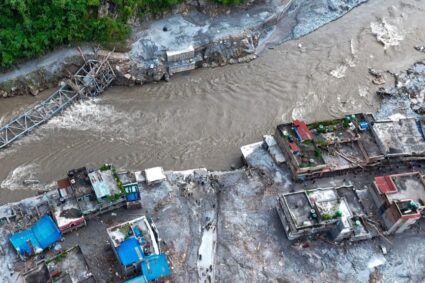
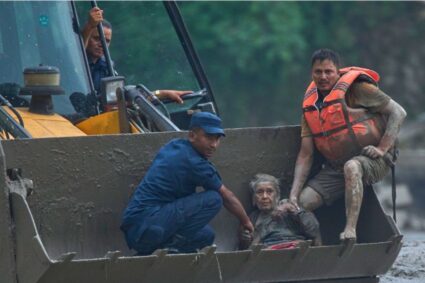
They may have survived the flash floods, but are haunted by the horror of Wednesday morning, when a wall of mud, rock and water took away the lives of their loved ones, and their livelihoods.
“I tried to hold on to my wife’s hand, but the water current was so strong that I couldn’t save her,” says Shyam Lal Thapa, a 52-year old farmer from Rasuwa district who lost his wife Gyanu. While his son is among those missing, his daughter-in-law is with him at the relief camp here. “I believe my son is alive. My daughter-in-law has not spoken a word since then,” he says.
Shyam Lal says that for generations, his family lived off their paddy fields in the border district. When he was airlifted, he could only see swathes of mud and debris.
Santosh Thapa, a 29-year-old engineer employed with the Gosaikunda municipality in Rasuwa district, says he only survived because he overslept that day. He was preparing his breakfast when the floods struck.
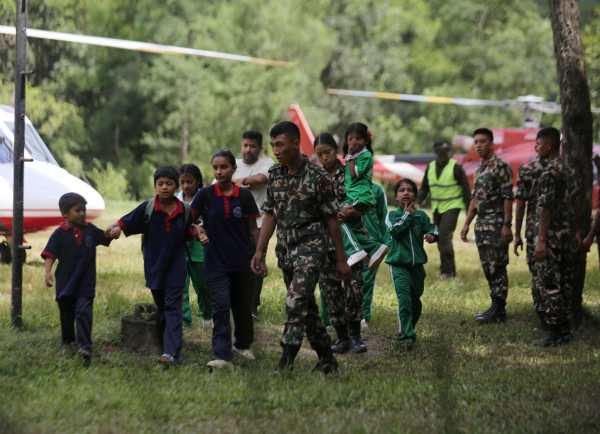
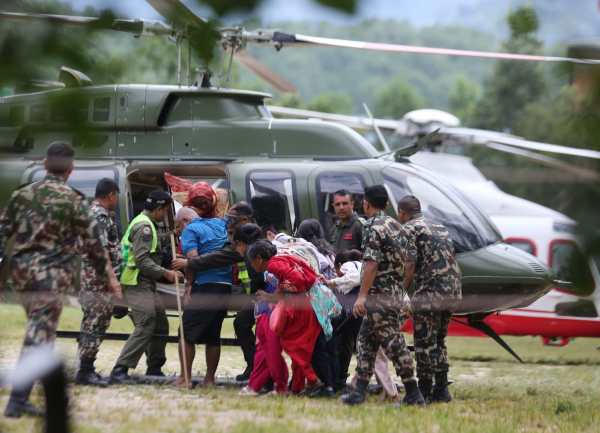 Today at the army base where a rescue and relief command centre is based, scores of school children were among those who were rescued from the adjoining regions cutaway after the floods. (Express Photo by Tashi Tobgyal)
He recalls that he first heard a woman screaming. As he looked out of the window, he saw a wall of water heading towards them. “The entire sky had turned black. It was as though the devil himself had come down from the sky,” he says.
He couldn’t move for a few seconds — until a friend pulled him, and they both ran as far and as high as they could, into the nearby hills. “I was saved because I woke up five minutes late, or else…,” he trails off, staring into the distance.
He says his two colleagues, Nar Bahadur Thapa and J C Prakash, who had already reached the municipality office, about 400 metres from their residence, were not so lucky.
Story continues below this ad
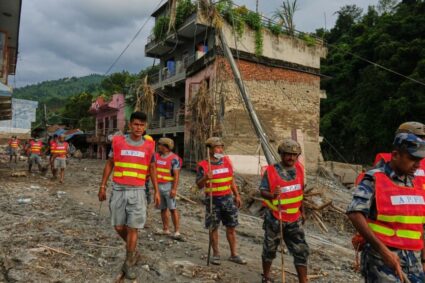
 Security personnel send out loud warnings on an impending second flood, after reports of a second lake break in the higher regions. (Express Photo by Tashi Tobgyal)
Om Prakash Tharu, a 19-year-old from Bardiya district, was engaged in road-laying work at the Trishuli-1 hydroelectric project when people started screaming and running. “We were at a higher level than the others, so we were safer, but we still ran towards the mountains,” he says.
“When I turned around and saw the flood of water, I knew that nobody working in the lower reaches would survive. I saw the river taking so many people with it,” he says.
Tharu says that he and his uncle, who also worked at the plant, along with some other workers, came down from the mountains after the flood waters receded, but soon rushed back to higher ground, where they remained until they were airlifted.


Stay updated with the latest – Click here to follow us on Instagram
