






Rust, 286 days at sea and ‘shocked observers’: USS Abraham Lincoln in before and after images

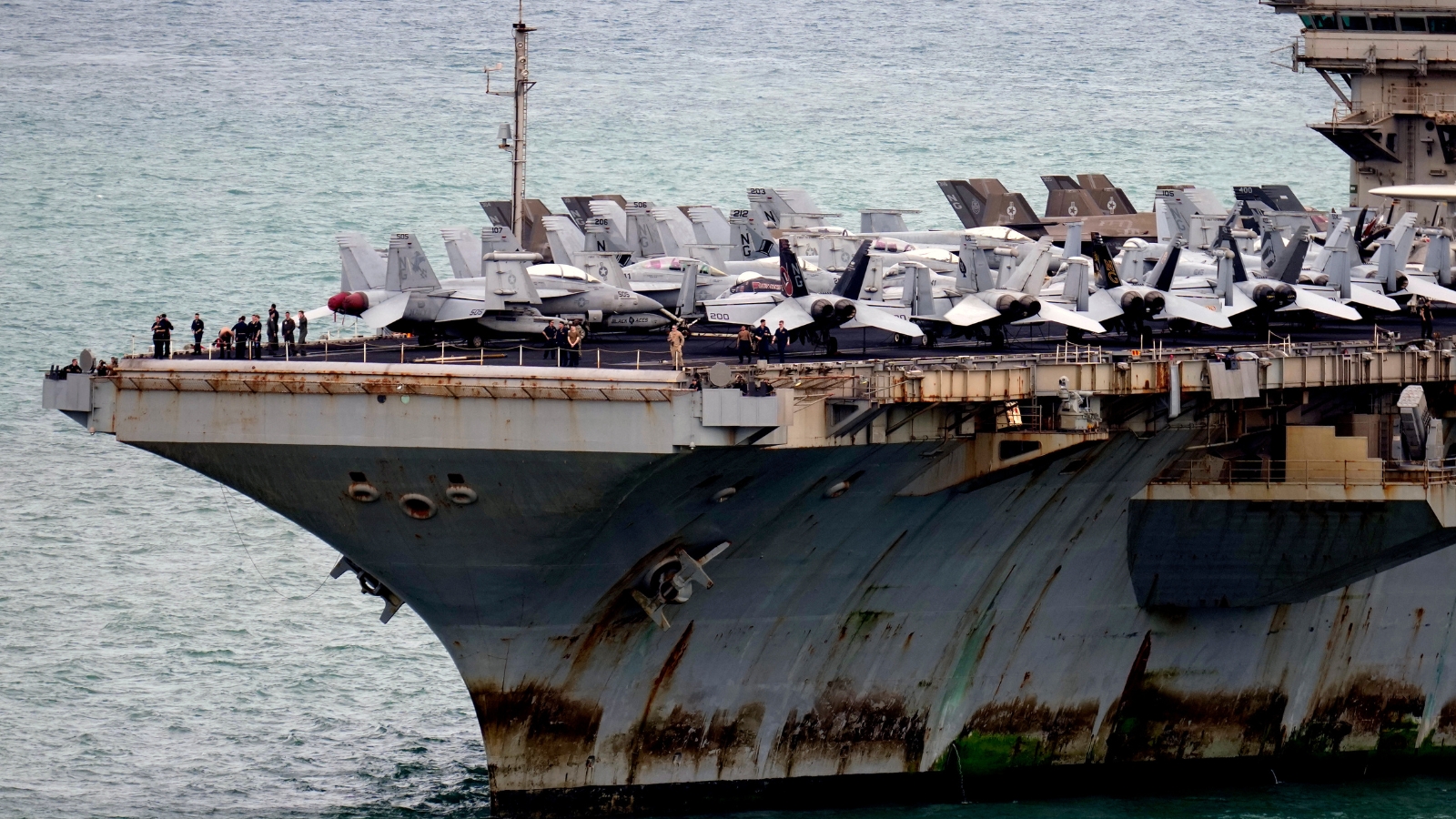
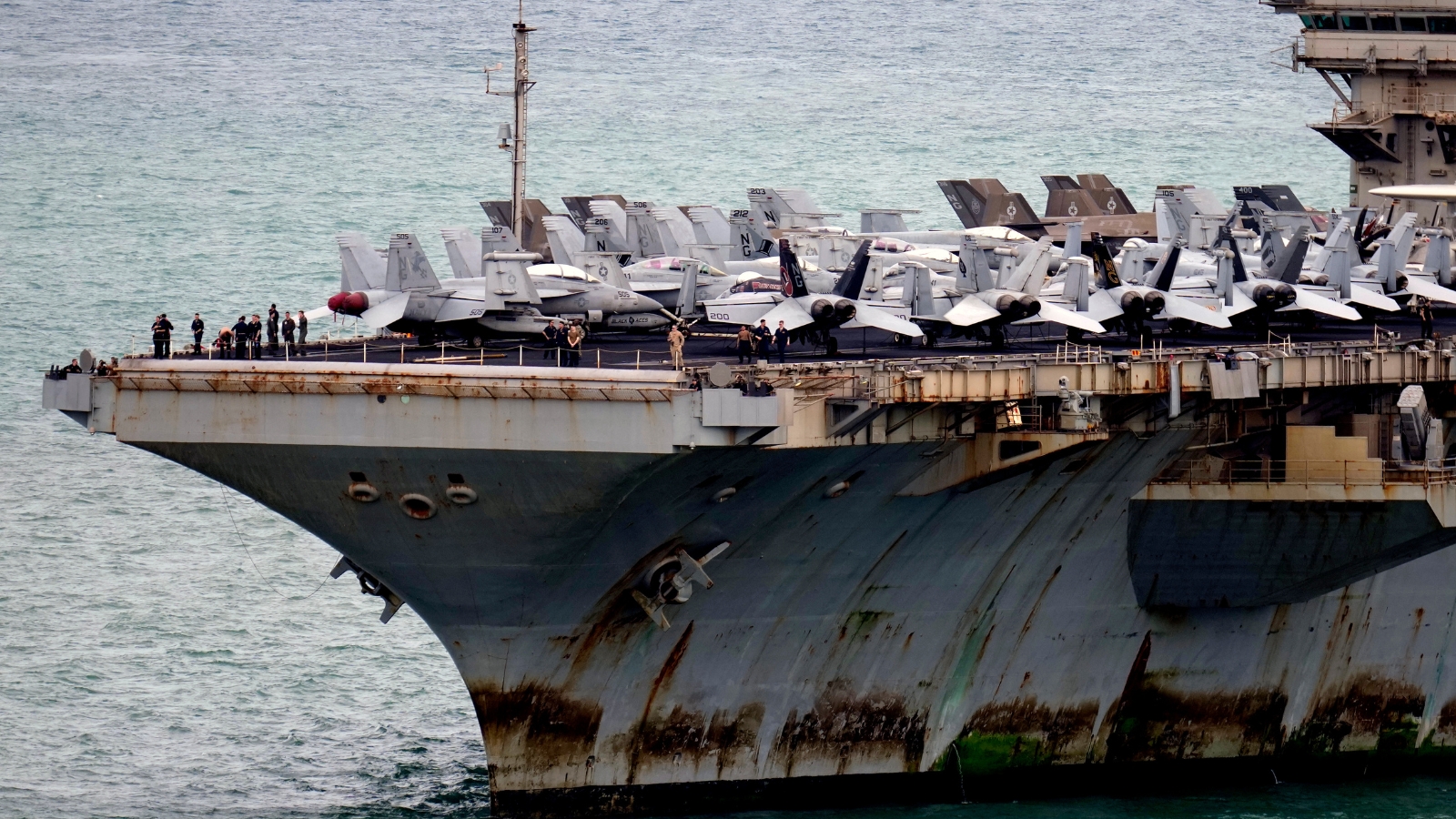
The nearly 1,100-foot-long USS Abraham Lincoln aircraft carrier arrived Wednesday in Thailand after spending months conducting combat and blockade operations against Iran in West Asia. The USS Abraham Lincoln arrived at Thailand’s Laem Chabang port with large patches of apparent rust visible on its hull after a marathon deployment.
CNN reported that observers were shocked by its appearance.
The carrier had been deployed for 286 days since leaving its home port of San Diego last November, according to the US Embassy. Before arriving in Thailand, it had spent 264 consecutive days without a full port stop.
During its deployment, the Lincoln supported US combat and blockade operations against Iran in West Asia.
.
World · US Navy · In Pictures
USS Abraham Lincoln arrives in Thailand
.
.
.
.
.
AP / REUTERS
. . . . .
The US Navy aircraft carrier USS Abraham Lincoln arrives at the port in Laem Chabang, Chonburi, Thailand, September 2.
Photos: AP and Reuters
.
Before: The Lincoln leaves San Diego
The USS Abraham Lincoln left San Diego last November for its latest deployment. The nuclear-powered aircraft carrier, launched in 1988, is nearly 1,100 feet long — approximately the length of three American football fields — and carries around 5,000 sailors and Marines.
The carrier was later sent to West Asia, where it spent months supporting US operations against Iran.
After: What long deployment did to the carrier
When the Lincoln arrived in Thailand, large patches of what appeared to be rust were visible on its hull, particularly above the waterline and along the edge of the flight deck, where fighter aircraft and helicopters were parked.
.
World · US Navy · Before / After
286 days at sea: the toll on a US carrier
The USS Abraham Lincoln pulled into Thailand rust-streaked from bow to stern after a punishing deployment to the Iran war. The same carrier, months apart.
.
.
Before · Mar 2026
After · Sept 2026
REUTERS
Photos: Reuters. Before — at sea during Operation Epic Fury (Mar 3). After — approaching Laem Chabang, Thailand (Sept 2). Tap the image to pause.
286
days at sea before this stop
~1,092 ft
length of the carrier
~5,000
crew now resting in Pattaya
The two images are different Reuters photographs of the same ship, months apart, framed to compare its condition — not a fixed-camera before/after.
Photos: Reuters. Context: US Embassy Bangkok / US Navy, AP, CNN, NBC News, Stars and Stripes. Arrival dated Sept 2, 2026.
.
Captain Dan Keeler, the Lincoln’s commanding officer, said its appearance was expected after such a prolonged deployment.
Story continues below this ad
“It is normal for a long deployment and we’re not going to make further comments,” Keeler said.
“It looks like what it is: a ship that’s been continuously at sea for 286 days,” Euan Graham, a defence expert at the Australian National Security College, told AP after reviewing photographs of the carrier.
Graham said the ship’s appearance could become a “tempting symbol” of the US Navy’s “strategic overstretch and fatigue”. However, he also highlighted the condition of its air wing as a possible sign of resilience under extreme stress.
Why could the rust not be treated at sea?
Carl Schuster, a former US Navy captain who completed three tours on Nimitz-class carriers such as the Lincoln, told CNN that rust along the waterline was not unusual for a ship that had operated continuously at sea for at least 60 days.
Story continues below this ad
Treating the rust would require crews to be lowered to the waterline, sand away the affected material, apply two coats of rust-preventative primer and then add two coats of naval-grey paint.
According to Schuster, the work could not be carried out at sea, particularly during combat operations.
Some rust on the carrier’s upper levels can be treated while the ship is underway. Repairs along the waterline, however, require the vessel to remain stationary and free from wave action.
USS ABRAHAM LINCOLN · CVN-72 1,092 ft / 333 m CATAPULT 1CATAPULT 2
1,092
Feet long
5,000
Sailors & Marines
~90
Aircraft aboard
250+
Days at sea (current deployment)
⚙ Ship Specifications
Nuclear
2 × Westinghouse A4W reactors · 20+ years without refuelling
30+ knots
Top speed (56 km/h) · unlimited operational range
104,000 t
Full load displacement · one of the largest warships ever built
1 every 20s
Launch rate via 4 steam catapults · 4 arresting wires for recovery
3 million gal
Aviation fuel capacity for aircraft operations
Nov 11, 1989
Commissioned · 5th Nimitz-class carrier · built by Newport News Shipbuilding
✈ Aircraft Typically Aboard
🛩
F/A-18E/F Super Hornet
Primary strike fighter — air-to-air and air-to-ground missions
📡
EA-18G Growler
Electronic warfare — suppresses enemy radar and communications
👁
E-2D Hawkeye
Airborne early warning and command-and-control
🚁
MH-60R/S Seahawk
Anti-submarine warfare, search and rescue, logistics
📅 Deployment History — Key Moments
1991 — Operation Desert Storm
First major deployment — provided combat air patrol and strike support over Kuwait and Iraq.
2003 — “Mission Accomplished”
President George W. Bush landed on Lincoln’s deck and declared the end of major combat operations in Iraq — a moment that became politically controversial as the war continued for years.
2003–04 — Record deployment
295 consecutive days at sea — the longest post-Cold War carrier deployment on record at the time.
2004 — Indian Ocean tsunami relief
Delivered nearly 6 million pounds of aid to tsunami-affected communities across Southeast Asia.
November 21, 2025 — Deployment begins
Departs Naval Station San Diego for a scheduled seven-month Indo-Pacific deployment. Mission anticipated to end May 2026.
Jan–Feb 2026 — Middle East redirect
Redirected to US Central Command to support operations against Iran following escalating tensions. Deployment extended indefinitely.
Aug 2026 — 250+ days at sea · no return date announced
Crisis reports emerge. Navy Times and Stars & Stripes report deteriorating conditions, mental health crises, and multiple attempts by sailors to jump overboard. Families meet US Navy officials in San Diego.
⚠ The 2026 Crisis — What’s Being Reported
Reports of deteriorating conditions aboard — Aug 2026
📰
Navy Times & Stars and Stripes reports
Both publications reported — citing sailors, family members and social media — that crew members were struggling with exhaustion, declining morale and suicidal thoughts. At least one instance of a sailor being prevented from jumping overboard was described.
👨👩👧
~200 family members raise concerns
Families met Acting Navy Secretary Hung Cao in San Diego. Concerns included moldy showers, broken toilets, no hot water for weeks, food shortages — reported as half a cup of rice and two tortillas in one account — and mail system disruptions.
💊
Ship’s doctor warning, per families
One family member said the ship’s own doctor warned they “need to reach port soon or people are going to start losing their minds,” per Rep. Mike Levin of California.
🏛
Congressional pressure
Sen. Richard Blumenthal wrote to defence officials: “Extended periods at sea can compound those inherent risks through fatigue, deferred maintenance, and reduced opportunities for rest and recovery.”
Two positions
🇺🇸 Pentagon / Navy
Sec. Hegseth: reports “completely misrepresented”
Navy: leadership continuously assessing sailors’ mental readiness
Access to mental health professionals on board
Internal tracking showed suicidal ideation reports declining in recent months (US official)
No correlation between deployment length and self-harm (Navy’s position)
📣 Families / Congress
~200 families raised concerns directly to acting Navy secretary
Reports of moldy showers, broken toilets, food rationing
Deployment expected to end in May — still no return date
Spouse told Navy Times her husband tried to jump overboard
Lawmakers demand answers on indefinite extension
⚠ Editorial note — mental health
This infographic covers reported suicidal ideation and self-harm incidents aboard the Lincoln. If you or someone you know is struggling, help is available: call or text 988 (US Lifeline) · visit 988lifeline.org. Veterans and military personnel can also call 988 and press 1.
📍 Homeport & Future
Current homeport
Naval Station San Diego, California
Possible homeport change
Chief of Naval Operations Adm. Daryl Caudle said during a visit to Naval Base Kitsap that the USS Abraham Lincoln may change homeport to Kitsap-Bangor, Washington — a move that would be significant for the Pacific Northwest and US Pacific posture.
🌐 Why It Matters
Strategic significance
Aircraft carriers like the Lincoln are the centrepiece of US power projection. A single carrier strike group includes the carrier, guided missile cruisers, destroyers, attack submarines and logistics ships — a floating air base capable of projecting force anywhere on the globe within days. The Lincoln’s indefinite deployment to the Middle East reflects the scale of US commitment to the Iran conflict — and the human cost that extended deployment extracts from the 5,000 personnel aboard.
Sources: Navy Times · Stars and Stripes · US Naval Institute (USNI News) · US Navy press releases · Reuters · AP · Fox News · CNN. Crew condition reports are attributed to families and sailors cited by Navy Times and Stars and Stripes; the Pentagon disputes their characterisation. All figures as of August/September 2026.
Removing the rust could take about 30 days
Based on what he could see, Schuster estimated that removing all the rust could require around 30 days of preservation work.
Story continues below this ad
Some critical maintenance may be undertaken during the ship’s stop in Thailand. Schuster said only high-priority work would be carried out during a seven-day port visit.
The bow and forward areas of the hull would be treated first because they take the most abuse when the ship is moving and face the corrosive effects of saltwater, particularly in choppy seas.
“Rust is like a contagious disease. It spreads. So, it is better to deal with it early to contain it or deal with a much larger problem later,” Schuster said.
He warned that rust weakens the steel structures it affects and must be removed before it has a significant impact on components such as decks, walkways and lifelines.
Story continues below this ad
Morale concerns and supply shortages
Rust has not been the only issue associated with the Lincoln’s prolonged deployment.
Reports emerged last month of deteriorating mental health among the crew and shortages of key food supplies. The US Navy downplayed reports of problems aboard the ship.
A Navy official said a crew member went overboard in early August but was quickly recovered, treated by the ship’s medical department and transferred from the carrier for follow-up care. The official did not say whether the incident was considered a suicide attempt.
President Donald Trump dismissed concerns about the length of the deployment, saying it was “not nearly long enough”.
Story continues below this ad
Trump has previously criticised the appearance of rusty US Navy vessels. Former Navy secretary John Phelan said last year that the President would call him in the middle of the night about the problem.
“He has stated to me many times: ‘Shipbuilding, shipbuilding, shipbuilding. Get those ships out of maintenance yards. Fix the damn rust,’” Phelan said at a conference in Maryland.
First full port stop of the deployment
The Lincoln docked at Laem Chabang for a visit expected to last several days, giving its approximately 5,000 sailors and Marines an opportunity for rest and recreation in nearby Pattaya.
Keeler said the Lincoln would head home soon but would need to make periodic stops to replenish supplies.
Story continues below this ad
“There’s no big delay about when we are going home,” he said. “They move us around where they need us to be.”
(With inputs from CNN and agencies)
Stay updated with the latest – Click here to follow us on Instagram
