
2 people rescued alive from Nepal tunnel 9 days after flash flood

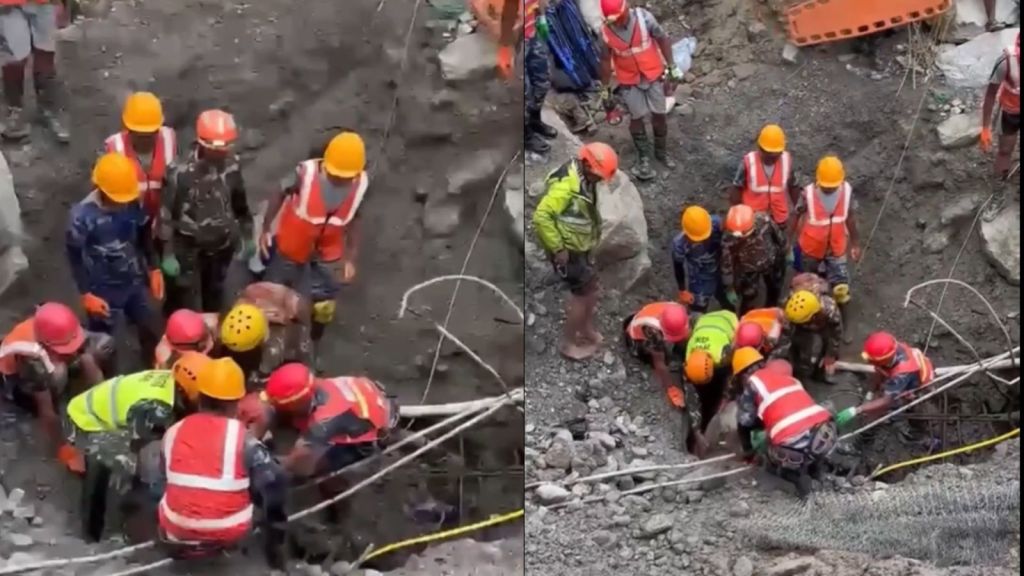
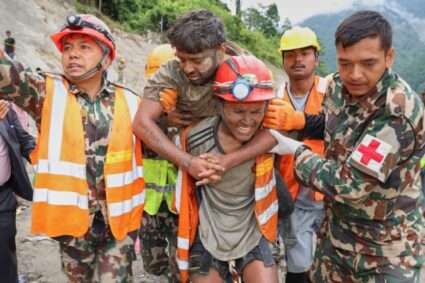
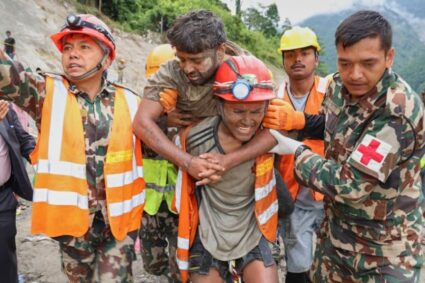
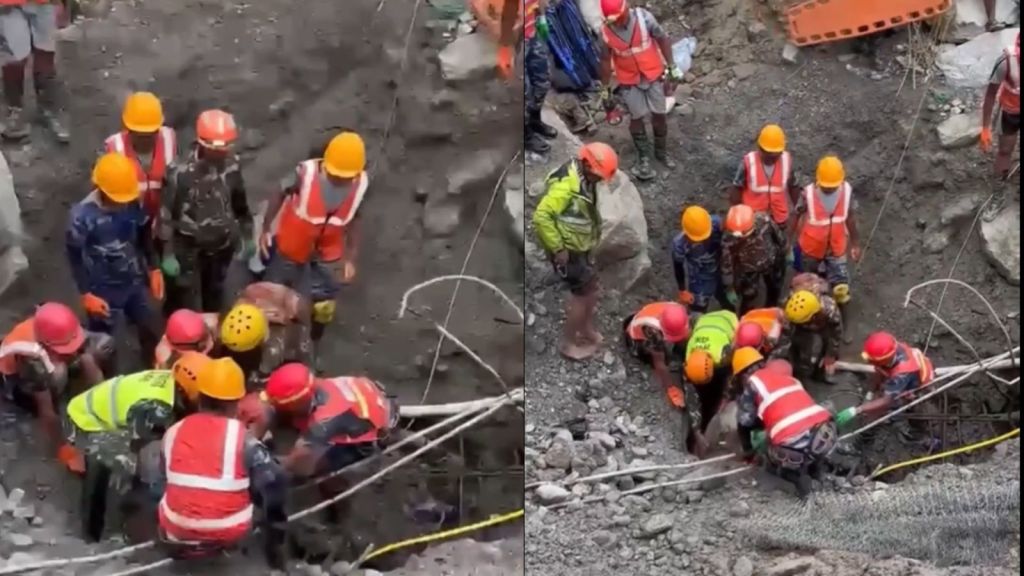 dramatic moment that the workers were rescued from the Trishuli 3A Hydropower Plant, nine days after a flash flood. (Screengrab: X/ @PTI_News)
Two workers have been pulled out alive from a hydropower tunnel in Nepal, nine days after a flash flood that killed more than 1,200 people. The rescue took place at the Trishuli 3A hydropower project, one of the sites worst hit by last week’s disaster, army spokesperson Brig Gen Raja Ram Basnet said. Teams are continuing to search for more people believed to be trapped inside.
The first survivor pulled out was named as Sanjaya Shah, a mechanical foreman with the Nepal Electricity Authority (NEA), a senior NEA official told the BBC. Local television footage showed him covered in mud and being carried out of the site on a rescuer’s shoulder before being taken to the Nepal Army barrack in Trishuli. A second worker, identified as Kabir Maharjan, was rescued shortly after. Both were found at a depth of 170 metres inside the tunnel, Basnet confirmed.
VIDEO | Trishuli, Nepal: One person rescued alive from Trishuli 3A tunnel after 10 days; search for others continues.
(Source: Security Force)
(Full video available on PTI Videos – https://t.co/d8jp61yd2p) pic.twitter.com/7Z0WU4O6ll
— Press Trust of India (@PTI_News) September 4, 2026
Suresh Raut, a senior NEA official present at the rescue site, told the BBC that rescuers gave oxygen to Shah after bringing him out. Suresh Chaudhari, a colleague of Shah’s, told the BBC: “I am so, so happy, I have been waiting for the news. This has given hope that others will also be rescued alive.”
What caused the disaster
Most of the hydropower projects in the region were destroyed when a surge of water, debris and mud swept down the river valley last week. The flood was triggered by the collapse of a melting glacier on the border between Nepal and China-controlled Tibet, according to the Guardian.
At the Upper Trishuli 3A site, it took rescue workers almost six days to locate the tunnels because of thick mud blocking the entrance. Authorities said they believe around 30 to 40 people may still be alive inside. Army units and specialist teams have been working around the clock to clear mud and boulders from the tunnel entrance, and hopes rose further early Friday morning when voices were heard deep inside the tunnel.
About 900 workers remain missing across 12 hydropower projects in Nepal, with roughly 500 believed to be trapped in tunnels, local authorities said.
