




RBI Keeps Lending Rate At 4%, Projects Real GDP Growth This Year At 9.5%

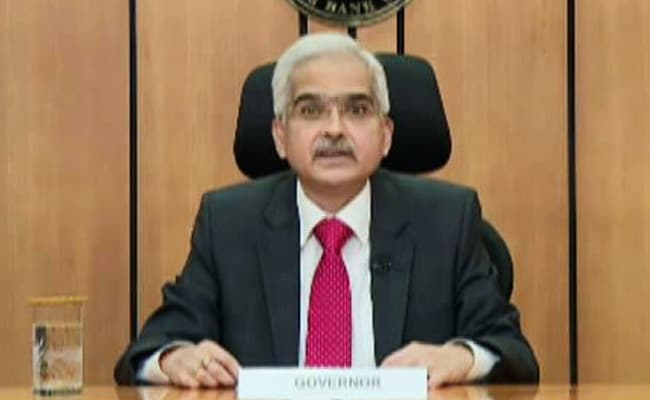

The Reserve Bank of India (RBI) has kept the benchmark rates unchanged and “decided to continue with its accommodative stance as long as necessary to support growth and keep inflation within the target”, the RBI Governor Shaktikanta Das said at the end of the three-day Monetary Policy Committee (MPC) meeting that started on Wednesday. The central bank kept the repo rate unchanged at 4 per cent and reverse repo rate unchanged at 3.35 per cent,
The central bank also projected real GDP Growth of 9.5 per cent for this financial year, which is lower compared to the earlier projection of 10.5 per cent due to the impact of the second COVID wave.
The Monetary Policy Committee (MPC) has kept the key benchmark rates unchanged in the past five monetary policy meets. The central bank had last cut its policy rates on May 22, 2020, in an off-policy cycle when the covid-19 pandemic first shook the country.
The Reserve Bank has slashed its key lending rates i.e. repo rate by 115 basis points since March 2020 to cushion the economy from the aftershock of coronavirus.
The RBI, in its first bi-monthly monetary policy review for financial year 2021-22, had retained its GDP growth projection at 10.5 per cent for fiscal 2021-22. As per the gross domestic product (GDP) estimates government released earlier this week, the economy contracted by 7.3 per cent in financial year 2020-21, while the agriculture sector witnessed a growth of 3.6 per cent, and the services and industry sectors contracted by 8.4 per cent and seven per cent respectively.
Many economists believe that the worse may be over as cautious unlocking has started in many states amid initial signs that the second Covid curve may have tapered.
The retail inflation has also eased to a three-month low of 4.29 per cent on the account of reduction in food prices such as vegetables and cereals, according to government data. The RBI in its bi-monthly monetary policy review in April 2021 targeted the retail inflation at 5.2 per cent in the first half of the current fiscal 2021-22 and within the two – six per cent band in the medium term.
