


4 min readAug 8, 2026 01:46 PM IST
Ashmita Chaliha had last left Korea on crutches. Back in August 2024, she suffered a mid meniscus tear at the Korea Open and needed a flight upgrade because she couldn’t sit with a knee swollen like a balloon. When her mother rushed to Bangalore airport to pick her up, she was in tears watching Ashmita walk down an escalator on crutches.
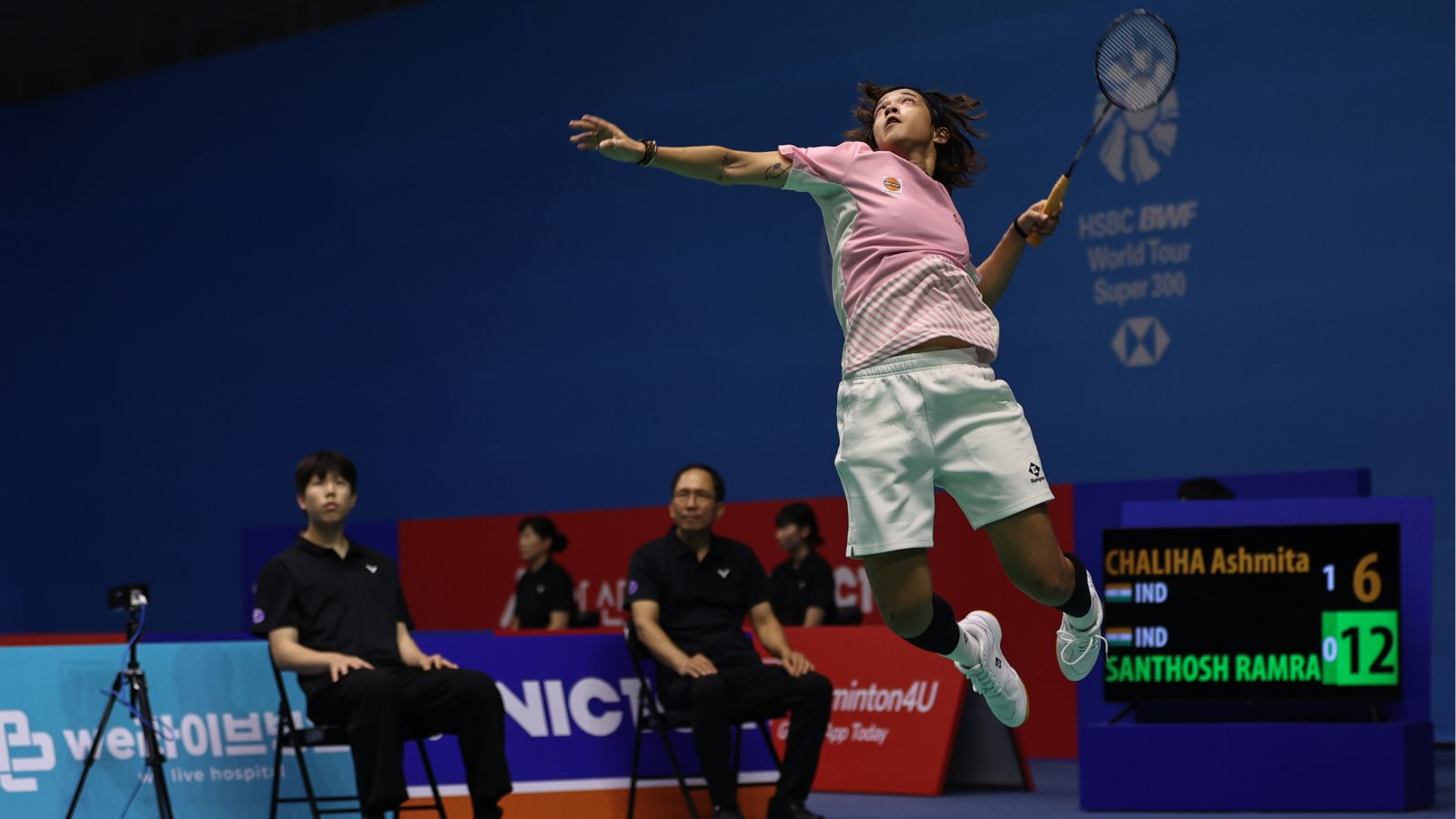
Two years on, the chill Assamese with stinging southpaw talent on her strokes, has completed the Korean circle and reached finals of the Super 300 Korean Masters. She defeated Rakshitha Sree Santhosh Ramraj 21-13, 16-21-21-13 relying on her left-handed shot-making and plays Chinese Han Qian Xi in the finals.
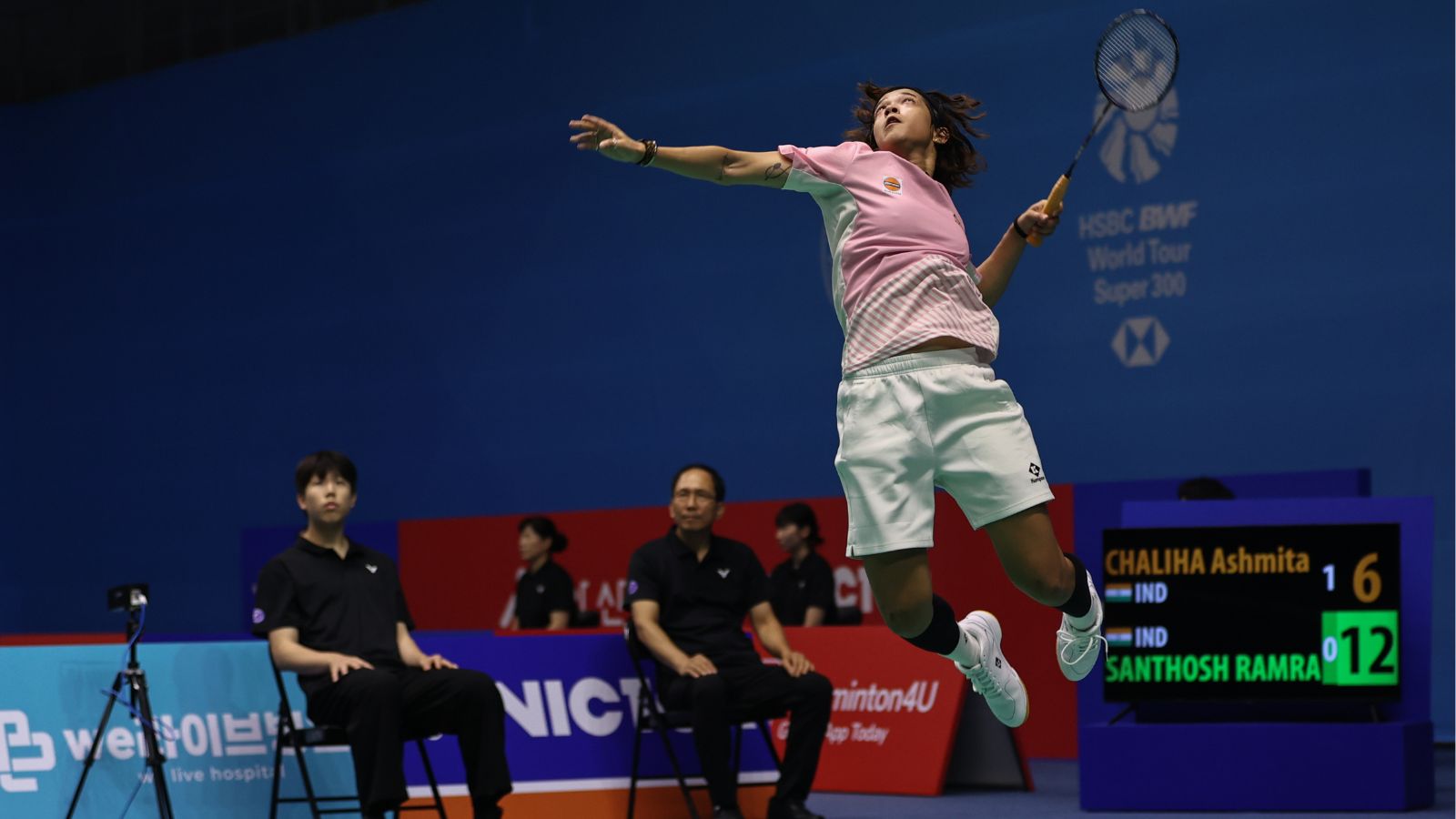
Local shuttler Kim Ga Ram was battling on an adjacent court. But the crowd was riveted by the all-India matches between Rakshitha and Ashmita as both Indians unfurled attacks that were magnetic and entertaining in their shot quality. Ashmita’s standout quality was just how high she took the shuttle creating all these deft angles while keeping it aggressive.
Ashmita’s hand speed combined with the leftie angles denied Rakshitha early entry into a rally, and she trailed 13-6 and 9-1 in the first and third set, effectively being driven out of the match when the 26-year-old Ashmita played from the faster side.
It was a semifinal between World No 50 and the Wirld No 49, but the older Indian, on her comeback, won.
Mother Geetali recalls the dampener of an August at Bangalore. “PPBA took good care of her and her employers helped land an appointment with Dr Pardiwala for an emergency surgery in Mumbai in two days which would otherwise take a month and half. But Korea was a painful memory,” she recalls. “Injuries happen to every sportsman. I told her even Tendulkar and Dhoni have battled injuries. But it took a long time,” she says. It was 8 months before she returned to the court, and two years till she made finals.
Her ranking had slipped over 200.
Ashmita returned to Guwahati but stays at the National Centre hostel in the same city, coming home only over weekend.
Story continues below this ad
Her struggles as a non-prodigy are not really documented, even as the Indian propensity to write off talent after age 23 if it doesn’t medal big, continues. “She was hurt by criticism. She used to wonder ‘they say nice things when I peak but pass negative comments when I lose.’ It would affect her, but now she’s settled into a groove and doesn’t bother,” her mother says.
The game has always been there. If anything, it was the most talented game after Sindhu’s. A hop smash, an entire arc of attacking pushes and clears and ability to keep the game away from the net – all at a fast clip. “Earlier she would make errors and not learn from them. Now she rectifies quickly. The maturity has come with age,” her mother says. “She was immature before.” An enigma who loves watching car racing and playing video games and music but only with her closest friends, Ashmita struggled to fit in, in Bangalore even while her game improved.
She won India a crucial WS2 match at the Asian team gold win, but it was clear, she needed a coach who would constantly be on her case and not let her drift.
Earlier this year, she did well at Malaysia and Macau to reach No 50 but the surge into finals has finally played out at Korea. “What keeps her going is she truly loves badminton. It’s inborn drive. She loves to play, looks forward to practicing and enjoys. At 26, she is back to fighting. Fingers crossed for the final,” her mother says. Ashmita Chaliha might prove Coach Park Tae Sang’s big challenge with the goal to steer the prodigious talent, albeit not a prodigy, back into the elite tier.
