

‘Attack on one, attack on all’: What’s in Saudi Arabia-Turkey-Pakistan defence deal? What it means


4 min readUpdated: Aug 7, 2026 09:54 PM IST
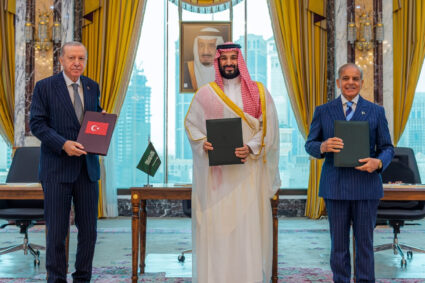
Saudi Arabia, Turkey and Pakistan on Friday signed the Mecca Joint Defence Agreement, a trilateral security pact that commits the three countries to treat an armed attack on any one of them as an attack on all three, strengthening defence cooperation amid growing instability in West Asia.
The agreement was signed in Mecca by Saudi Crown Prince Mohammed bin Salman, Turkish President Recep Tayyip Erdogan and Pakistani Prime Minister Shehbaz Sharif.
The agreement comes after nearly a year of negotiations, first reported by Reuters in January, and follows months of heightened regional tensions triggered by the Iran conflict, which has exposed Gulf security vulnerabilities and disrupted shipping through the Strait of Hormuz.
What does the agreement say?
The agreement’s central provision states that an armed attack against any one of the three countries will be regarded as an attack against them all, making it the first trilateral mutual-defence arrangement among the three Sunni Muslim-majority nations. According to a joint statement cited by AP and Reuters, the pact is intended to strengthen collective deterrence against any act of aggression.
The agreement also calls for:
- Enhanced military coordination among the three countries.
- Greater cooperation in the defence industry.
- Broader defence collaboration and joint security planning.
- Strengthening collective deterrence against external threats.
However, the joint statement does not specify what military obligations each country would assume if one of the signatories came under attack. Reuters reported that it remains unclear whether the pact would require troop deployments, military intervention or other specific forms of defence assistance.

What the pact does not do
Saudi Arabia and Turkey stressed that the agreement is purely defensive.
According to AP, Saudi officials said the pact does not represent an attempt to create a military alliance or a sectarian bloc, nor is it linked to nuclear ambitions or an arms race. Instead, they described it as an effort to build sustainable, self-reliant defence capabilities while preserving Saudi Arabia’s existing Gulf, Arab and international partnerships.
Story continues below this ad
A Turkish official quoted by AP also said the agreement is not directed against any specific country, does not replace existing bilateral or multilateral defence arrangements and remains open to other regional countries that may wish to join in the future.
Why now?
The agreement comes at a time when the Middle East’s security landscape has changed dramatically.
According to Reuters, the Iran conflict has led to missile and drone attacks on Gulf states and disrupted energy shipments, prompting regional powers to reassess their security arrangements. Saudi Arabia has also sought to diversify its defence partnerships as questions have grown over the reliability of its long-standing US security umbrella.
Abdulaziz Sager, chairman of the Saudi-based Gulf Research Center, told Reuters that the agreement reflects a growing willingness among regional powers to coordinate more closely on security and could contribute to a more regionally driven security architecture.
Story continues below this ad
Builds on existing military ties
The Mecca agreement formalises defence cooperation that has existed for decades.
Pakistan and Saudi Arabia signed a bilateral mutual-defence agreement last year, while Pakistan has long provided military training and technical assistance to Saudi forces.
Turkey and Pakistan have steadily expanded defence cooperation through naval projects, military training and defence technology, while Saudi Arabia has emerged as a significant buyer of Turkish-made drones and defence equipment. Reuters also reported that Pakistan has deployed thousands of troops, fighter aircraft, drones and air-defence systems to Saudi Arabia over the years.
Together, the three countries bring complementary strengths to the partnership:
Story continues below this ad
- Saudi Arabia: One of the world’s largest oil exporters and the Arab world’s biggest economy.
- Turkey: A NATO member with the alliance’s second-largest military and a rapidly growing defence industry.
- Pakistan: The world’s only nuclear-armed Muslim-majority country with decades of military experience.
Iran criticises agreement
Iran reacted critically to the new pact.
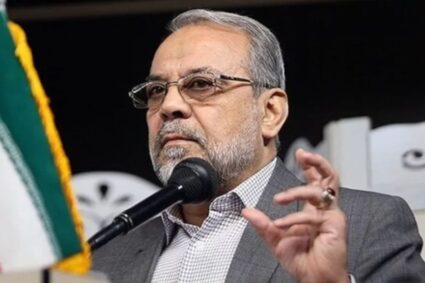
According to AP, Iranian lawmaker Ebrahim Rezaei argued that the agreement would not improve Saudi Arabia’s security and said Riyadh should change its regional policies instead of “begging for security” from other countries.
India watching developments
India is closely following the development. Reuters reported that a spokesperson for the Ministry of External Affairs said New Delhi was monitoring the agreement.
The pact is expected to draw attention in India given Turkey’s expanding defence ties with Pakistan and the broader realignment of security partnerships across West Asia amid continuing regional conflict.
Stay updated with the latest – Click here to follow us on Instagram
