




Broad Peak avalanche: Rescue briefly paused after 3 bodies recovered, Nirmal Purja among missing


The search for the missing seven of the 10 mountaineers who were caught in an avalanche on Broad Peak in Pakistan was suspended on Friday because of adverse weather conditions.
A team of Pakistani search crews recovered the bodies of the three mountaineers, a day after an avalanche struck the 12th-highest mountain in the world on Thursday.
The 10 mountaineers caught in the avalanche include famed Nepalese climber Nirmal Purja and Nadhira Al Harthy, the first Omani woman to summit Mount Everest. The expedition included climbers from Nepal, Pakistan, Oman, the US and China, the Alpine Club of Pakistan said.
The climbers were swept away roughly at an altitude of around 7,000 metres during ascent of the 8,051-metre mountain.
Omani, American and Nepalese among dead
The three bodies recovered during the search operation are those of US citizen Sarah Mallory, Nadhira Ahmed Abdullah Al Harthy from Oman, and Nepalese citizen Pur Bahadur Gurung, Reuters cited Gilgit-Baltistan authorities as saying.
A three-member search and rescue mission, led by renowned mountaineer Sarbaz Khan, was launched by the Commissioner of the Baltistan Division, Dawn reported. The team recovered the bodies of the climbers, which were later shifted by Pakistan Army Aviation helicopters.
The rescue ops were temporarily suspended on Friday due to poor weather conditions. It is likely to resume on Saturday.
Story continues below this ad
Sarah Mallory was among the 10-member team climbing the Broad Peak, known for its extremely rugged terrain and challenging weather. This was Mallory’s first attempt at an 8,000 metre peak.
Nadhira Ahmed Abdullah Al Harthy was the first Omani woman to summit Mount Everest in 2019. She had also summited K2 and Manaslu.
Pur Bahadur Gurung was an experienced climber who guided and summitted 28 peaks above 8,000 metres.
What makes Broad Peak difficult?
Broad Peak, at a height of 8,047-meters (26,401 feet), remains difficult to ascent compared to higher peaks. The reason: difficult terrain, strong winds and challenging terrain.
Story continues below this ad
The peak, 12th-highest in the world, lies in Pakistan’s Karakoram range, home to five of the world’s 14 eight-thousanders. Eight-thousanders refer to the 14 mountains in the Himalayas and the Karakoram ranges, which exceed an altitude of 8,000 meters (26,247 feet) above sea level.
The expedition was led by renowned mountaineer Nirmal Purja, a Nepal-born former soldier in the British army. Widely known as Nims Dai, he climbed the world’s 14 highest peaks in a record 189 days in 2019, according to Reuters. His achievement was featured in the Netflix documentary, “14 Peaks: Nothing is Impossible.”
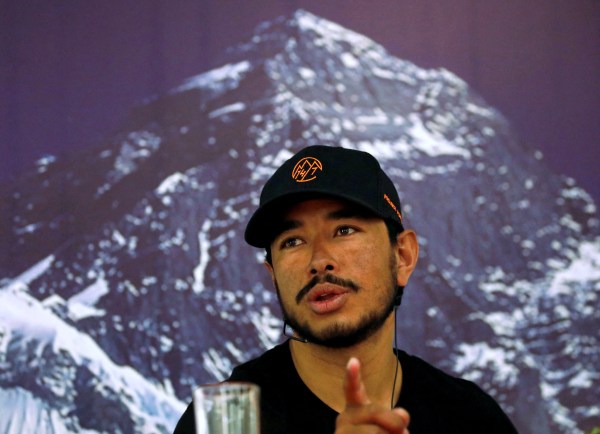 Nirmal Purja, attempting a record to climb fourteen 8000-meter mountain peaks in seven months speaks during a news conference after climbing six mountains including Mt. Everest in Kathmandu, Nepal May 28, 2019. (REUTERS)
What went wrong with the climbers
Ascent to mountains like Broad Peak, one of the highest in the world, depends on terrain and changing weather patterns. The expedition is mostly during summer months. Avalanches are common during climbing expeditions and so are the accidents.
According to Karrar Haidri, vice president of the Alpine Club of Pakistan, the climbers lost contact with their base camp after an avalanche struck Broad Peak while they were attempting to scale the mountain. “The team has been out of communication since Thursday,” Haidri said.
Story continues below this ad
The climbers’ last tracked location at the time of the avalanche was at 6,600 metres (21,653 ft), Chhang Dawa Sherpa, a board director at trekking company Seven Summit Treks told Reuters. They are believed to have “fell down straight from there,” Sherpa said. The climbers swept nearly 1,000 metres downhill.
The Nepalese Ministry of Foreign Affairs said six of the 10 climbers missing in the avalanche were Nepalis. Three sherpa climbers from the country were among the missing.
Stay updated with the latest – Click here to follow us on Instagram
