





Days after Indonesia quake killed 53, another 5.9 earthquake Flores Island

3 min readUpdated: Aug 20, 2026 08:58 AM IST
An earthquake of magnitude 5.9 struck the Flores region of Indonesia on Thursday, the European-Mediterranean Seismological Centre (EMSC) said.
The earthquake occurred at a depth of 10 km (6.2 miles), according to the EMSC.
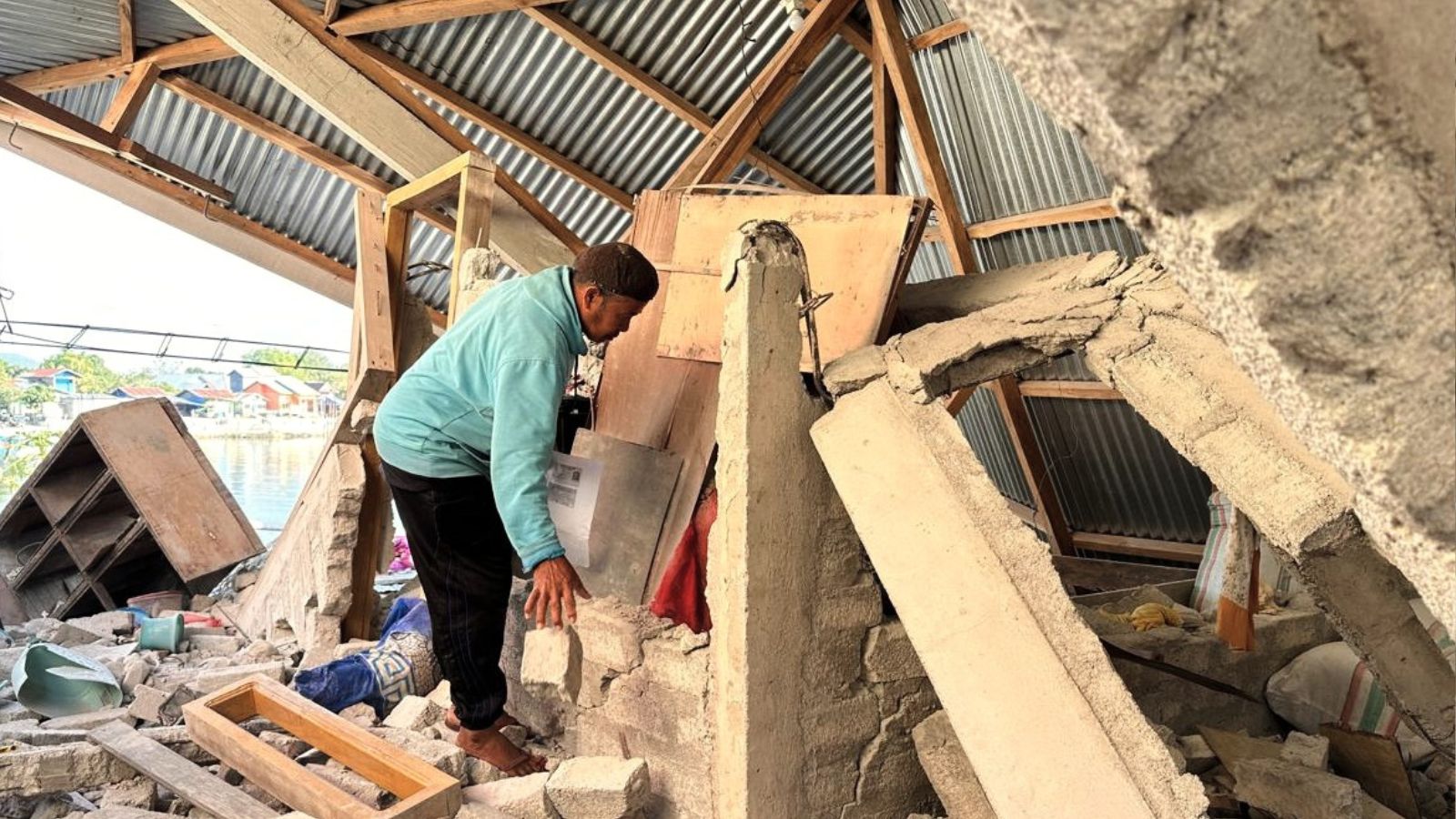
This is the second earthquake that hit Indonesia’s Flores region. Earlier on Monday, August 17, an earthquake of magnitude 5.9, according to Germany’s GFZ Research Centre for Geosciences hit Flores region. The quake hit at a shallow depth of 10 km (6 miles), rattling nerves in a region already reeling from a far more destructive earthquake just two days earlier. The tremor comes as rescue teams on Flores continue digging through landslides and rubble from Saturday’s 7.7-magnitude earthquake, which has now killed at least 53 people.
Over 53 people were killed since last week’s earthquake in the region as rescue teams continued digging through landslides and rubble from Saturday’s 7.7-magnitude earthquake.
M5.7 earthquake near Ruteng, Indonesia — depth 10 km (shallow). A shallow event, typically felt over a wide area of Nusa Tenggara Timur. ⚡
Shallow quakes like this tend to shake more broadly; expect moderate shaking near the epicenter and noticeable shaking across Ruteng and… pic.twitter.com/48VJqEMjNm
— GeoShake | Community Seismic Network (@geoshake_ai) August 20, 2026
Thousands affected in series of earthquakes in Indonesia
More than 900 homes were destroyed and 450 damaged across East Nusa Tenggara province, forcing about 5,000 people into temporary shelters. Officials said 135 people were injured, with at least 241 homes damaged in the Flores region alone. Residents fled in panic when tsunami warnings were issued after the quake, before later being lifted.
Relief workers have distributed rice, ready-to-eat meals, drinking water, blankets and medicine, and emergency shelters have been set up for displaced residents. Authorities say restoring electricity and communications, and delivering aid to remote villages cut off by landslides, remain among the biggest challenges.
Why is Flores so vulnerable to earthquakes?
Indonesia, an archipelago of more than 17,000 islands, sits on the Pacific “Ring of Fire” an arc of seismic faults and volcanoes that makes it one of the most earthquake-prone countries in the world. Flores in particular has a painful history with disaster. A powerful earthquake and tsunami in 1992 killed about 2,500 people on the island. In 2018, a magnitude 7.5 earthquake triggered a tsunami on Sulawesi that killed more than 4,400 people, and in 2004, a magnitude 9.1 quake off Sumatra unleashed a tsunami that killed about 230,000 people across a dozen countries.
Stay updated with the latest – Click here to follow us on Instagram
