


5 min readJul 29, 2026 08:38 PM IST
Pelting rain, chilly conditions and a field of runners from Africa with a podium-finishing history spanning over 50 years — India’s Gulveer Singh was up against the weather, sporting history and a quality field at the Commonwealth Games.
Yet, the 28-year-old from Sirsa in UP’s Aligarh held his nerve, stuck to his race strategy and produced an impressive final burst to win silver, marking India’s first-ever Commonwealth Games medal in the men’s 10,000m with a time of 27 minutes and 49.80 seconds.
Gulveer had, in fact, fallen behind during the race but fought back to snap at the heels of the leading pack before surging forward. Ky Robinson of Australia won gold in 27:48.93, while David Mullarkey of the Isle of Man took bronze in 27:50.28.
The result also ended decades of African dominance. For the first time since 1970, no athlete from the continent finished on the podium, though eight of them were in the 15-man final, including two formidable Kenyans: 2023 World Championship medallist Daniel Ebenyo and 2024 Paris Olympics podium-finisher (5000m) Edwin Kugrat.
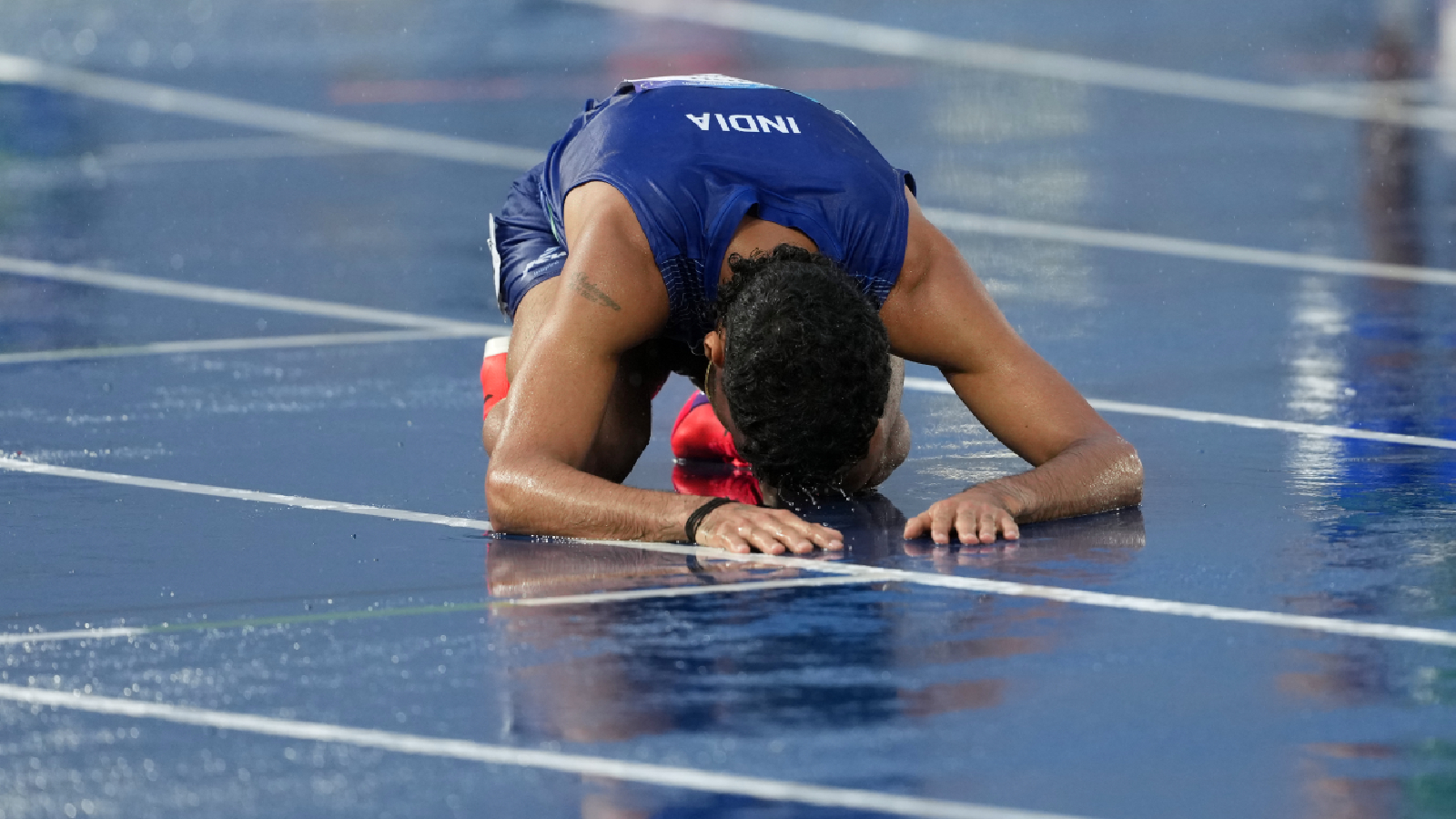 Gulveer Singh, of India, reacts after crossing the finish line to win the silver medal in the men’s 10,000 meters final at the Commonwealth Games in Glasgow, Scotland, Tuesday, July 28, 2026. (AP Photo/Eranga Jayawardena)
But Gulveer was unfazed by reputation. His performance in the rain-soaked conditions, alongside Avinash Sable’s second-place finish in the 3000m steeplechase four years ago in Birmingham — another event once dominated by Kenyans — will be remembered among the finest races by an Indian distance runner.
“The silver means a lot because it is the result of a lot of hard work over the last few years,” Gulveer told The Indian Express from Glasgow.
This wasn’t a flash-in-the-pan performance. Gulveer holds national records in the 10,000m (27:00.22), 3,000m, 5,000m and the 25-km road race, and became the first Indian to run a sub-60-minute half marathon, in New York, this year.
Story continues below this ad
In Glasgow, the downpour made things harder. “We had to be a little careful on the bends because the track was wet. Otherwise, my focus was only on following my race plan and staying relaxed,” Gulveer said.
Gulveer Singh creates history, becoming the first Indian to win a Commonwealth Games medal in the Men’s 10,000m with a brilliant silver medal finish. 👏
Watch the Commonwealth Games Glasgow 2026 LIVE & EXCLUSIVE on Sony Sports Network TV channels & Sony LIV.#SonySportsNetwork… pic.twitter.com/6VIXZysfBJ
— Sony Sports Network (@SonySportsNetwk) July 28, 2026
He started with a moderate average speed of 21.5 km/h, holding that pace for the first 4,000 metres and staying among the top three runners. “In a championship race, position is very important. I didn’t want to lead too early because that would have meant doing extra work, but I also didn’t want to lose contact with the front group,” said Gulveer, a JSW Sports-backed athlete.
After the 4,000-metre mark, as the other runners began making their moves, he slipped back in the pack, dropping to ninth at the 5,600-metre mark. But the moment he lost sight of the leading pack, he sped up to 24.7 km/h. “Whenever I felt the pace changing or the gap opening, I made sure I moved up again. The idea was to stay in a good position and be ready when the race really started in the last few laps,” he said.
With 2,000m to go, Gulveer was in seventh position and getting boxed in on the inside lane. But as an opening appeared with 1.2 km left, he moved up to fourth.
The worry was that he might fade at the business end of the race. In 2025, he had finished ninth in the 5,000-m heats at the World Championships after being in fourth position with a little over two laps to go.
Story continues below this ad
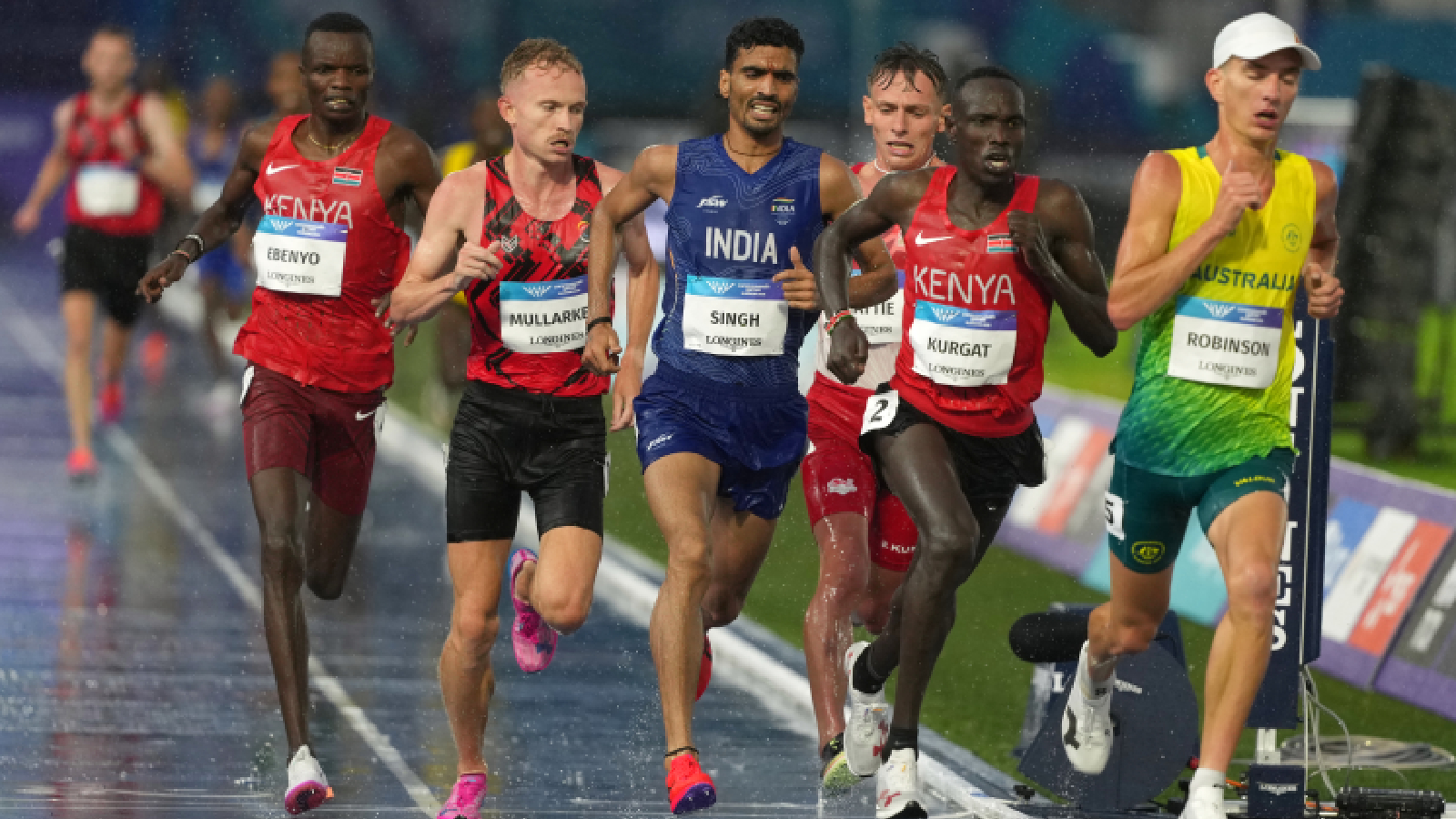 Gulveer Singh, of India, competes in the men’s 10,000 meters final at the Commonwealth Games in Glasgow, Scotland, Tuesday, July 28, 2026. (AP Photo/Eranga Jayawardena)
This time, it was clear he had learnt from that mistake, producing a finishing kick with 200 metres remaining. “By the last 200 metres, I knew it was time to give everything I had left. At that stage, you don’t really think too much. You react. I had saved enough for the finish, and I tried to maintain my form and kept pushing until the line,” Gulveer said.
“When you are racing for a medal, you don’t feel the pain at that moment. You only think about finishing as strongly as possible,” he said.
Hailing from a farming family, Gulveer had wanted to join the Army for a stable job — in Sirsa, nearly 700 men serve in the forces. He started out running on a mud ground near his home, training to pass the Army’s 1.6-km Physical Efficiency Test. Just eight years later, the Naib Subedar and Army Sports Institute runner had etched his name into the annals of India’s distance running history.
