






It was on the final day of the Test in Galle that Niroshan Dickwella walked out to bat, after a frustrating partnership between Dhananjaya de Silva and Sonal Dinusha. It didn’t take long before the Indian fielders started chirping at Dickwella, who himself never shies away from banter. He was drawn into an exchange this time, one that eventually led to him playing a rash cut shot against Prasidh Krishna, at a moment when his side desperately needed to survive the day and draw the Test.
Jaiswal, standing at square leg, asked Dickwella to hit sixes the way he had in the first innings. Dickwella responded, “No requirement. Take me to the IPL, then I’ll hit.” Jaiswal kept the exchange going: “We will. Hit him for a six, I’ll take you to the IPL.” It worked. Immediately after, Dickwella played an unnecessary shot, edging a short ball while trying to cut fiercely, straight to Indian keeper Rishabh Pant.
“So when it comes to banter, there are three dynamics at play. First of all, it’s the nature of the comment. It might be a silly comment, a clever comment or an abusive comment. The second one is the person delivering the comment. And the third one is the batsman that it is directed at. And the interplay of those three is really important,” Paddy Upton, who worked as the Indian team’s mental conditioning and strategic leadership coach, told The Indian Express.
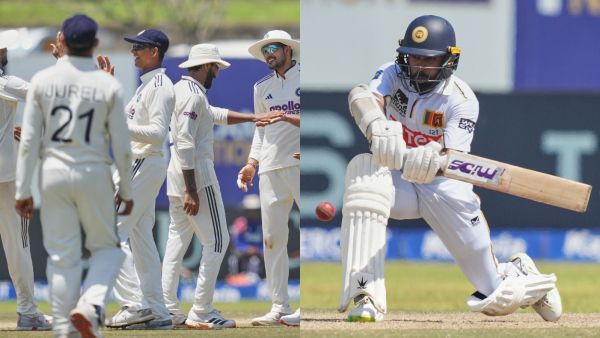 Indian fielders celebrating a wicket on the left and Niroshan Dickwella playing a shot on the right. (AP photo)
Test cricket is the ultimate test of a batter’s concentration and focus. “What a batsman needs to be doing is focusing really intensely on the ball, for about three seconds, just as the bowler is about to approach the umpire,” Upton observed.
The gap between deliveries is when the batsman tries to switch off, while the fielders keep talking.
“Banter generally happens in that period, to see if the fielder can get into the batsman’s head and get them thinking about engaging in that comment, and get the batsman focused on what the person said rather than the ball. So that’s the purpose,” Upton explained. “Obviously, Test cricket is a much longer format; there’s much more time to try and get the batsman focused on sideshows rather than the main show, which is the ball.”
“Sometimes a clever comment can be much better for a batsman who’s an overthinker,” Upton said.
Story continues below this ad
Wise Indian banter
Be it Jaiswal telling Mitchell Starc during the Border-Gavaskar Trophy that “it’s coming too slow,” or Shubman Gill, agitated by Zak Crawley wasting time late in the day on his first tour of England as captain, telling him to “grow some f****g balls,” the new generation of Indian Test players has been upfront about aggressive wordplay.
“Modern-day Indians are more comfortable with banter; youngsters tend to be much more worldly-wise. They’ve been exposed to it largely through social media; they watch a lot of impetuous, cheeky behaviour that has made that more acceptable,” Upton said.
Upton believes that in generations gone by, when players like Sachin Tendulkar, Rahul Dravid and VVS Laxman were in the Indian side, the team gave the opposition too much respect. “There’s also an aspect where, for a long time, Indian players were overly respectful of opponents. They gave, for example, players like the Australians much too much respect,” he said.
He noted that a shift began once former India captain Virat Kohli started giving it back.
Story continues below this ad
“Kohli is probably one of the first to say, actually, hang on a minute, we don’t need to be apologetic, stand down, and play small in front of Australians. We can actually stand toe to toe and give them back exactly what they give out,” Upton recalled.
Banter lovers
While banter has played its fair share of tricks on batters’ minds, some succumbed to it, while others used it as fuel and became better versions of themselves. “Players like Kohli, Faf du Plessis, Shane Watson and Mark Boucher really thrived when they were abused. It’s not clever to abuse them,” Upton said.
Sometimes it isn’t just the fielding side; batsmen initiate conversations too, or keep them going, simply to feel comfortable.
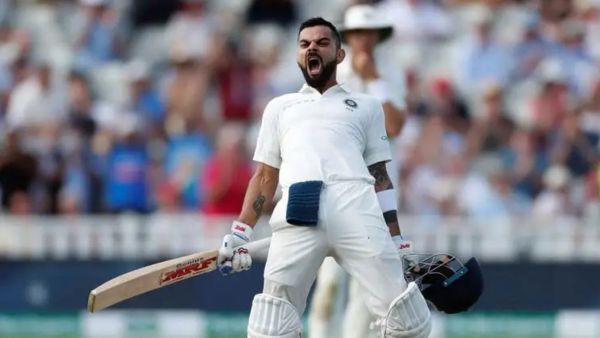 Virat Kohli in action. (FILE photo)
Dickwella was caught in that trap in the second innings, but in the first, he had scored a counter-attacking 80 when his side was in trouble, an innings through which he was seen bantering happily with Pant and fast bowler Mohammed Siraj.
Story continues below this ad
“Some batsmen, when they come out to bat, really like to be talkative. They like to talk to the opponents; they like to be friendly,” Upton observed. “And they do that because they want to feel comfortable at the wicket.”
Upton was firm, though, that players shouldn’t cross the line into abuse. “Very often, people who get involved in abuse, I would call them very immature or of questionable character. So it says more about them than it actually does about the game.”
“A lot of people who get involved in banter don’t realise what they’re saying to the batsman, because you might be able to distract someone in a moment, or maybe not, but that mark against your character, someone who does that, lasts a lifetime. So that’s something I think is very overlooked,” Upton concluded.

Stay updated with the latest sports news across Cricket, Football, Chess, and more. Catch all the action with real-time live cricket score updates and in-depth coverage of ongoing matches.
