






How major oil companies reaped massive profits from the US-Iran conflict


Six months of fighting between the US and Iran have squeezed disruption is the Strait of Hormuz, a narrow shipping channel that once carried roughly one-fifth of the world’s oil and gas. With the conflict shutting down most traffic through this route, global supply tightened sharply.
Brent crude, the international benchmark, climbed from near $70 a barrel to well above $100 through March, April and May, briefly touching $126. The effects reached beyond fuel pumps: petrol rationing hit some countries, government offices in Nepal and Sri Lanka shut amid shortages, and Australia faced sporadic fuel restrictions.
How much did the major players earn?
Exxon Mobil said its second-quarter profit doubled to $14.53 billion, helped by record diesel output. The Texas-based company’s revenue rose 42 per cent to $116.02 billion.
Chevron, based in Houston, saw profit nearly quadruple to $12.07 billion, with revenue up 56 per cent to $70.06 billion.
Story continues below this ad
Six of Europe’s largest oil firms reported combined first-quarter profits of $22 billion, more than 40 per cent higher than the previous year.
Why did profits rise so sharply?
Oil companies do not set crude prices themselves. Prices are shaped by supply, demand, and what traders and refiners are willing to pay. During the quarter, US oil prices swung from $68 to $115 a barrel.
Refining businesses benefited the most, according to Tom Seng, an energy finance academic at Texas Christian University. Firms that also own refineries, such as Exxon and Chevron, were well placed to profit, since refineries convert crude into fuels like petrol, diesel and jet fuel. Chevron’s refining profit was six times higher than the year before, even though it processed and sold less oil.
Rob Thummel, a senior portfolio manager at Tortoise Capital, said the global refining market remains undersupplied, with countries such as Russia and China no longer exporting fuel, leaving firms like Exxon and Chevron to fill the gap. He expects profits in this segment to stay high.
Story continues below this ad
Timothy Fitzgerald, a business economics professor at the University of Tennessee, said not every refinery has had enough crude oil to meet demand since the war began. Refiners with steady oil supply, including many in the US, have gained the most, particularly from diesel and jet fuel, now priced about 41 per cent higher in the US than before the Strait of Hormuz was blocked.
What are critics saying?
Patrick Galey, fossil fuels lead at the non-profit Global Witness, told AP: ‘There are constituencies around the world who are having a very good crisis.’ He argued this is hard to justify given the hardships elsewhere, including power cuts, food shortages and disrupted fertiliser supplies affecting hundreds of millions of people.
In Congress, Democratic lawmakers introduced bills in March to tax major oil producers on profits from 2026 onward, with proceeds redistributed to consumers. Senator Sheldon Whitehouse of Rhode Island, who put forward the Senate version, argued a windfall tax was fairer than cutting children’s food programmes. He also pointed to record petrol prices hitting families who depend on driving for work.
The proposed tax would apply to companies that produced or imported at least 300,000 barrels of oil a day in 2025. The UK and other European nations brought in similar windfall taxes on fossil fuel firms in 2022, with the UK extending its version to 2030.
Story continues below this ad
Exxon’s chief executive, Darren Woods, pushed back against such measures on a call with investors, saying past windfall taxes had already led the company to cancel planned investments in Europe.
Are all oil and gas firms benefiting equally?
Fitzgerald said outcomes vary widely depending on a company’s position. US producers and international firms with output outside the Gulf are selling at higher prices and gaining. But Middle Eastern companies struggling to export oil and gas, or dealing with damaged infrastructure, face falling revenue alongside higher transport and security costs.
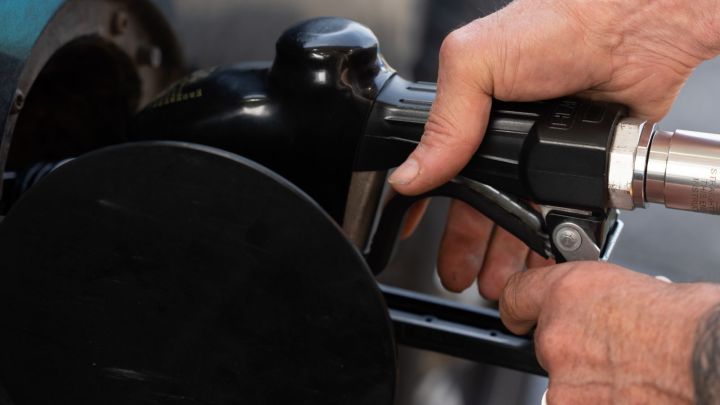
Consumers, meanwhile, are absorbing the impact through higher fuel costs and pricier everyday goods, since most products carry some embedded energy cost, according to Fitzgerald.
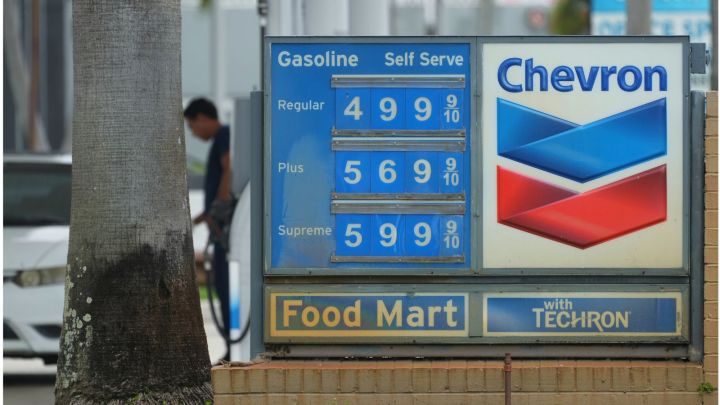
The average US price for a gallon of regular petrol, which was below $3 before US and Israeli strikes on Iran began, reached $4.11 on Friday, about $1 higher than the same time last year.
(With inputs from Associated Press)
