








6 min readAug 14, 2026 07:13 PM IST
The Galle weather in August is unpredictable. It is usually warm and humid like most parts of Sri Lanka. But in the southern coast with the monsoon winding up, showers can show up impromptu. Just like the weather, the strip at the picturesque venue overlooking the Galle Fort can be equally tough to predict, particularly during the second half of a Test. It can create illusions in batsmen’s mind, its notorious invariable bounce never makes batsmen feel completely comfortable.
Ajantha Mendis, the mystery spin OG, was eagerly awaiting this showdown as far back in February. “They may well come very well prepared. Because, if New Zealand and South Africa spinners can do it, then Sri Lanka spinners can definitely cause more problems,” he had told The Indian Express.
On Saturday, when India take the field for the first Test, more than their opponents, their biggest enemy would be the conditions. Against an injury-depleted batting line-up that may struggle to put up a commanding score against a strong India attack, there are enough reasons to be optimistic for an Indian fan. But bring the conditions into equation and the vulnerabilities of Indian batsmen’s against tweakers in spin-friendly pitches, where the turn and the bounce is hard to predict, they are staring at a familiar ghost they wouldn’t want to frequent.
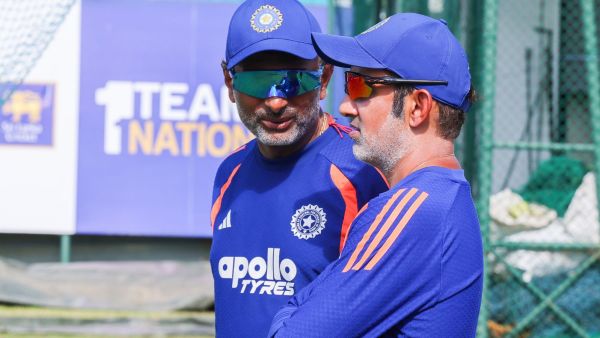 Gautam Gambhir Head Coach of India and Sitanshu Kotak batting Coach of India during a training session at the Galle International Stadium, Galle, Sri Lanka on August 14, 2026.
Photo by Pankaj Nangia / CREIMAS for BCCI
The last time India visited these shores for a Test series, they blanked the hosts 3-0. But it feels like a different age. They didn’t have the best of batsmen to take down the hosts’ spinners, yet their collective calibre was such that Sri Lanka couldn’t make a match out of the series.
This time, the batting group, comprising mostly of the future, isn’t a shadow of what Sri Lankans are used to witnessing. In the island nation across Palk Strait, it is still a common sight to find old timers regaling about the batsmanship of Sunil Gavaskar and Mohammad Azharuddin against spinners over a malt or arrack. At shacks or clubs, they have idolised and groomed batsmen who have painted their own success stories.
An Indian team landing in Sri Lanka usually generates interest. This time, though, the story is a little different. With the likes of Virat Kohli, Rohit Sharma, Cheteshwar Pujara and Ajinkya Rahane moving on, the new crop has struggled to make runs in their own backyard. If the whitewash at the hands of New Zealand in 2024 came as a harsh reality, the blanking by South Africa in 2025 felt like the new normal. Against two teams with spinners who provide exceptional control and stick largely to basics, Indian batsmen didn’t have any answers. They simply wilted under pressure, sucked into the illusion of demons lurking around, when there was actually none.
Eschewing mistakes
At Galle, a predominantly red-soil surface, the spinners will thrive on bounce. As part of their preparations, India’s batting group has been working hard to not repeat the mistakes they committed against New Zealand and South Africa. With batsmen being tentative to employ sweep, and not applying pressure on the spinners by use the feet to come down the track, they ended up in a trap. If they repeat it here, Sri Lanka spinners would be ready to pounce. “You talk about sweep, but on a red-soil pitch like Galle it can be hard to control with the bounce. If you sweep, you have to pick the right deliveries, not to length deliveries because you can end up top-edging,” former India batting coach Robin Singh said.
Story continues below this ad
Those are conditions India routinely confronts at home, in particular in Mumbai and Chennai or in certain pockets in the west. India captain Shubman Gill struck the parallels. “The big similarity is spinners play a huge role. The spinners and fast bowlers, when the bowl gets old, they play a huge role,” he said.
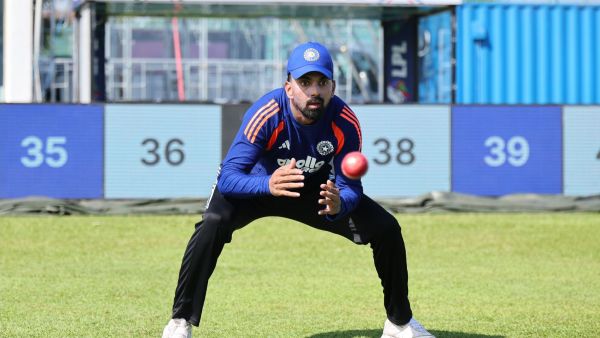 KL Rahul of India during a training session at the Galle International Stadium, Galle, Sri Lanka on August 14, 2026. Photo by Pankaj Nangia / CREIMAS for BCCI
“The differences (of what) we have seen here in the matches that were played recently, is that there is a good bit of bounce on the wicket. I would say it is similar to playing on a red soil wicket. Here, the spinners get good bounce. There are a lot of dismissals, caught in the slips or the close-in fielders, who play a huge role here with that bounce.”
As Mendis said, Sri Lanka’s spinners led by left-arm spinner Prabath Jayasuriya would look to create doubts in the minds of batsmen and make them tentative. When they are tentative, India’s batsmen have shown a tendency to get into a shell, thus playing into the hands of the spinners.
Adding more pressure are the uncertain spots in the batting line-up and those striving to fix it.Devdutt Padikkal faces a litmus test at No 3, while the likes of Rishabh Pant and Dhruv Jurel are out to prove a point or two. If it rains, then there would be help for seamers. If the sun is harsh, the pitch can break open in no time. The word around is that batsmen can breathe easy for the first two days. So, India’s challenge would be to bat big in the first innings, failing which they would be staring at uncertainty. Team for team, India may definitely start favourites, but their biggest opponent would be themselves.
