





Iran, Oman close in on Strait of Hormuz deal: Why US disputes proposed ‘service fee’ plan

5 min readUpdated: Aug 4, 2026 02:30 PM IST
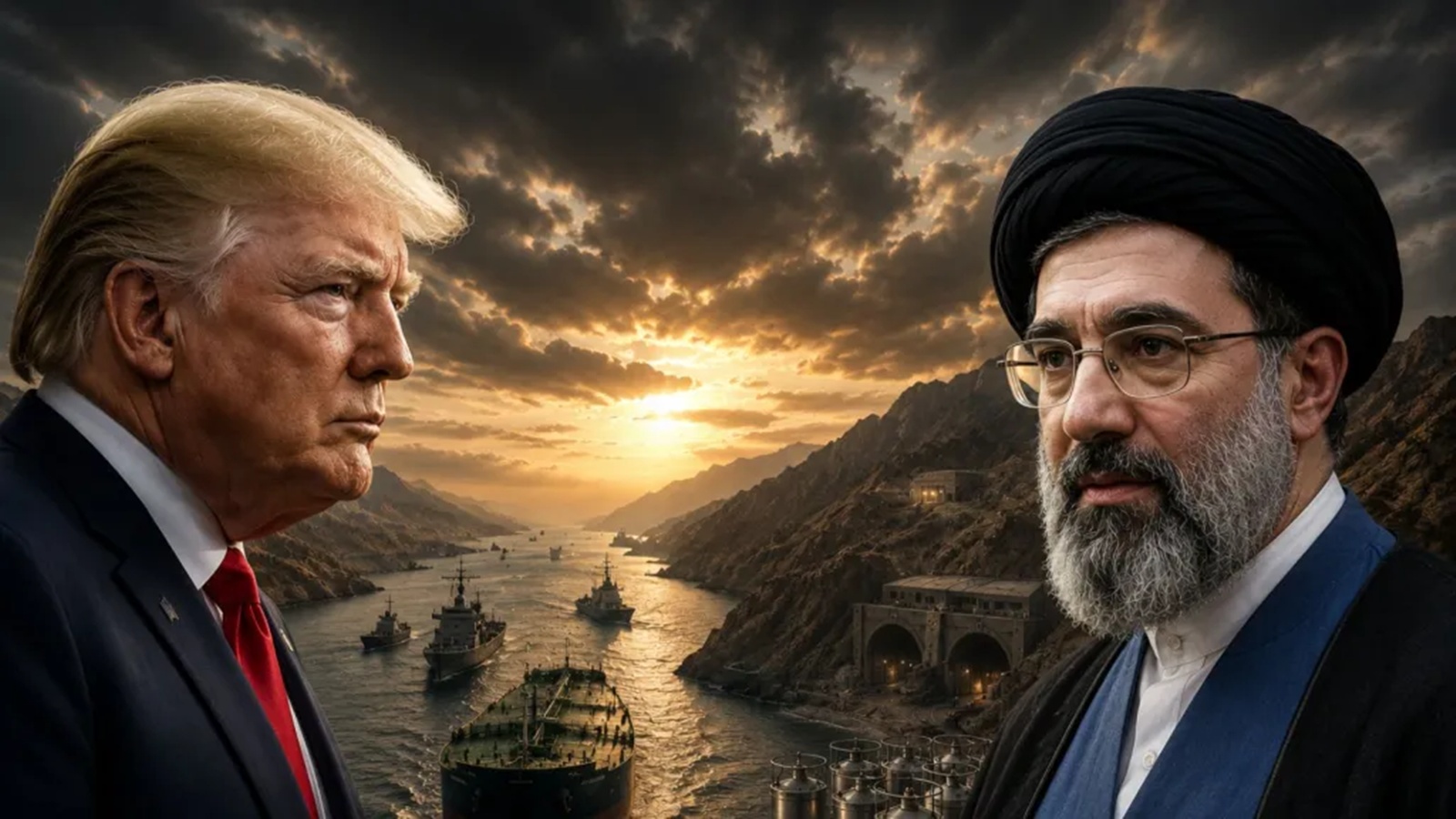
Iran and Oman are reportedly negotiating an agreement to reopen commercial shipping through the Strait of Hormuz that could formally acknowledge Tehran’s role in managing one of the world’s most critical maritime chokepoints, even as the United States disputes key elements of the proposed arrangement and insists Iran will not control international navigation.
The emerging negotiations have exposed a widening gap between Washington and Tehran over the future of the strategic waterway, through which around one-fifth of global oil and natural gas shipments passed before the conflict disrupted maritime traffic. While US President Donald Trump has portrayed the talks as part of a broader diplomatic effort to end months of fighting, Iranian officials insist their discussions are with Oman, not the United States, and are focused solely on restoring safe navigation through the Strait of Hormuz.
The New York Times reported that Iranian and Omani officials are closing in on a framework that would create separate shipping lanes, with inbound vessels to the Persian Gulf travelling through a channel controlled by Iran and outbound traffic using a route closer to Oman. Iranian officials quoted by NYT said the proposal includes a “service fee”, rather than a toll, to cover environmental protection, security and staffing, with revenue shared equally between Iran and Oman.
However, a US official familiar with the negotiations rejected that account, telling the publication that any temporary navigation arrangements would not require Iranian permission or involve tolls or fees. According to the official, any revised shipping routes would be temporary and would preserve freedom of navigation.
The reported differences reflect broader disagreements over what the negotiations are intended to achieve.
Trump says talks are underway; Iran disagrees
Speaking at the White House on Monday, Trump said the United States and Iran had resumed discussions and suggested an agreement could be reached quickly.
“They’re going to go quickly one way or the other. It’s not very complex,” Trump said, adding that the Strait of Hormuz could reopen “literally by tomorrow”. He also described reopening the strait as the “first phase”, with negotiations over Iran’s nuclear programme expected to follow.
Trump on Iran:
Talks will go quickly, one way or the other. It’s not very complex.
We are talking about opening the strait tomorrow, completely open.
Then we will talk about the nuclear capacity of Iran. pic.twitter.com/jHJTsdxK3S
— Clash Report (@clashreport) August 3, 2026
Story continues below this ad
But Iran has publicly disputed Trump’s characterisation. News agency Associated Press reported that Iranian Foreign Ministry spokesperson Esmail Baghaei said Tehran is not negotiating directly with Washington. Instead, he said Iran’s discussions are only with Oman and are limited to establishing a temporary route for safe navigation through the strait.
Trump responded on his Truth Social platform by accusing Iranian leaders of sending contradictory signals.
“Iranian Leadership is unbelievably duplicitous,” he wrote, insisting discussions with Tehran were taking place despite Iran’s public denials.
.
World · Middle East · Explainer
Iran–Oman Strait deal: what’s on the table?
Mediated by Oman, Iran is negotiating a phased reopening of the Strait of Hormuz. The sides are still exchanging proposals — and Iran and the US disagree sharply over control, fees and navigation.
.Developing · proposal, not a final deal
What Iran and the US disagree on
Iran’s position
US position
Shipping lanes
Inbound route through Iranian waters
No Iranian control of the lanes
Fees
A per-vessel “service fee” (shared with Oman, per Tehran)
No mandatory tolls or fees
Navigation
Iranian oversight of transit
Freedom of navigation
Reopening
Tied to security & sanctions concerns
Immediate, unconditional reopening
The talks are Iran–Oman; the US is kept informed but is not directly involved, and Iran says it has no plans to negotiate with Washington. Iran rejected Oman’s plan to split the lanes 50/50 and countered for more control. Oman proposes “voluntary” fees (modelled on the Strait of Malacca); the US and Oman oppose mandatory tolls.
One of the world’s most vital waterways
Iran
Oman · UAE
← Persian Gulf
Gulf of Oman →
.
.
.
Inbound (proposed: Iran side)
Outbound (proposed: Oman side)
.
.
.
.
~20%
of the world’s oil & LNG passed through the Strait before the war — about a fifth of global supply
.Connects the Persian Gulf to the Gulf of Oman and the Arabian Sea.
.The only sea route out for Gulf oil exporters — Saudi Arabia, the UAE, Qatar, Kuwait, Iraq and Iran.
.A vital route for Asia, including India, Japan, China and South Korea.
Lanes shown are the proposed corridors under negotiation, not an agreed layout; schematic, not to scale.
From war to negotiations
.
Late Feb 2026 — US–Israeli strikes on Iran begin; the strait becomes a flashpoint.
.
Iran fires on shipping; traffic through the Strait of Hormuz is disrupted.
.
June — an initial US–Iran deal collapses in early July after Iran fires on ships using an unapproved route.
.
Oman mediation steps up with a Gulf-backed plan; Iran and Oman exchange counter-proposals.
.
Aug 1 — Trump pauses planned new strikes, citing the “parameters of a deal.”
.
Now — reports say the sides are nearing a phased reopening, but key terms remain unresolved.
Timeline compiled from Al Jazeera, Reuters, The National and NYT reporting; dates approximate.
Who wants what
Iran
Reopen shippingRetain strategic leverageA service feeSanctions relief
United States
Freedom of navigationNo Iranian controlOpen shipping lanesNuclear track
Oman · mediator
Safe navigationVoluntary feesRevenue sharing (per Iranian officials)
Positions as stated publicly and via mediators; the “revenue sharing” framing is attributed to Iranian officials and disputed by Washington.
Why Indians should watch the Strait
OIL
Crude oil imports
₹
Fuel prices
SHIP
Shipping & insurance costs
TRADE
Gulf trade flows
CPI
Inflation risk
GAS
Energy security
India imports a large share of its crude and LNG via Hormuz, so disruption there can lift pump prices, freight and insurance rates, and feed into inflation.
Sources: Al Jazeera · Reuters · The New York Times · The National · Middle East Monitor · Jerusalem Post · i24News · statements by Iranian and US officials. A developing, contested negotiation; terms are proposed and reconfirm against the latest wire before publish.
.
What Iran wants
According to the NYT, Iranian officials say the strait would remain closed until two conditions are met: the United States lifts its naval blockade on Iranian ports in the Persian Gulf, and both countries return to the framework outlined in the Islamabad memorandum of understanding.
Story continues below this ad
Iran also reportedly sees the proposed arrangement as a way to formalise strategic leverage over the waterway.
Ali Vaez, Iran project director at the International Crisis Group, told the NYT that Tehran considers continued influence over the Strait of Hormuz one of its few strategic gains from the war.
“Whatever solution leaves Iran in control of the strait will be a very tough sell for Trump but there is also no military solution to remove Iran’s control of the strait,” Vaez said. “Trump’s options are between an unwinnable war and an unpalatable peace.”
US concerns over freedom of navigation
The reported arrangement appears to conflict with repeated statements by US Secretary of State Marco Rubio, who has argued that no country should be allowed to exercise control over an international shipping lane.
Story continues below this ad
Rubio has warned that allowing any nation to control access to the Strait of Hormuz or charge vessels for passage would create a dangerous precedent for global trade and undermine the principle of freedom of navigation.
Fresh security concerns
Even as diplomatic discussions continue, shipping risks remain high.
The AP report said the United Kingdom Maritime Trade Operations (UKMTO) said a cargo ship reported being struck by an unidentified projectile overnight while sailing northeast of Oman’s Musandam Peninsula near the Strait of Hormuz. The agency did not immediately identify the vessel or report casualties.
The incident underscores continuing security risks in the waterway despite renewed diplomatic efforts.
Story continues below this ad
Why it matters to India
The Strait of Hormuz is among the world’s most important energy chokepoints, handling roughly a fifth of global oil and gas shipments before the conflict disrupted traffic. India imports a significant share of its crude oil from Gulf producers, making any long-term arrangement governing navigation through the strait strategically important for its energy security, shipping costs and trade.
(With inputs from agencies)
Stay updated with the latest – Click here to follow us on Instagram
