

Iran War News Live Updates: Microsoft, Google, Apple among 18 US cos to be attacked from April 1, says Iran’s Revolutionary Guards

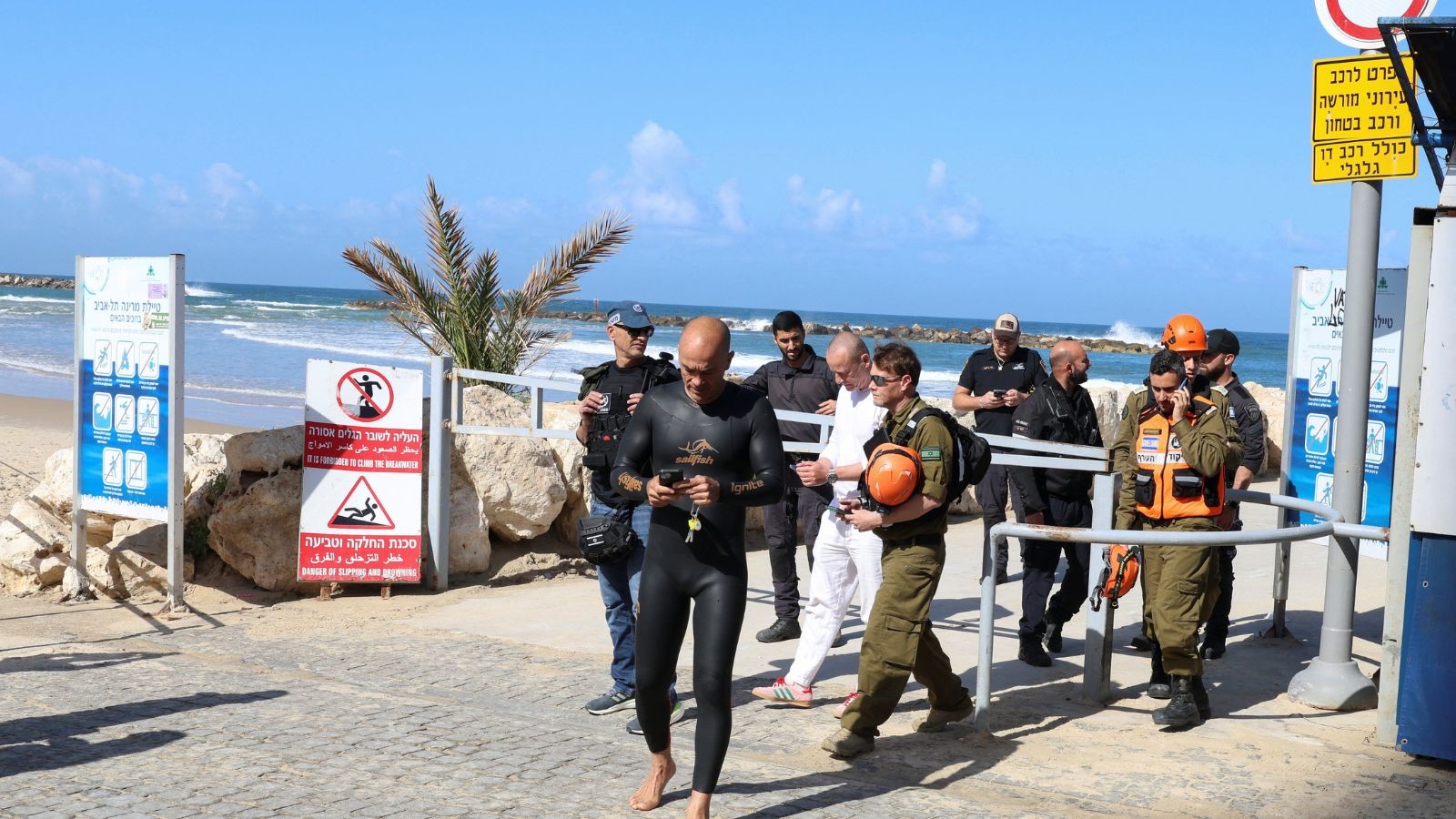
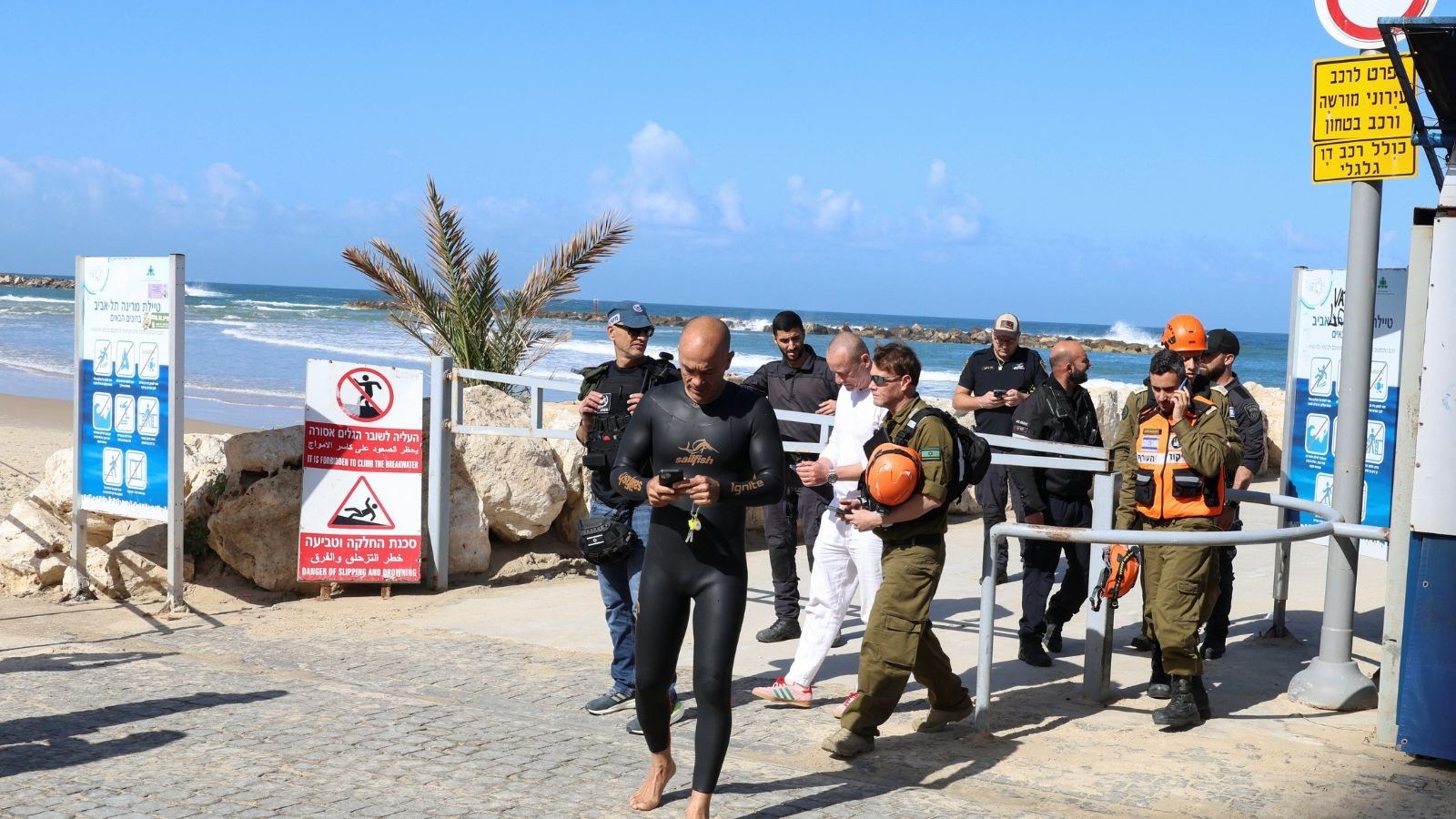 Emergency personnel work at the site where damage was caused following the launch of barrages of Iranian missiles towards Israel March 31, 2026. (REUTERS)
US-Israel-Iran War News Live Updates: Iran’s Revolutionary Guards said on Tuesday they will target US companies in the region as of April 1 in retaliation for attacks on Iran, state media reported, according to Reuters. The 18 companies listed in the IRGC’s threat included Microsoft, Google, Apple, Intel, IBM, Tesla and Boeing. Meanwhile, US President Donald Trump on Tuesday said US planes with military supplies for Israel are not being allowed to use the French airspace. He also said countries, including the United Kingdom, should “start learning how to fight for” themselves and get their own fuel. He added that the US won’t be there to help anymore.
Meanwhile, as the US-Israel war on Iran entered its second month, American forces struck a major ammunition depot in Isfahan using 2,000-pound bunker-buster bombs, according to officials cited by The Wall Street Journal, while regional tensions escalated with fresh strikes, tanker attacks and rising global economic concerns, Reuters reported.
Story continues below this ad
The strike in Isfahan, a key Iranian military hub, reportedly triggered secondary explosions, even as Tehran signalled it viewed recent US peace proposals as “unrealistic”. The developments come amid continued exchanges of fire between Iran and Israel and growing fears over energy security linked to the Strait of Hormuz.
What Trump said: US President Donald Trump said Washington would target Iran’s critical infrastructure if talks fail. “If they don’t make a deal… we will destroy their energy sites,” he said, adding that the US could hit power plants, oil wells and “possibly” water desalination facilities.
Trump also claimed “serious” talks were underway and confirmed communication with Iranian parliamentary speaker Mohammad Bagher Ghalibaf, even as Iran denied direct negotiations. He has set a 6 April deadline for a deal and warned of further strikes on sites the US has so far avoided.
US Arsenal
Four bombs, one mission: defeat what’s buried
The US fields a tiered family of penetrating munitions — from tactical strikes on reinforced bunkers to the GBU-57 MOP, the largest conventional bomb in the US arsenal at 30,000 lbs, designed for the most heavily fortified underground sites.
GBU-28 “Deep Throat” — ~5,000 lbs
Tactical strikes on reinforced concrete and deep earth. Delivered by F-15E and B-2. Original casing machined from surplus 8-inch howitzer barrels.
GBU-72 A5K — ~5,000 lbs
Modern successor to the GBU-28 with advanced “smart” fuzing. Delivered by F-15E.
GBU-57 MOP — ~30,000 lbs
“Massive Ordnance Penetrator.” Reserved for the most heavily fortified sites. Only deliverable by B-2 Spirit and B-21 Raider stealth bombers.
B61-11 — Variable yield (nuclear)
Nuclear earth-penetrator for destroying entire underground complexes. Delivered by B-2.
4
Primary variants in US inventory
30K
lbs — weight of GBU-57 MOP
B-21
Raider — newest MOP platform
The Science
Not an explosion on impact — a massive nail driven into a wall
Bunker busters don’t detonate on contact. They rely on kinetic energy and a hardened body to physically drill through soil, rock, and reinforced concrete before the explosive fires.
Stage 1 — Casing & Material
Material
Eglin Steel alloy or depleted uranium — body that won’t shatter on impact
Shape
Long and thin (high sectional density) — all weight focused onto a tiny tip area
Stage 2 — Guidance & Velocity
Near-perfect impact angle required
GPS and laser guidance (JDAM/Paveway) direct the bomb to a soft spot — ventilation shaft or entrance — at close to 90 degrees. A hit at angle fails to penetrate.
Supersonic terminal velocity
Gravity-fed from high altitude to reach supersonic speed. Some variants use rocket boosters to add extra velocity just before impact.
The Brain
If the bomb explodes the moment it hits the roof, it fails
The Hard Target Smart Fuze (HTSF) uses accelerometers and a microprocessor to count layers as the bomb penetrates — detecting the difference between soil, concrete, and empty space — firing only when it senses the target room.
Accelerometer reads deceleration signature
Soil, rock, and concrete each produce a distinct deceleration profile. The microprocessor logs each material transition as the bomb bores through.
Programmed to skip floors
The fuze can be set to ignore the first three floors of a building and only detonate on a specified layer — for instance, the fourth void below ground level.
Void sensing — the trigger
The fuze detects the abrupt absence of deceleration — the moment the bomb enters empty air inside the bunker room. That void is the detonation signal.
HTSF
Hard Target Smart Fuze — standard on modern variants
3+
Distinct material layers the fuze can count and skip
Detonation
The camouflet: why underground explosions are far more lethal
When a bunker buster detonates deep underground, energy that would escape upward into the atmosphere has nowhere to go. It bounces off surrounding rock repeatedly, crushing the structure from within. This underground cavity effect is called a camouflet.
Standard vs Thermobaric Variant
Standard HE
Contained shockwave collapses walls and ceiling onto occupants
Thermobaric
Fuel cloud fills tunnels, ignites — pressure wave travels around corners, removes all oxygen
Why Depth Multiplies Lethality
Surface burst: energy escapes upward
A surface explosion dissipates most of its energy into the atmosphere. Structural damage is concentrated near the impact point only.
Underground burst: energy is trapped and amplified
The same yield underground creates a camouflet — the shockwave reflects off surrounding rock repeatedly. Bunker walls and ceiling are crushed inward.
Sources: US Air Force · Federation of American Scientists · GlobalSecurity.org
5 key developments | Day 32
- Netanyahu on war progress: Israeli Prime Minister Benjamin Netanyahu said the conflict is “beyond the halfway point” in terms of military objectives, clarifying it does not refer to timeline.
- Tanker attack near Dubai: A Kuwait-owned oil tanker carrying around 2 million barrels caught fire after what officials described as an Iranian drone strike. Authorities said the blaze was contained and all 24 crew were safe, though risks of an oil spill remain.
- Strikes, outages in Iran and Israel: Blasts were reported in Tehran with temporary power cuts in parts of the capital, while Iranian missiles targeted central Israel without immediate reports of casualties.
- Global economic impact: Oil prices surged amid supply fears, with US fuel prices crossing $4 per gallon for the first time in over three years, while global markets showed volatility.
- Rising regional tensions: Three UN peacekeepers were killed in southern Lebanon, and thousands of US troops from the 82nd Airborne Division have begun arriving in the Middle East, expanding Washington’s military options.
Meanwhile, US Secretary of State Marco Rubio reiterated that Washington “prefers diplomacy” but warned of “real consequences” if Iran continues actions such as restricting access through the Strait of Hormuz.
Also Read:
The Indian Express Global Desk remains committed to rigorous verification. Follow our live blog below for real-time tracking of Operation Epic Fury, regional airspace status, and diplomatic efforts to contain the escalation.
Live Updates
Stay updated with the latest – Click here to follow us on Instagram
© IE Online Media Services Pvt Ltd
