





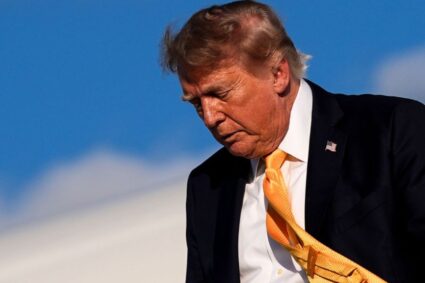
Trump threatens 50% tariffs on Canada, Ottawa’s ‘dollar for dollar’ retaliation


Canada announced retaliatory tariffs against the United States on Tuesday, with retaliatory tariffs on about $20 billion worth of American goods, including steel, dairy products, appliances and farm equipment, in a sharp escalation of a Donald Trump intensified the dispute on Monday, telling Canadian leaders to “fall in line” or face consequences “far WORSE” than the tariffs already imposed. He also threatened new 50 per cent tariffs on Canadian vehicles, auto parts and steel, prompting Carney to accuse Washington of trying to subordinate Canada and dismantle major Canadian industries.
The latest flashpoint follows Carney’s decision late on Friday to walk away from trade talks, just before a US deadline that would have added a 50 per cent levy on nearly $20bn of Canadian imports. Trump has said the higher 50 per cent rate on Canadian cars, trucks and auto parts will take effect from 1st January, up from the current 25 per cent.
Canada be treated as a ‘subsidiary’?
Carney accused Washington of trying to subordinate Canada and said US trade demands had confirmed Canada’s fears that the United States was seeking to dismantle major Canadian industries. “An attitude at the negotiation table that Canada is a subsidiary of the United States” is “not something we’re going to accept,” Carney said.
He was even blunter in French, saying, “We learned during the negotiations that the Americans want to destroy our major industries, including autos, steel and aluminium. That was one of the main reasons we said no. It was a bad deal.” He also questioned how dependable the US is as a partner these days, saying Canada is finding steadier friends almost everywhere else in the world, except in the US and Russia. Carney has said Canada is ready to resume negotiations if the US comes back with a fairer approach.
Story continues below this ad
Trump warned that further tariffs would hit Canada’s car industry from next year, accusing the country of unfair treatment of American farmers on social media.
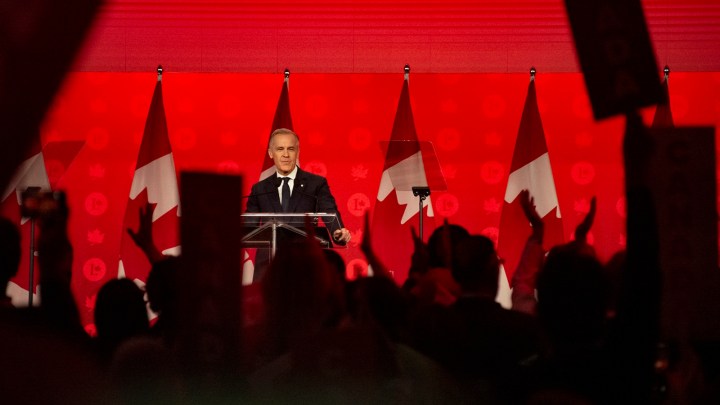
Carney said the US proposals on autos would gradually dismantle Canadian production, and described the Canada-US car partnership as follows,“This is the most successful automotive partnership in history.”
Canadian officials say the US brought last-minute demands to the table that were unacceptable, including a clause that would have limited which countries Canada could sign trade deals with. US officials counter that it was Canada that introduced late changes, with US Trade Representative Jamieson Greer saying simply that Canada “wanted more.”
How did Doug Ford respond to Trump?
Ontario Premier Doug Ford, whose province is home to Canada’s car manufacturing industry, hit back hard. Asked about Trump’s tariffs and threats, Ford told the US president, “Kiss my a**.”
Story continues below this ad
He also suggested Canada should charge the US more for oil, gas, electricity and critical minerals, and said he planned to speak with Carney about ways to fight back. Trump responded on his Truth Social platform by accusing Ford of bluster.
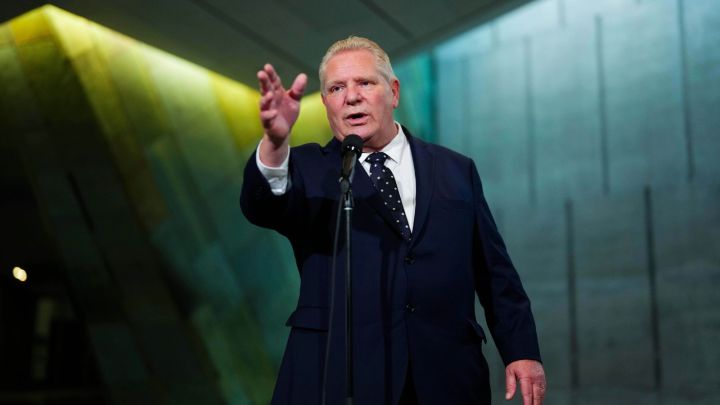
Ford also struck a defiant note in an interview with the Associated Press (AP), saying Trump had underestimated Canadians’ willingness to bear economic pain rather than give in. “We’re all in,” Ford said. “Up here, we’re at a fever pitch; everyone’s in for an economic war. They know they’re going to have to sacrifice.” After Trump called him “the less charismatic, intelligent, and overall unimpressive brother of the late, great, Rob Ford” and again referred to the prime minister as “Governor Carney”, Ford replied, “If you think an insult from him hurts me? Well, bring it on, buddy, I’m ready.”
He said Ontario powers around 1.5 million homes and businesses across the border, and that nothing is off the table. This isn’t the first time he’s used electricity as leverage Ontario previously added a surcharge on power sold to Michigan, Minnesota and New York during an earlier stage of the dispute.
Why has the car industry become the main battleground?
The auto sector now sits at the heart of the fight. Ford accused Trump of trying to hollow out Canadian industry entirely rather than negotiate a fairer deal, claiming the real aim is to shift production south of the border.
Story continues below this ad
Ontario is home to Canada’s largest vehicle plants, many tightly linked to factories in Michigan and other US states, with parts crossing the border several times during production. Automakers including Ford, General Motors and Stellantis run major assembly plants there, supporting tens of thousands of jobs through the wider supply chain.
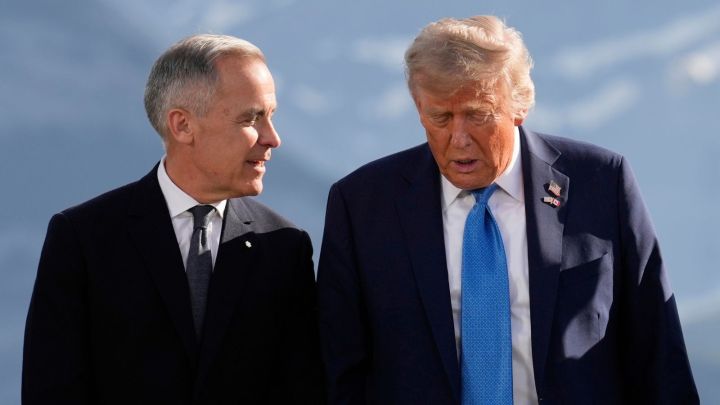
US Trade Representative Jamieson Greer argued that Canada’s car industry only exists because of a 1960s trade pact that gave Canada access to the US market in exchange for building vehicles locally.
How is Canada trying to reduce its reliance on the US?
Alongside the tariff fight, Carney has been pushing to diversify Canada’s trade, which has historically depended heavily on the US. He announced C$11bn (about $7.95bn) in funding to build six icebreakers at a Quebec shipyard for the Canadian Coast Guard, replacing its ageing fleet. The ships are meant to help open winter shipping routes through Canada’s northern and Atlantic waters.
Canada remains a major energy supplier to the US, accounting for around 60% of total US crude oil imports and close to all of its natural gas imports, according to Canadian government figures.
Story continues below this ad
Ford disclosed that he had opposed an earlier draft agreement Carney had been considering, and that he was not prepared to let US-made liquor back onto Ontario shop shelves as part of any deal.
He said he understood Washington had also pushed for terms limiting Canada’s ability to negotiate trade deals with other countries without US approval a demand Carney has called unacceptable and a matter of Canadian sovereignty.
Carney said the dispute has also exposed a deeper divide over language and culture, with protections for French and Canadian culture seen by Washington as trade irritants, but treated in Canada as fundamental rights.
The fight is also raising bigger questions about the future of USMCA, the trade pact linking Canada, the US and Mexico, which underpins around $1.6 trillion in North American trade. Canada and Mexico both want the pact extended for another 16 years, but the US has said it won’t renew it in its current form. Analysts at Oxford Economics have warned that the risk of USMCA unravelling has grown, which could push Canada into recession and onto a permanently lower growth path.
With Canada preparing fresh tariffs and the US threatening more duties, the dispute has widened well beyond trade into questions of industry, sovereignty and political resolve.
