

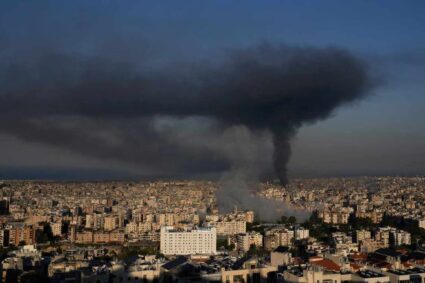



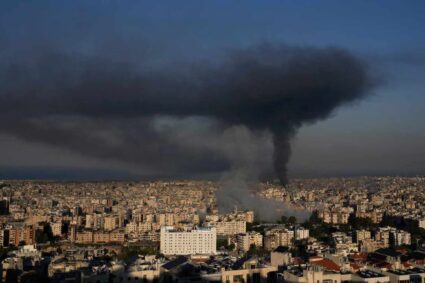
US-Iran war news LIVE updates: Iran denies unfrozen assets will be used for US purchases

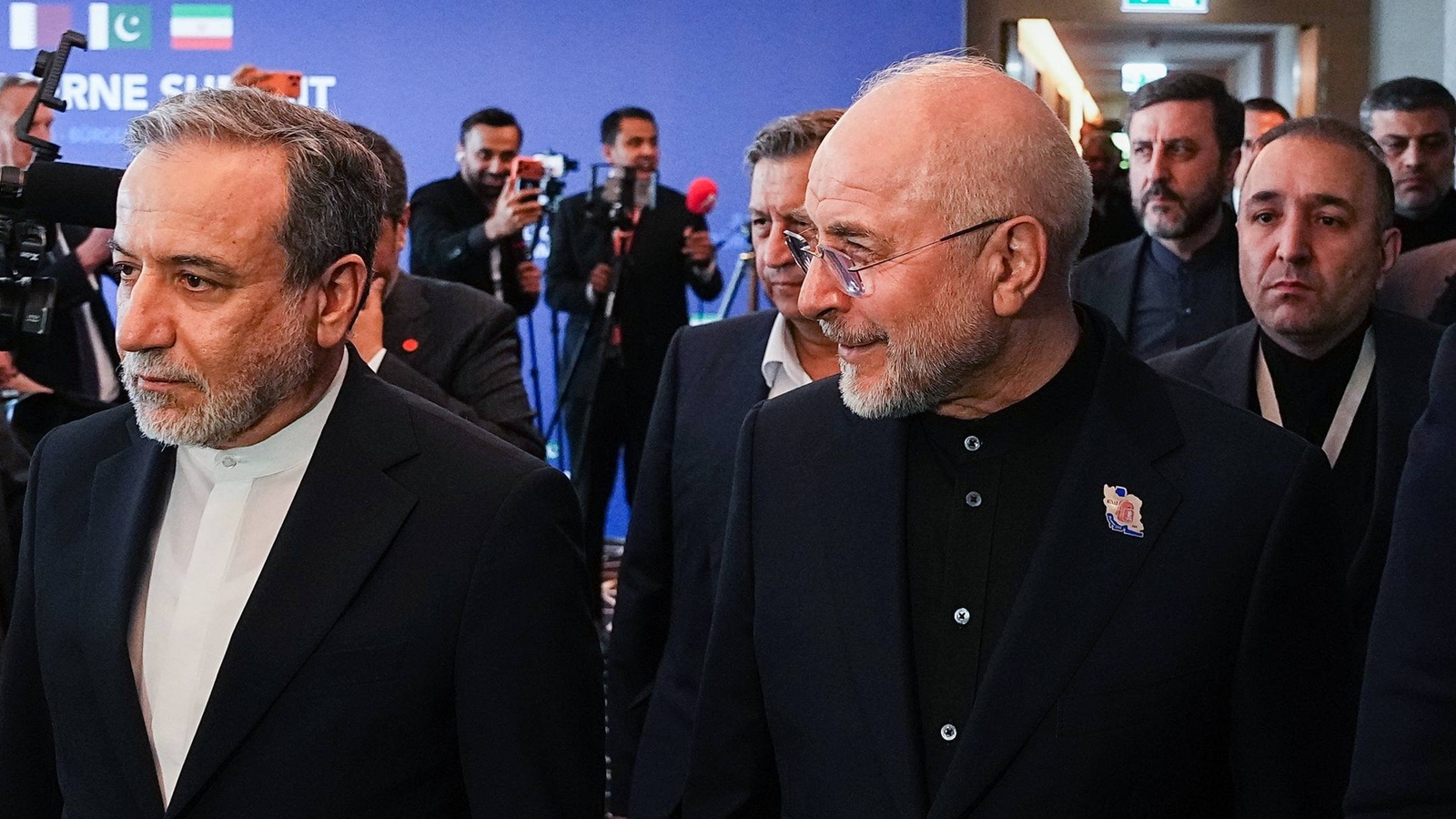
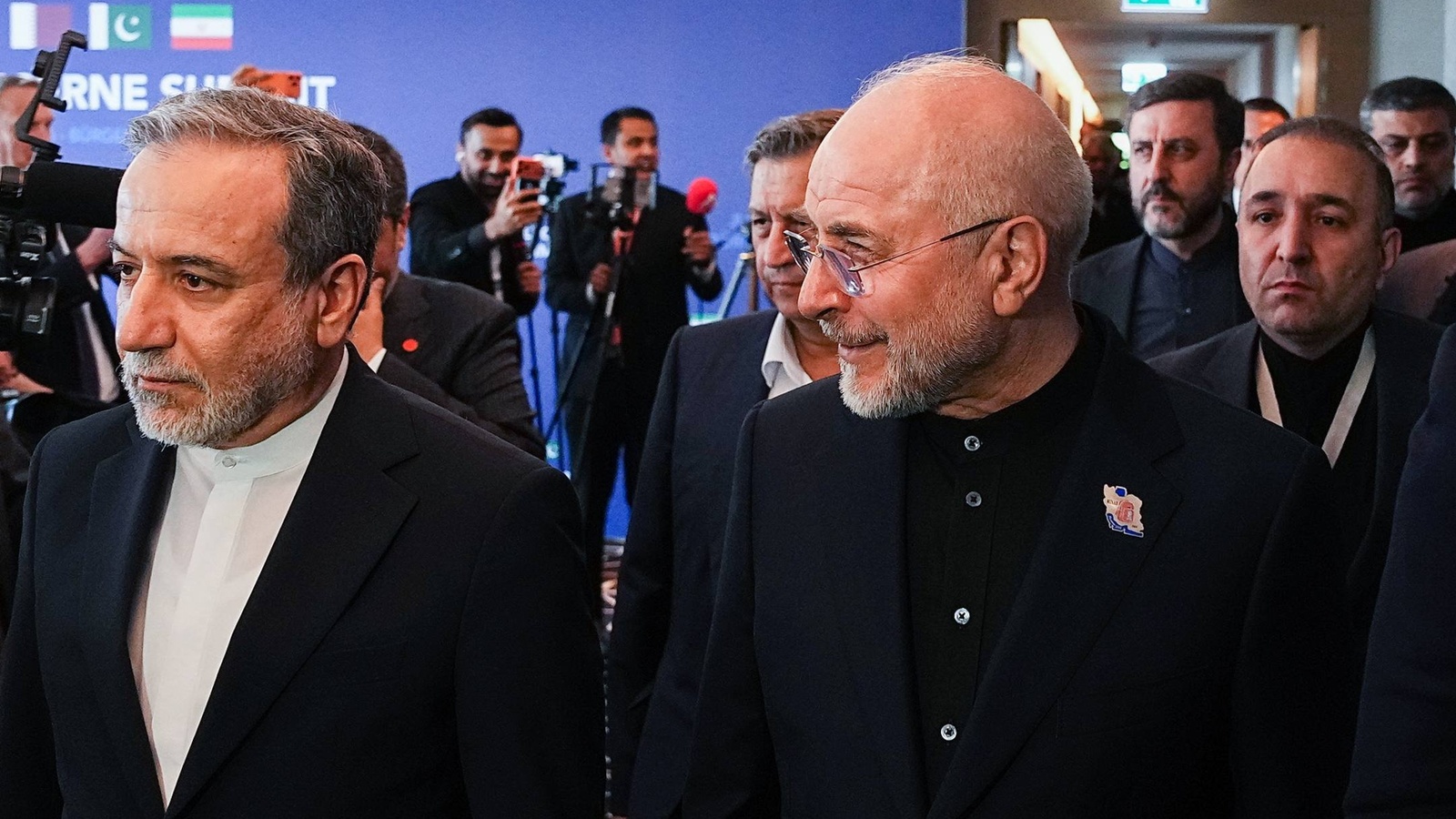 Iran’s Foreign Minister Abbas Araghchi (left) and Parliamentary Speaker Mohammad Bagher Ghalibaf (right) during high-level US talks, at the Bürgenstock Resort in Obbuergen, near Lucerne, in Switzerland. (Photo: X/@IRNAEnglish)
Iran war LIVE updates: Iran’s top negotiator and parliament speaker, Mohammad Bagher Ghalibaf, has denied the claims made earlier by the US President Donald Trump’s administration that unfrozen assets will be used to buy US agricultural products.
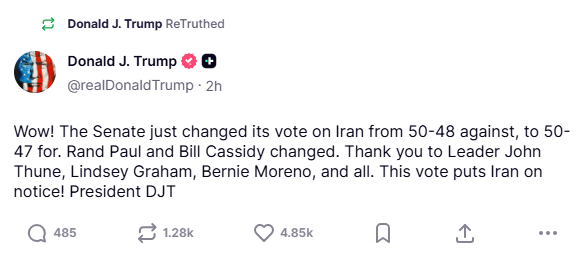
US Senate rejects resolution: Just a day after the US Senate passed a resolution aimed at halting aggression in Iran, the senators rejected a similar resolution, says CNN. It comes as US President Donald Trump expressed his frustration with Senate Republicans who voted for an Iran war powers resolution as well as Republicans who missed the vote. Trump argued that the resolution weakens his position on the negotiation table with Iran. In a post on Truth Social, Trump informed about the two senators changing their votes on the war powers resolution. Earlier, two Republicans Rand Paul and Bill Cassidy voted to control the president’s war powers on Iran, taking the final vote tally to 47-50-1.
Story continues below this ad
Iran says passage of vessels must follow designated routes: As an interim deal between Iran and the US takes shape, Iran’s Revolutionary Guards Corps on Thursday said that safe passage of vessels through the Strait of Hormuz is only possible through routes designated by Iran. IRGC also said that it will take action against vessels that fail to comply with the requirements and any new route that allows for the passage of vessels via the Strait without coordination with Iran is unacceptable.
Trump says no toll on Hormuz: On June 24, US President Donald Trump said that Iran has told the US that no tolls were being sought from ships travelling through the Strait of Hormuz. The first round of negotiations between Iran and the US ended in Switzerland on June 22. US Energy Secretary Chris Wright told a forum on Wednesday that flows through the Strait of Hormuz were close to what they were before the start of the Iran war, saying at least 20 million barrels had exited the strait in the last 24 hours, says Reuters.
Section 1
Key facts
Location
Connects the Persian Gulf to the Arabian Sea.
Global oil
Around one-fifth of the world’s oil passes through the Strait.
Shipping
Critical route for oil tankers and LNG carriers.
Latest
Iran says vessels must follow routes designated by Tehran.
Section 2
Countries dependent on the Strait
Persian Gulf
Saudi Arabia
Iraq
UAE
Kuwait
Qatar
Iran
The chokepoint
Strait of Hormuz
↓ Out to the Arabian Sea & world oil markets
Schematic — not to geographic scale.
Section 3
Why it matters
Oil prices
Any disruption to flows can push global crude prices higher.
Fuel costs
Costlier crude can feed through to petrol and diesel prices.
Global shipping
Re-routing, delays and higher insurance can raise freight costs.
India’s energy imports
India sources a large share of its crude from the Gulf via the Strait.
Section 4
Current situation
US-Iran negotiations underway
Iran issues Hormuz navigation warning
Ships asked to follow designated routes
Markets watching oil supply
Developing
Sources: U.S. Energy Information Administration (oil-share estimate); news agency reports. Verify against desk sourcing before publish.
Live Updates
Stay updated with the latest – Click here to follow us on Instagram
© IE Online Media Services Pvt Ltd