


US strikes Iranian missile sites near Strait of Hormuz despite ceasefire

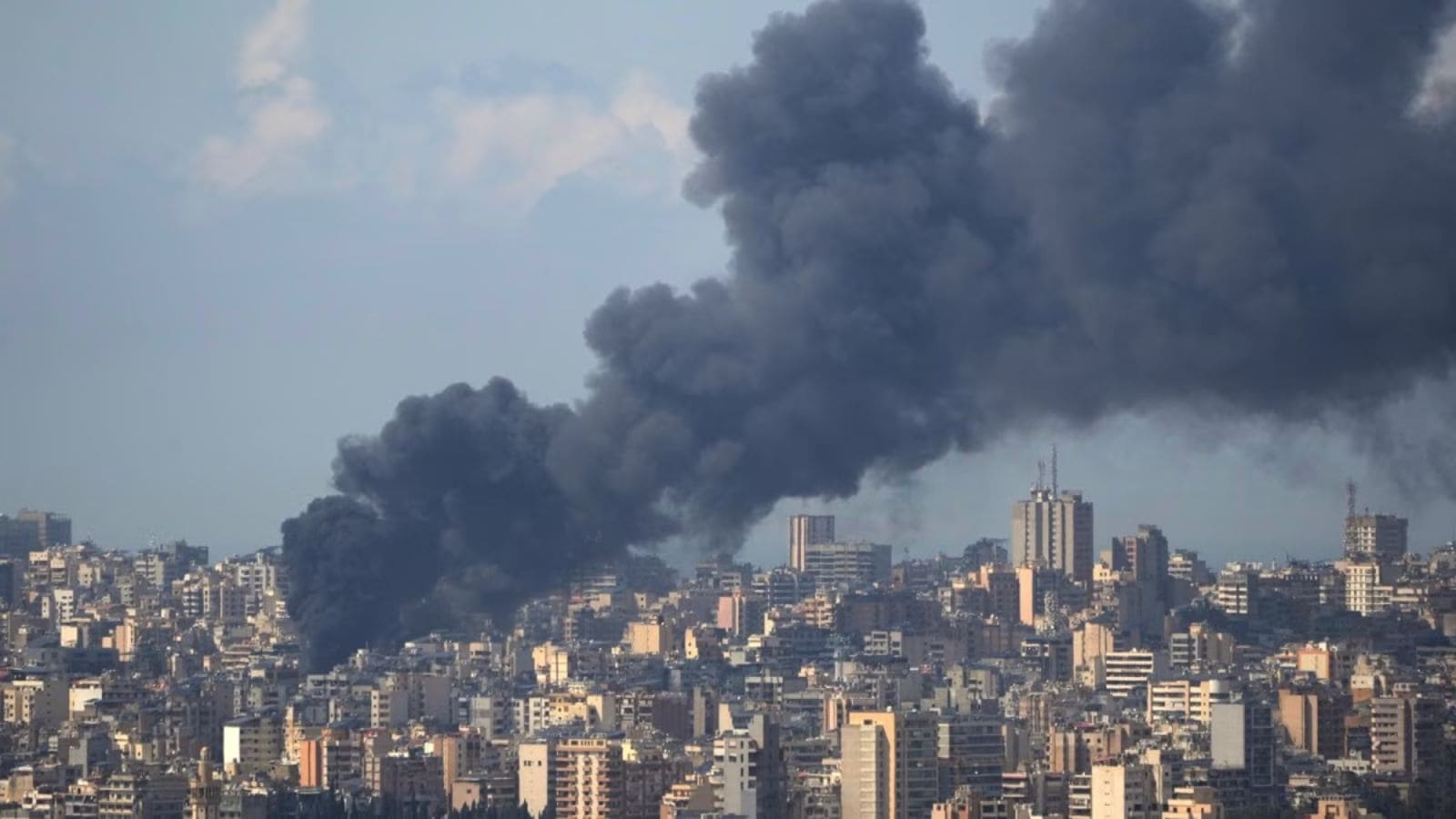

The United States military Tuesday (local time) said it has carried out “self-defence” strikes in southern Iran, targeting missile launch sites and boats laying mines, even as President Donald Trump said negotiations were “proceeding nicely”.
Spokesman for US Central Command Capt. Tim Hawkins said the strikes were aimed at protecting American forces from threats posed by Iranian units.
US says strikes were ‘self-defence’
“The strikes were conducted to defend our troops,” Hawkins said, adding that the military was “using restraint during the ongoing ceasefire”.
The strikes took place near Bandar Abbas, close to the Strait of Hormuz, a key shipping route. Iranian media reported explosions in the area, but officials later said the situation was under control.
Footage allegedly shared by a U.S. soldier appears to show HIMARS missile launches targeting Iran from an undisclosed Gulf nation during the recent U.S.-Iran conflict. pic.twitter.com/Oh4sEDjMOD
— Breaking911 (@Breaking911) May 25, 2026
There was no indication that the action had changed the current ceasefire, which has been in place since April.
Details about the specific threats or the extent of the damage were not immediately available. The developments come as talks continue between Washington and Tehran to end the conflict that began in late February following US and Israeli strikes on Iran.
Story continues below this ad
“Few days”PENDING
Rubio, in Jaipur
from 125-140 baseline
Nikkei estimate
vs Friday close
Pillar 1: Strait of Hormuz
Reopening framework with Oman protocol; no tolls but service fees
Core
Pillar 2: Enriched Uranium Stockpile
“Time-limited negotiation” on nuclear matter, Rubio says
US Ask
Pillar 3: Frozen Iranian Funds
Iran’s central bank governor in Doha to negotiate release
Iran Ask
Trump’s ultimatum
“Great Deal for all, or no Deal at all” – Truth Social, Monday
US
Iran’s sequence
Nuclear talks only AFTER framework accord, Baghaei says
Iran
Doha as the venue
Iran’s top negotiator + FM met Qatar PM on potential deal
Fact
| Metric | Value | Context |
|---|---|---|
| Daily transits now | ~30 vessels78% | Since Feb 28 strikes |
| Pre-war daily traffic | 125-140 vesselsBASELINE | Reuters baseline |
| Share of global oil & LNG | ~20%STAKES | “About a fifth” |
| Reopening timeline | ~30 daysPOST-DEAL | Post-deal (Nikkei) |
| Iran’s toll position | No tollsFIRM | Service fees only |
| Partner state for protocol | OmanENGAGED | Opposite shore |
| WTI crude move | −5.5%FALLING | vs Friday’s close |
Marco Rubio
US Secretary of State · In Jaipur
The straits have to be open, they’re going to be open one way or the other, so they need to be open.
Marco Rubio
US Secretary of State · On the table
[There is] a pretty solid thing on the table… a very real, significant, time-limited negotiation on the nuclear matter.
Donald Trump
US President · Truth Social
[Talks are going “nicely”] It will only be a Great Deal for all, or no Deal at all.
Esmaeil Baghaei
Iran Foreign Ministry Spokesperson
Nuclear issues would only be negotiated after the framework accord was agreed.
Esmaeil Baghaei
Iran Foreign Ministry · On Hormuz
Iran would not charge tolls for ships to pass through, but there would be a cost for services – navigation and environmental protection – under a protocol to be agreed with Oman.
Sources: Reuters · Nikkei · US Central Command · Iranian Foreign Ministry · Truth Social · Data as of May 26, 2026
Trump pushes broader Iran deal
Earlier, Trump said any agreement with Iran should include wider regional commitments. He suggested that several countries — including Saudi Arabia, Pakistan, Turkey, Egypt and Jordan — should join the Abraham Accords, which aim to normalise ties with Israel.
“After all the work done by the United States… it should be mandatory that these countries sign onto the Abraham Accords,” Trump wrote on social media.
However, the proposal may complicate negotiations. Saudi Arabia has said normalisation depends on progress towards Palestinian statehood, while Pakistan does not have diplomatic ties with Israel.
Analysts said the suggestion adds a new element to already complex talks.
Story continues below this ad
“It gives a new dimension to the diplomatic process,” said former Pakistani ambassador Masood Khan, adding that negotiations are still ongoing.
Trump also repeated his demand that Iran’s enriched uranium be removed or destroyed under international supervision, a key issue in the talks. It remains unclear when a final agreement might be reached.
Why Strait of Hormuz matters
The Strait of Hormuz is arguably the world’s most vital and sensitive maritime chokepoint. Situated between Iran and Oman, it links the Persian Gulf with the Gulf of Oman and the Arabian Sea, serving as the only sea route connecting the oil-rich Middle East to global markets.
The massive volume of energy shipments passing through this narrow stretch of water makes it a critical artery of the global economy. Roughly 20 million barrels of petroleum and crude oil pass through the strait every single day. This accounts for about 25 per cent of all seaborne oil traded globally.