

Video: The moment Nepal’s glacier collapsed, triggering deadly floods


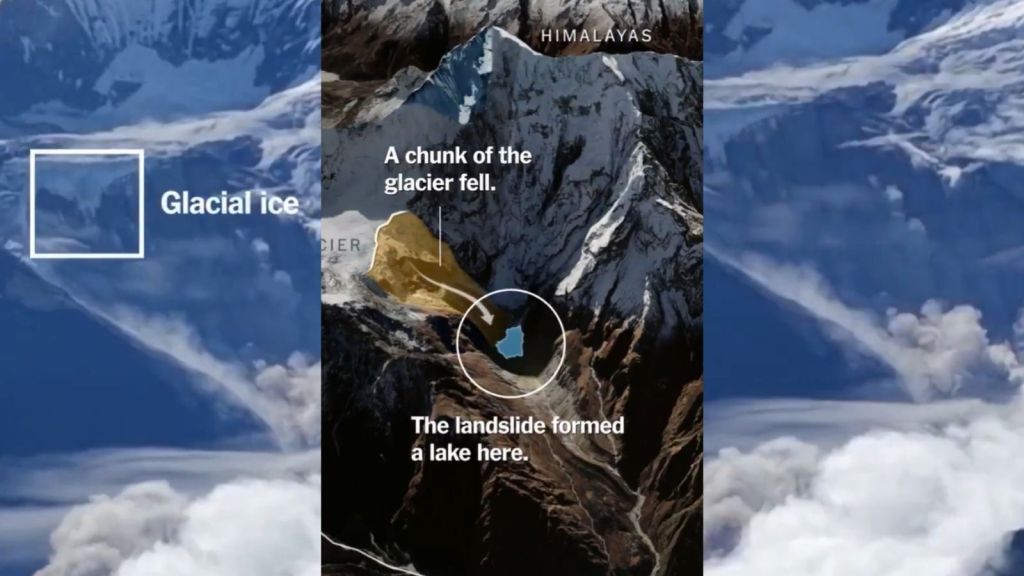 Nepal new exclusive footage obtained and verified by The New York Times. (Screengarb/X/@clashreport)
 New footage obtained and verified by The New York Times gives the clearest look yet at the glacier collapse that set off deadly floods in Nepal last week.
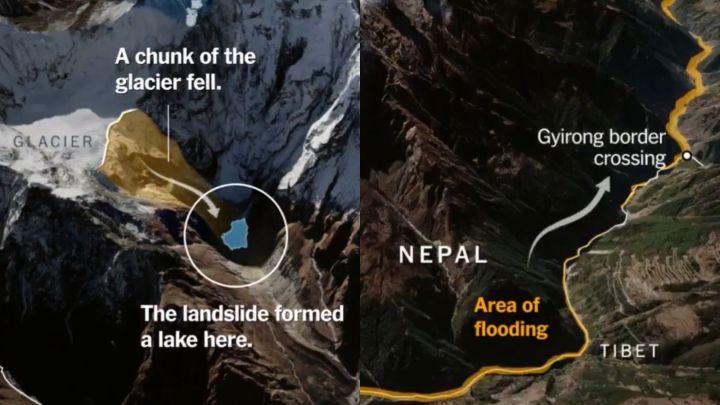
The videos show the avalanche at Langtang Lirung, near the Nepal-Tibet border, on August 26, moments before a wall of water and mud swept through river valleys below.
New exclusive footage obtained and verified by The New York Times gives the clearest view yet of the Aug. 26 Langtang Lirung collapse that triggered the catastrophic Nepal–Tibet floods.
Hikers heard a huge crack before ice, rock and debris plunged into the valley, throwing up an… pic.twitter.com/2X8pkSwUOI
— Clash Report (@clashreport) August 29, 2026
What the videos show
A tour guide named Ziha Yitie and a group of hikers were on an observation deck in Tibet that morning, looking across the border at snow-capped peaks in Nepal. Ziha said a break in the morning mist revealed the glacier on Tsangbu Ri, so the group began filming.
As they filmed, they heard a series of deep rumbles, which they first mistook for thunder. Then, just after 10:50 a.m. local time, a loud crack rang through the valley.
Ziha said it sounded like explosives detonating inside the mountains. He said the sound of the avalanche continued for several minutes after the initial crack.
Dust cloud and aftermath
Dust from the landslide soon filled their view, resembling a large mushroom cloud, Ziha said. In the minutes that followed, the group filmed smaller chunks of ice breaking off the glacier and falling down the mountain’s steep face.
Story continues below this ad
It was only after the group made their way down that they learned the scale of the disaster, finding blocked roads and hearing news reports about the avalanche and the flood that followed.
The New York Times compared footage from before and after the collapse, offering one of the clearest views yet of how much glacial ice and rock came down into the valley below.
The glacier collapse triggered floods that have caused widespread destruction across Nepal. The death toll has climbed to 734, with nearly 3,000 people still unaccounted for, as rescue teams continue searching through debris and damaged communities.
Nepal’s prime minister said 4,451 people have been rescued so far. Humanitarian needs remain high: UNICEF has warned that thousands of children require urgent assistance, and international aid has started reaching survivors sheltering in temporary camps.
