

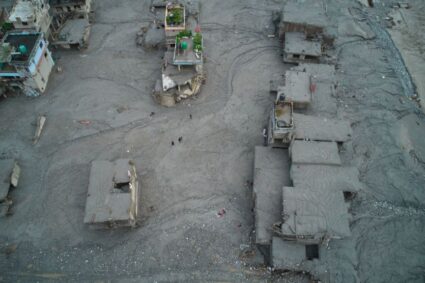




Videos: Indonesia’s Anak Krakatau volcano erupts; authorities urge residents to stay away

4 min readUpdated: Sep 5, 2026 03:20 PM IST
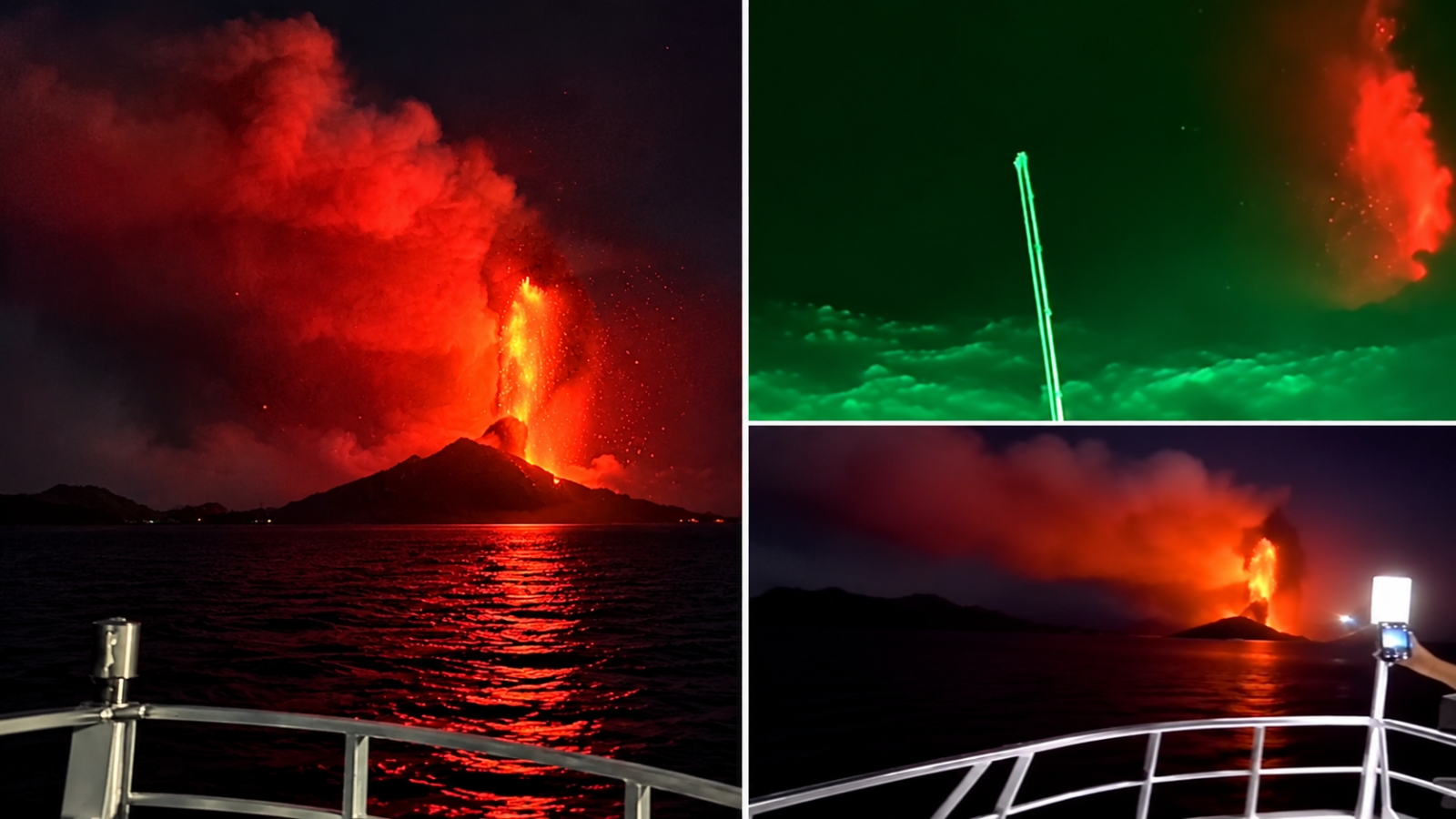
Indonesia’s Anak Krakatau volcano erupted on Saturday, sending plumes of volcanic ash into the sky over the Sunda Strait between Java and Sumatra, while authorities urged residents, tourists and visitors to stay away from the volcano, Reuters reported.
The eruption began at 11.07 pm local time on Friday and continued through the observation period from midnight to 6am on Saturday, according to Indonesia’s National Disaster Mitigation Agency (BNPB), citing monitoring by the Centre for Volcanology and Geological Hazard Mitigation (PVMBG).
PVMBG said Anak Krakatau’s current volcanic edifice remains relatively small and is not considered capable of collapsing on a scale that could trigger a tsunami, BNPB Disaster Data, Information and Communication Centre Acting Head Berton Panjaitan said in a statement on Saturday.
HAPPENING NOW: Large eruption at the Anak Krakatau volcano in Indonesia pic.twitter.com/gnz8fIsTQP
— BNO News Live (@BNODesk) September 4, 2026
Why are authorities warning people to stay away?
The Indonesian authorities have maintained a Level III, or Siaga (Alert), status for Anak Krakatau and a 3-km exclusion zone around its active crater.
.
World · Indonesia · Volcano
How can Anak Krakatau trigger a tsunami?
A volcanic eruption does not automatically cause a tsunami. A major concern arises if part of the volcano collapses into the sea — displacing enough water to generate waves.
.
Four-step chain of events
1
Volcanic activity
Eruptions can destabilise parts of a volcano’s slopes.
2
Flank collapse
A large section of the volcanic edifice can collapse into the sea.
3
Water displacement
The sudden movement of volcanic material displaces seawater.
4
Tsunami waves
The displaced water can generate waves that travel towards nearby coastlines.
.
December 2018
What happened
A partial collapse of Anak Krakatau’s flank generated a tsunami that struck coastal areas of Banten and Lampung.
Mechanism
The west-southwest slope collapsed into the sea, displacing enough water to produce destructive waves with little warning.
Key risk
A flank collapse generates a tsunami without the seismic signal that normally triggers early-warning systems.
.
Current status (PVMBG)
Alert level
Level III — Siaga (Alert)
Exclusion zone
3 km around the active crater
Authorities have urged residents, tourists and visitors not to approach the volcano while activity continues.
According to Indonesia’s disaster mitigation agency BNPB, Anak Krakatau’s current volcanic edifice remains relatively small and is not considered capable of a collapse large enough to trigger a tsunami. However, monitoring continues given the 2018 precedent.
.
The original Krakatau — a historical benchmark
36,000+
deaths in the 1883 eruption — most caused by tsunami waves, not the blast itself.
Sunda Strait
The massive tsunamis swept coastlines across the strait.
Anak Krakatau
“Child of Krakatau” emerged from the sea in 1927, growing within the original caldera.
Alert level and exclusion zone reflect PVMBG/MAGMA Indonesia guidance as at the latest available reporting. Volcano status can change rapidly; refer to official Indonesian authorities for updates.
Sources: PVMBG / MAGMA Indonesia · BNPB · RRI / Databoks (July–August 2026) · 1883 death toll: historical record.
.
“The government is addressing concerns among the public, particularly along the coasts of Banten and Lampung over a potential tsunami linked to Anak Krakatau given their experience of the Dec 22, 2018 tsunami,” Panjaitan said, according to BNPB.
Authorities have urged the public not to approach the volcanic area to observe the eruption or take photographs and videos, warning that material could still be ejected from the active crater.
WATCH: Timelapse of eruption at Anak Krakatau volcano in Indonesia pic.twitter.com/kCocLMqrdd
— Insider Paper (@TheInsiderPaper) September 4, 2026
PVMBG recorded an eruption earthquake with a maximum amplitude of 70mm between midnight and 6am on Saturday. A field surveillance camera was also knocked out after being struck by material ejected from the volcano, BNPB said.
Story continues below this ad
Why does Anak Krakatau raise tsunami concerns?
Anak Krakatau, meaning “Child of Krakatau”, emerged within the caldera left by the catastrophic 1883 eruption of Krakatau. Volcanic activity resumed in the area in the 1920s, with Anak Krakatau subsequently forming within the old caldera, according to the US National Oceanic and Atmospheric Administration (NOAA) and the Smithsonian Institution’s Global Volcanism Program.
The 1883 eruption was one of the most destructive volcanic events in recorded history. It generated massive tsunamis that struck coastal areas around the Sunda Strait and caused about 36,000 deaths, according to NOAA. Most of those deaths were attributed to the tsunamis generated by the eruption.
The volcano again became the focus of tsunami concerns in December 2018, when a partial collapse of Anak Krakatau generated a deadly tsunami that struck the coasts of Banten and Lampung.
The history is one reason authorities are closely monitoring the volcano during the latest eruption. However, PVMBG’s assessment cited by BNPB indicates that the current structure of Anak Krakatau is not considered capable of producing a collapse on the scale required to trigger a tsunami.
Story continues below this ad
What is the current warning?
Authorities have not announced a tsunami warning linked to the latest eruption. The main restriction remains the 3-km exclusion zone around the active crater, with officials asking people not to approach the volcano while activity continues.
The Smithsonian Institution’s Global Volcanism Program lists Krakatau as an active volcanic system in the Sunda Strait and notes that Anak Krakatau has experienced frequent eruptions since 1927.
Stay updated with the latest – Click here to follow us on Instagram
