




Harmanpreet Singh had just given India a lifeline. His goal against the Netherlands halved the deficit and briefly changed the mood of India’s World Cup campaign. He sprinted back to the dugout and lay down for treatment on his aching back. Within minutes, India lost possession in midfield, the Dutch broke at pace, and Thijs van Dam restored their two-goal lead.
It was one passage in one match. But the sight of the Dutch running into space India had failed to cover became a recurring image of their World Cup.
They call it repeat sprint ability.
In hockey, it is the capacity to sprint, recover, and sprint again, repeatedly, over 60 minutes. It allows a midfielder to join an attack, lose the ball, and still get back quickly enough to cover the space before the opposition can run through the middle.
For Siddharth Pandey, technical director of Hyderabad Toofans and coach of Mumbai-based club CTC, India’s World Cup campaign offered a fairly straightforward diagnosis. “When your midfielders do not have the ability to come and cover the space in midfield on a defensive transition when they’ve lost the ball, that is the sure-shot sign that they do not have the repeat sprint ability,” Pandey said.
The evidence, he said, was visible repeatedly: open spaces in midfield, opponents running through the centre. “They’re not running back because they’re not fit.”
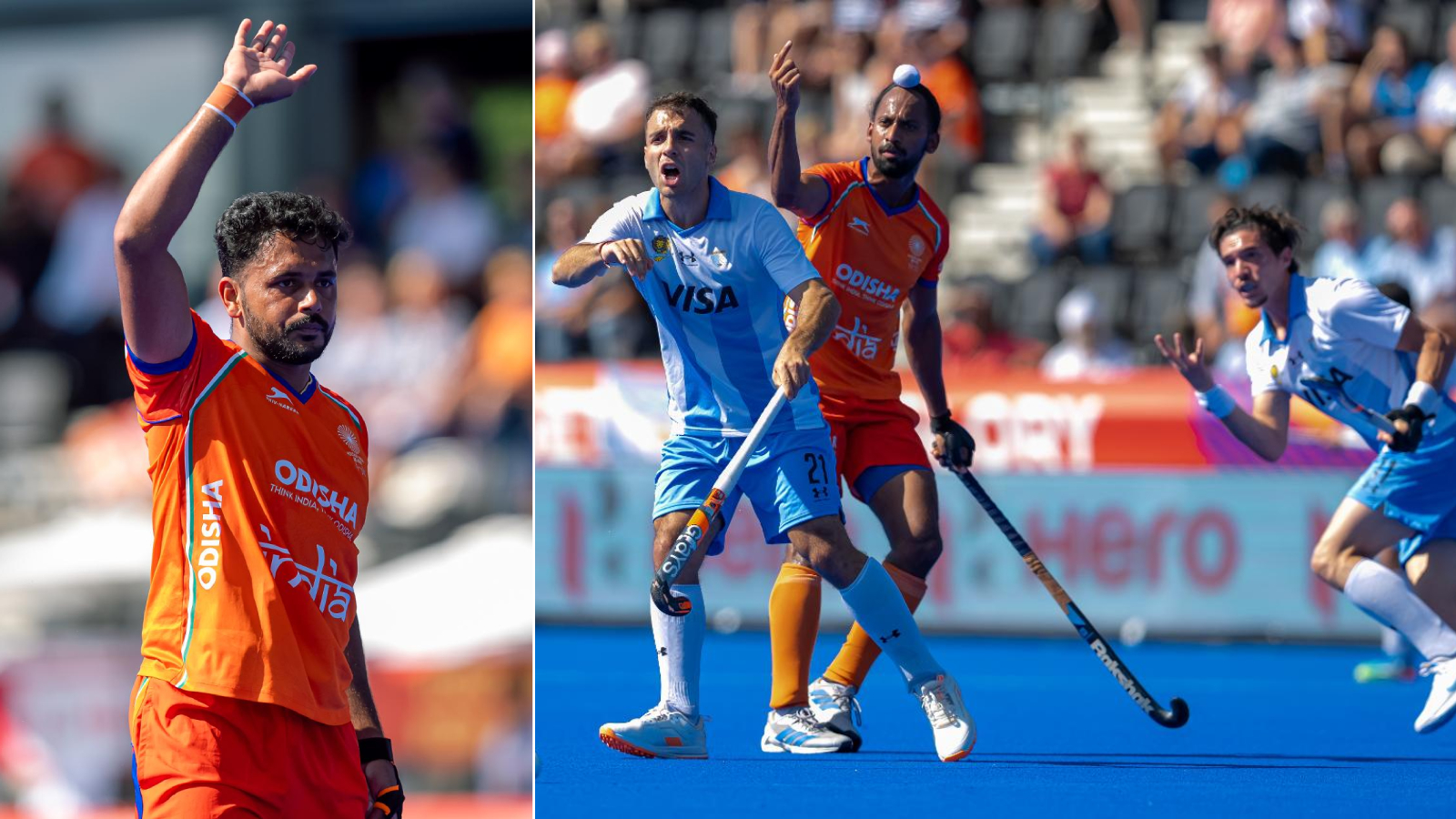 India are out of the Hockey World Cup, and the manner of their elimination – following a 5-3 hammering to Argentina – was as damning as the result. (Credit: Hockey India)
It is a striking assessment, because fitness was once one of Indian hockey’s biggest competitive advantages, built over the last 15 years.
Under previous coach Graham Reid and scientific adviser Robin Arkell, India’s physical output was measured almost obsessively, and data became a source of competition. The aim was not simply to make India fitter. Arkell, drawing on his rugby background, wanted to turn Indian players into “powerful, strong, fast athletes.”
Story continues below this ad
By the Tokyo Olympics, fitness had become part of India’s identity, and India won bronze after playing eight matches in 13 days in excruciating heat.
Arkell left after Tokyo, and the physical setup changed. By the 2023 World Cup, concerns had already emerged about whether India had maintained the standards reached under him.
That does not mean fitness was subsequently ignored. Alan Tan joined as scientific adviser in 2023 and continues to work with the team. Under chief coach Craig Fulton, physical preparation has remained a focus. Hardik Singh has spoken about Tan pushing players through 400m and 1,600m runs and hill work, while Tan has described a data-driven, individualised approach.
So this is not a simplistic Arkell-versus-Tan story. India have continued to use sports science and focus on conditioning. The question is whether that preparation is translating into the kind of repeated high-intensity efforts that international hockey now demands.
Story continues below this ad
Pandey believes it did not, at this World Cup. The open spaces in midfield, he said, were a consequence of players failing to recover after losing possession.
The same problem may also have hurt India’s attack.
An Indian selector, speaking anonymously, pointed to a recurring pattern. Instead of running at defenders, eliminating a player through a forward pass, or hitting teams before they had reorganised, India often played sideways or backwards after winning possession. That allowed opponents to settle. By the time India created chances, the selector said, there were often seven defenders inside the circle.
“You can’t do it every time,” the selector said. “But unless you do it five, six times in a half, you’re not spreading the defence.”
Story continues below this ad
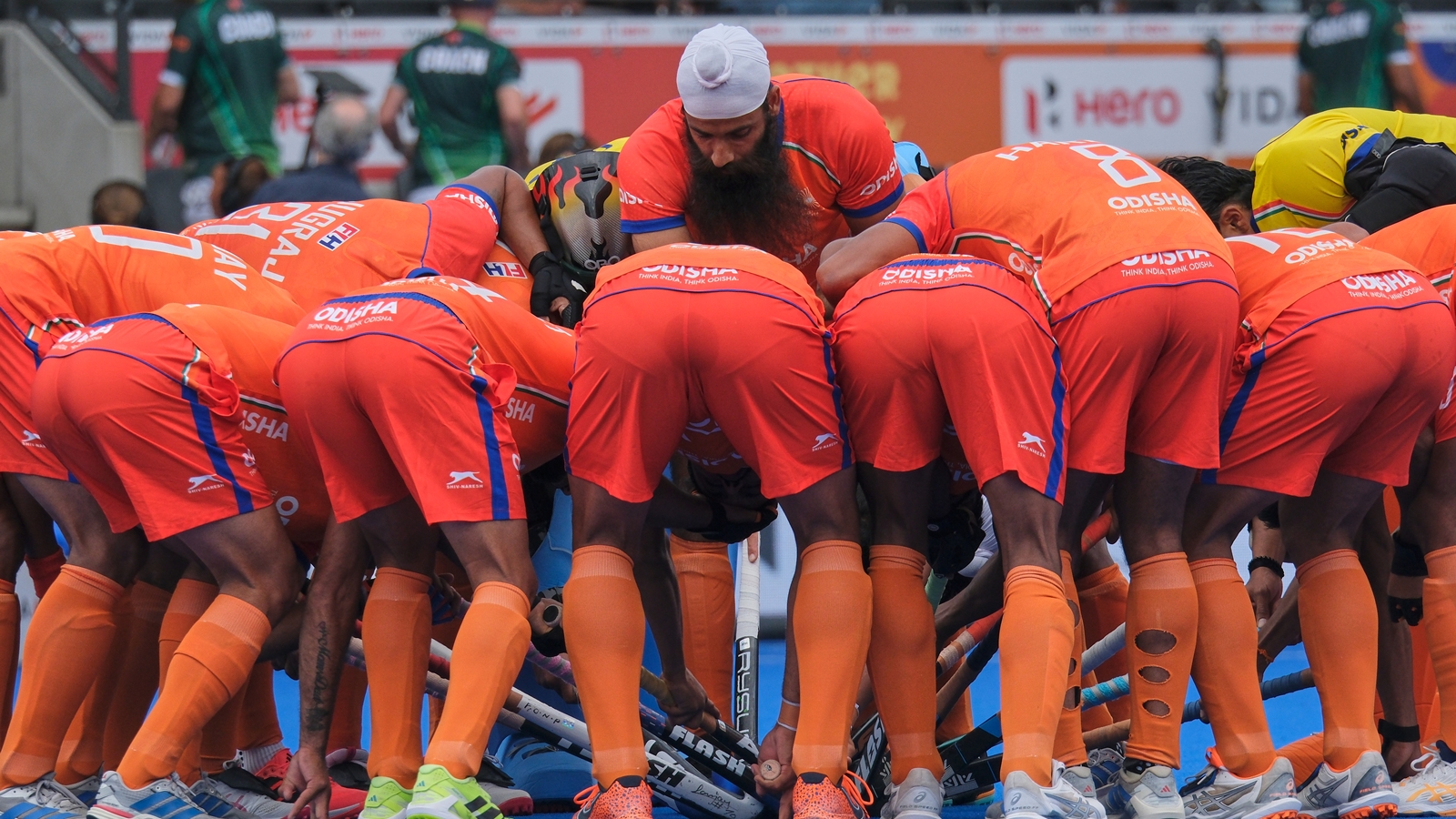 India’s players huddle before the World Cup Field Hockey pool D match between India and Pakistan in Amstelveen, Netherlands, Wednesday, Aug. 19, 2026. (AP Photo/Patrick Post)
Generational transition
There is a connection between the two criticisms. Counterattacking requires repeated high-intensity runs. Defensive transitions demand the same capacity in reverse. And this is where India’s generational transition becomes relevant.
The average age of India’s World Cup squad was around 28.4 years. That is not an exceptionally old team. There are players in their early and mid-20s who can become important members of the side. But several of the players who continue to carry major responsibilities are from the generation that formed the core of India’s Olympic resurgence, and are in their early and mid-30s, middle age in sporting terms. The physical demands on that group have accumulated over years of international hockey.
That does not mean the answer is simply to replace older players with younger ones. Younger players need time to reach that level. There is a difference between being physically capable of producing a sprint and knowing, after years of international hockey, when to make that sprint, how to recover from it, and where to position yourself when the ball is lost.
Experience, tactical understanding, and physical maturity develop together. India’s challenge, therefore, is not that their younger players cannot match the older generation. It is that they have not yet had enough time at this level to fully take over the responsibilities carried by the established players.
Story continues below this ad
The concern is whether that transition has happened quickly enough. At the Tokyo Olympics, and even at Paris 2024, fitness allowed India to press, recover, and counterattack repeatedly through a gruelling tournament. At this World Cup, those same qualities were harder to see.
Virat Kohli recently hailed the fitness levels of the Indian hockey team. This World Cup, and an ageing squad, raise an uncomfortable question: are they fit enough to keep running with the world’s best teams?
