

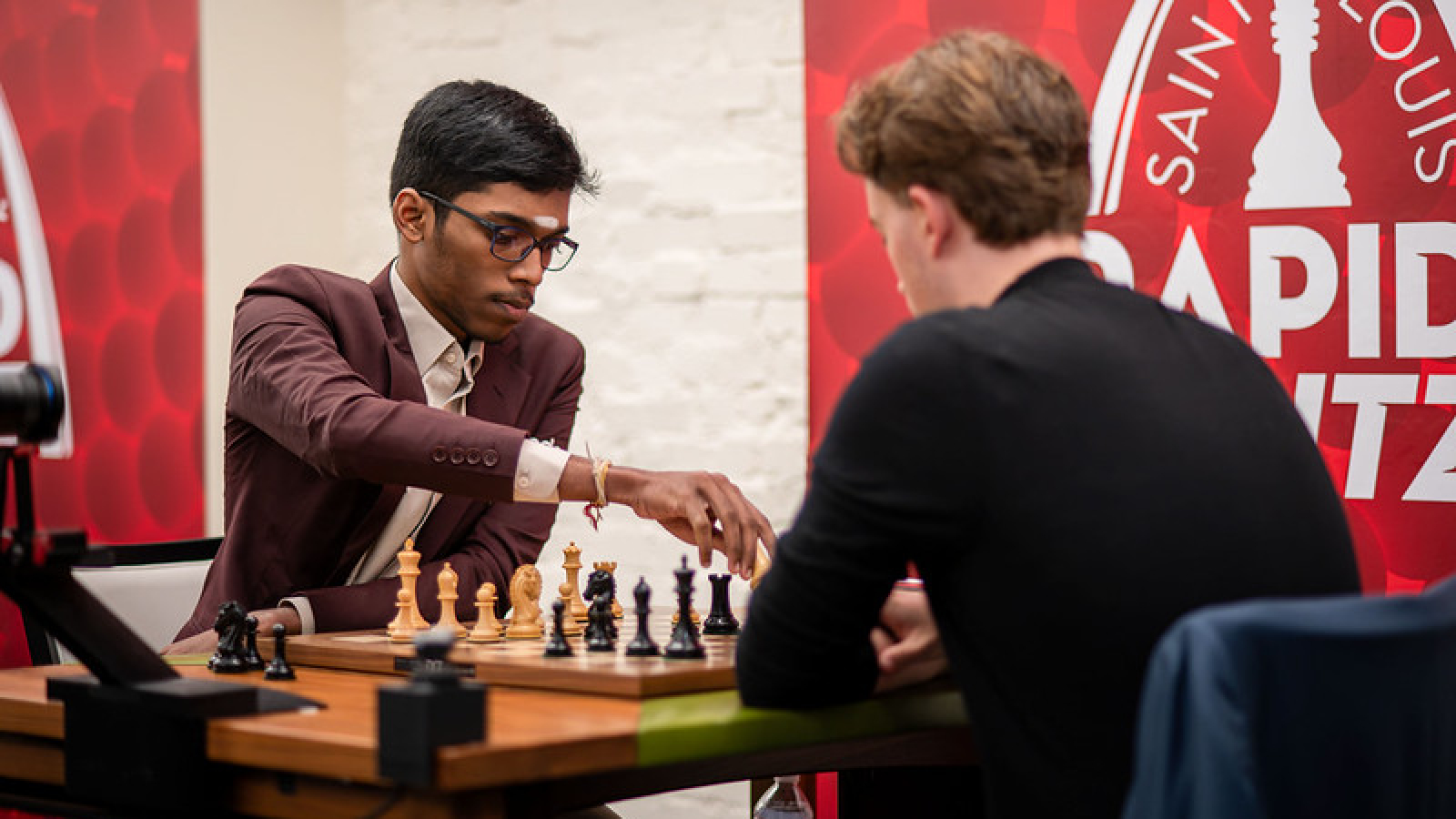
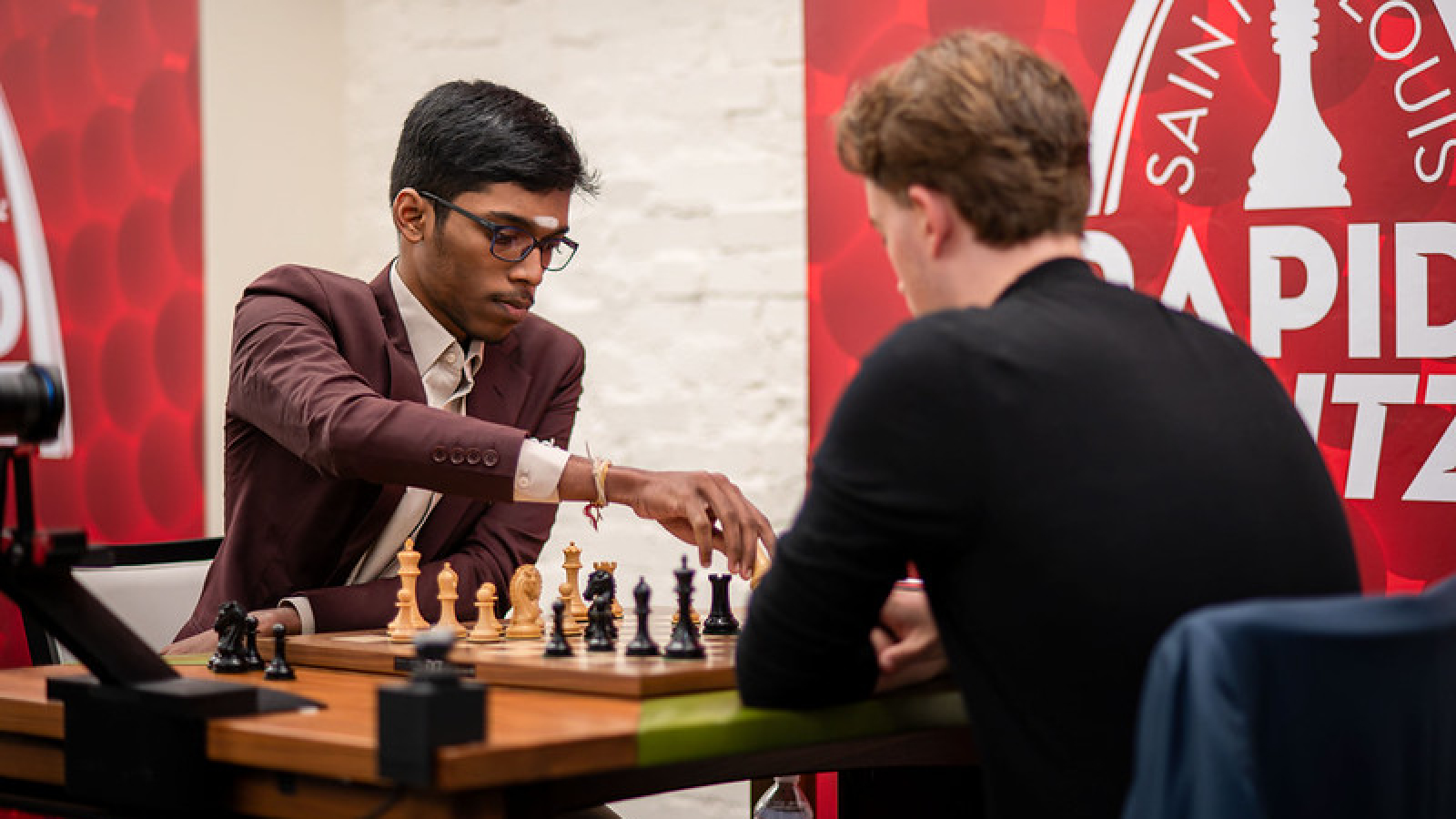
“I don’t remember winning a strong Rapid and Blitz event in the last few years. In fact, ever.” That admission from R Praggnanandhaa after his St Louis triumph revealed a little more than just surprise. He is a man who has beaten the best in Classical chess. At Norway Chess, Tata Steel Masters, the London Classic, GCT Romania or the UzChess Cup, the titles kept coming his way. But the faster formats had always been a blind spot. Until Friday, when the Indian Grandmaster finally bridged the gap, winning the Grand Chess Tour’s Saint Louis Rapid & Blitz event in what he called “the best Rapid and Blitz performance that I’ve shown.”
With the margins so narrow and the field so stacked, it was Praggnanandhaa’s clinical consistency that stood out. Ever since he seized the lead on Day 1 after three rounds of Rapid and never let it slip, not even when Javokhir Sindarov and Wesley So turned the heat up.
After ending the penultimate day on top, holding a 1.5-point lead over Sindarov and a 3-point cushion over So, he kept holding on to his lead on the final day even as the Uzbek rival came agonisingly close. His day may have started slowly, with Sindarov shrinking the gap to just 0.5, but the Indian never squandered his grip on the title race, winning the event with a round to spare.
While he stopped short of calling it a domination, he was in control throughout the event. “I don’t think it was a domination as such because the fight was still on almost till the very end. If I’d lost to Javokhir, then there was still a lot of fight in the last game. I believe there were some moments that went my way, but overall I like to believe I played quite well and managed to keep control in most of the games, so that’s good,” he told Chessbase India.
Pragg’s Blitz campaign had a method to the madness. He played safe, sharing points in eight games against Sindarov, So, Aronian, and Caruana, four players who finished just behind him in the Blitz standings. Against the bottom four ranked players, he cashed in ruthlessly, accumulating seven points from eight games with six wins.
The title not only filled Praggnanandhaa’s pocket with $50,000 (approx. ₹47.5 lakh) but also earned him 13 Grand Chess Tour points for finishing as the sole leader. The haul thrust him into second place on the GCT leaderboard, just half a point behind Fabiano Caruana. With that, he is now primed to qualify for the tour finals for the second consecutive year.
Cracking consistency code
Ever since the high of 2024, when Indian chess produced the youngest-ever world champion in D. Gukesh and the country claimed a historic double gold at the Olympiad, the question has lingered: can India match that high again?
Story continues below this ad
Renewed enthusiasm and a string of strong performances made that hope feel anything but meaningless. But the months that followed told a different story, with the Indian men’s chess team hitting a quiet patch. The home World Cup ended without a podium finish, the Cyprus Candidates proved disappointing, and Gukesh’s form took a noticeable dip.
What is the Grand Chess Tour, and what’s at stake for Pragg?
The Grand Chess Tour is an elite circuit spanning Classical, Rapid, and Blitz events with a $2 million (19 cr) prize pool. The top four players in the season standings qualify for the GCT finals, a knockout event where the year’s best compete for the title. Praggnanandhaa sits second in the GCT standings after his Saint Louis win, just half a point behind Caruana. With the Sinquefield Cup remaining, a solid performance there will confirm his spot in the finals for the second straight year. From there, he will have a shot at the overall title, a prize no Indian has ever won.
Amid the quiet, one family has continued to shine. The brother-sister duo of R Vaishali and Praggnanandhaa have kept the light burning. It began with Vaishali stunning the world by winning the Candidates, becoming the first Indian woman to do so and earning the right to challenge Ju Wenjun for the world title.
Praggnanandhaa could not match his sister’s feat in the parallel Open event, crumbling under expectations in his second Candidates appearance. But he continues to prove that he is India’s most reliable name on the big stage.
Timed to perfection
Pragg’s scintillating form has come at the perfect time for India. In a little over a month, the team will defend their Olympiad gold medal on Uzbekistan’s home soil in Samarkand, where a formidable challenge awaits from the hosts, the USA, and China.
Story continues below this ad
The Olympiad has traditionally been Gukesh’s hunting ground. The world champion has made the event his own, obliterating opponents and racing to individual gold medals on the top board in both 2022 and 2024. He was the driving force behind India’s gold medal charge in Budapest. But form is a fragile thing, and right now, Gukesh is enduring one of the lowest phases of his career. That makes India’s path to glory far less certain. Arjun Erigaisi has been a model of consistency, but a maiden big-ticket title remains elusive. Nihal Sarin, for all his talent, is yet to make a defining mark in Classical chess. The weight of expectation, then, falls squarely on Praggnanandhaa.
His Olympiad journey, in a way, reflects India’s rise. He played on Board 3 in 2022, Board 2 in Budapest and now, with Gukesh enduring a lean patch, there is a real possibility that Praggnanandhaa could be asked to spearhead India on Board 1 ahead of Gukesh or Arjun.
The Sinquefield Cup awaits Praggnanandhaa next, the last Classical stop before the Olympiad. His performance in the final GCT event will be watched closely, not just by him, but by a nation hoping for momentum heading into Samarkand.
