

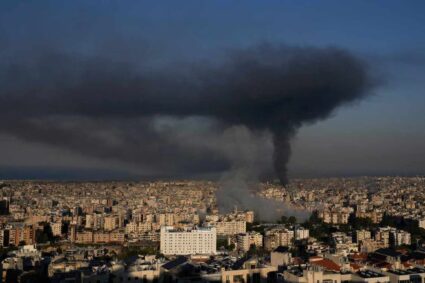
At 7.5 magnitude, Venezuela sees its strongest earthquake since 1900


Venezuela was struck by two powerful earthquakes within minutes of each other on the intervening night of Wednesday and Thursday, causing extensive damage in Caracas, the capital. The twin earthquakes in Venezuela prompted authorities to issue tsunami alerts across parts of the Caribbean. Many are feared dead and trapped under the debris of buildings now.
According to the US Geological Survey (USGS), the first earthquake measured 7.1 in magnitude and struck near the coastal town of Morón, about 168 kilometres west of Caracas, along Venezuela’s Caribbean coast. The quake took place at a depth of 13 kilometres.
Just a minute later, a stronger 7.5 magnitude earthquake hit the same region. The second tremor was recorded at a depth of 10 kilometres, with its epicentre located roughly 16 kilometres southwest of Morón. This was the strongest earthquake recorded in the country since 1900.
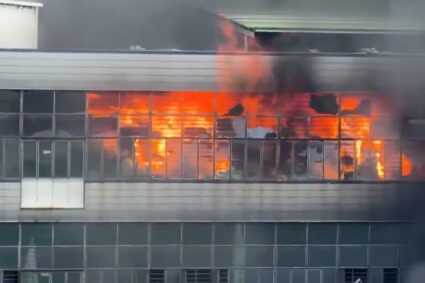
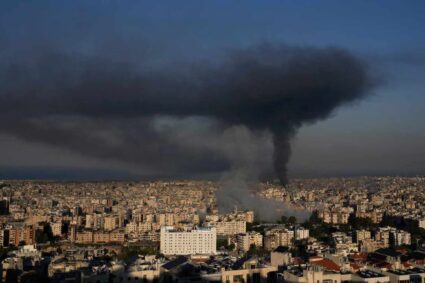
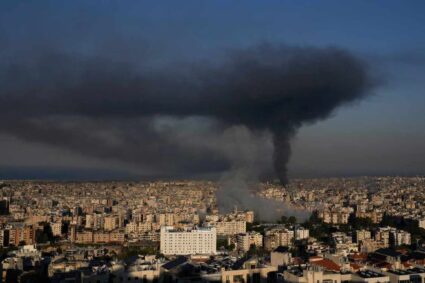
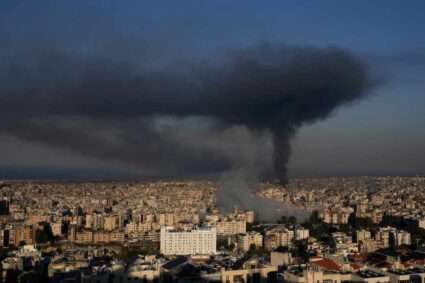
The back-to-back quakes saw residents rushing out of homes, offices and buildings. In Caracas, many structures sustained damage, with portions of buildings and walls collapsing. Dust clouds rose above parts of the city as debris fell onto streets below.
According to news agency Associated Press, witnesses said people evacuated swaying buildings and gathered in open spaces. In some neighbourhoods, entire sections of walls collapsed, exposing furniture and interiors to the public.
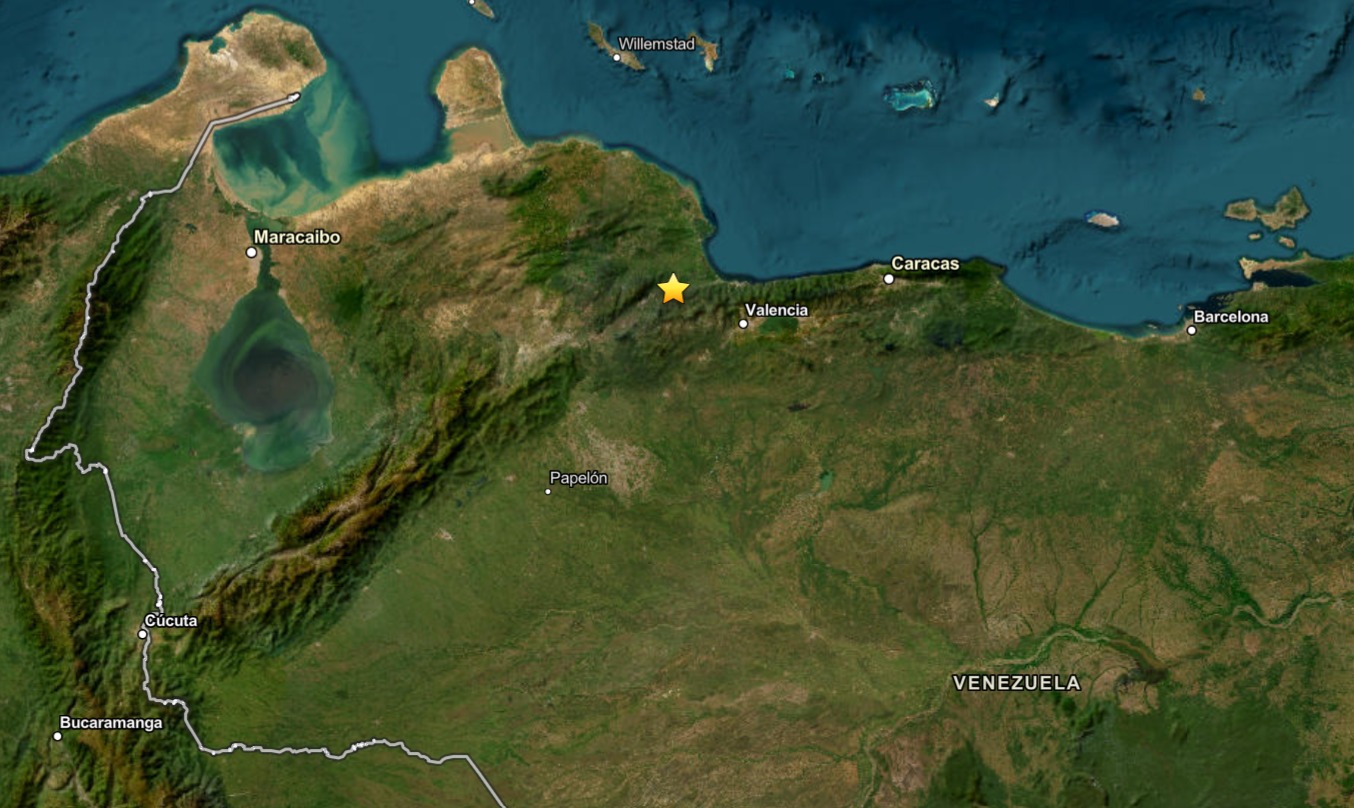 The satellite image shows the epicentre of the earthquakes in Venezuela. (Source: USGS)
Venezuela earthquake casualties
Authorities had yet to release an official nationwide count of casualties, local officials and eyewitnesses reported collapsed buildings, ongoing rescue operations and a rising number of injured people, according to Reuters. Preliminary estimates suggested the death toll could range anywhere between 10,000 and 100,000, though officials cautioned that the full scale of the disaster was still being determined, Reuters reported.
The USGS said, “High casualties and extensive damage are probable and the disaster is likely widespread.”
Este video se va poniendo peor mientras avanza. #TerremotoenVenezuela pic.twitter.com/4LqCoL84kc
— Yisus 💾 (@SoyJesusTarre) June 25, 2026
Tsunami alerts
Following the earthquakes, the US Pacific Tsunami Warning Center issued tsunami alerts for the Virgin Islands, while authorities in the Dominican Republic also cautioned residents of possible sea-level disturbances. A precautionary alert issued for Puerto Rico was later lifted, as per AP reports.
Story continues below this ad
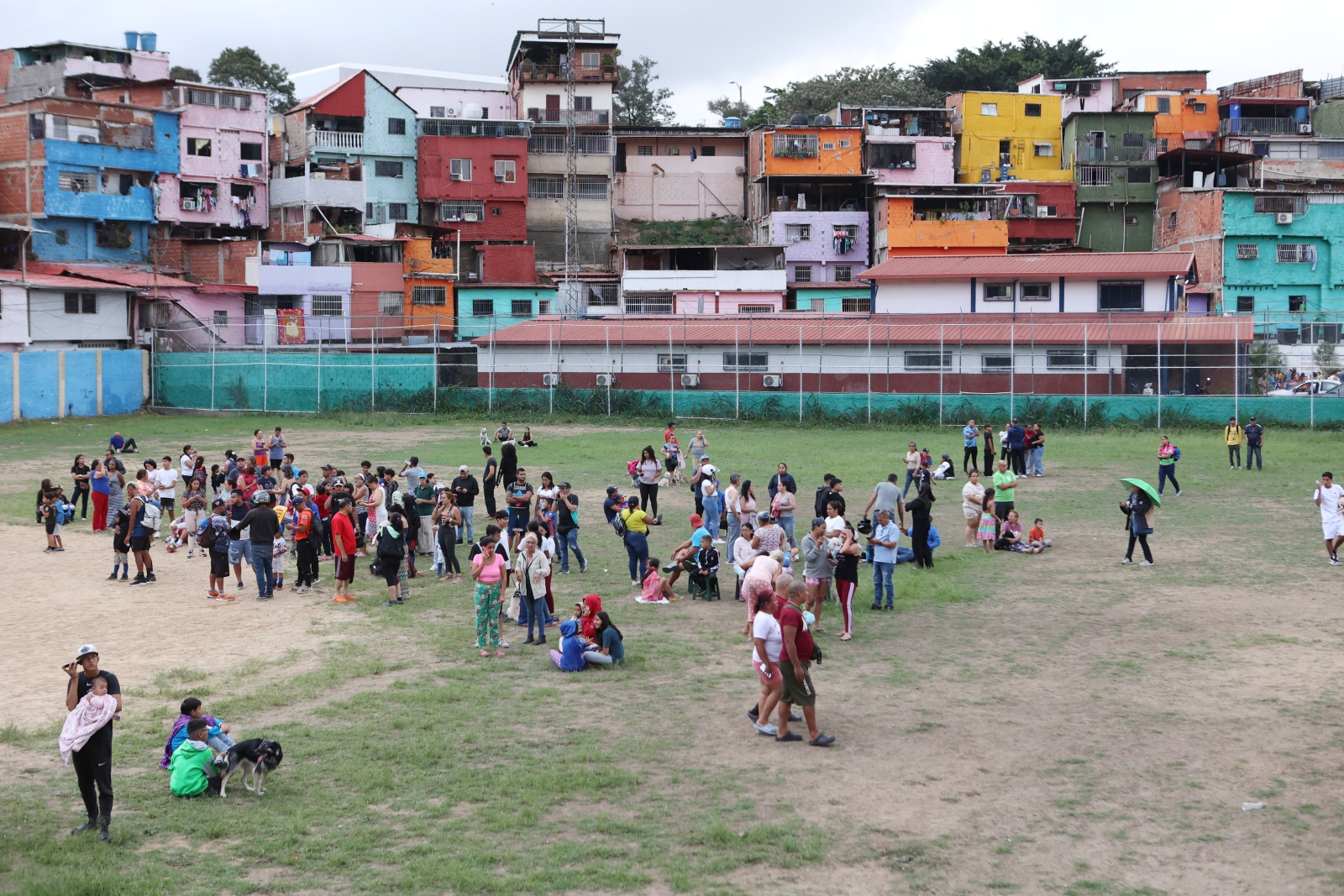 People stand on a park after an earthquake in Caracas, Venezuela, Wednesday. (AP Photo)
Emergency teams were assessing the extent of the damage and monitoring aftershocks as authorities urged residents to stay alert.
🇻🇪🌍 USGS: Venezuela’s devastating earthquake sequence has been identified as a “doublet event.”
A magnitude 7.2 foreshock struck first, followed just 39 seconds later by a more powerful magnitude 7.5 mainshock, significantly increasing the destructive impact across affected… pic.twitter.com/Jzf7xc6YUw
— WorldAxisIndia (@WorldAxisIndia) June 25, 2026
Japan earthquake
Hours after the Venezuela disaster, a 6.9-magnitude earthquake struck off Japan’s northeastern coast, rattling the Tohoku region.
The Japan Meteorological Agency (JMA) said the quake occurred beneath the seabed off Iwate Prefecture at a depth of around 50 kilometres. While slight sea-level changes were possible, authorities confirmed there was no danger of a destructive tsunami.
BREAKING: A powerful 6.9-magnitude earthquake struck off Japan’s Iwate Prefecture.#japan #earthquack #japon pic.twitter.com/7zJ5eIdWdx
— Adnan Tariq (@AdnanTariq57586) June 25, 2026
The tremor was felt across several prefectures in northeastern Japan. Aomori Prefecture recorded the strongest shaking, reaching 6-plus on Japan’s seven-level seismic intensity scale — strong enough to make standing difficult for many people.
Government response
After the quake, the Japanese government established an emergency task force to collect information and coordinate any required disaster response.
Chief Cabinet Secretary Minoru Kihara said authorities were closely monitoring the situation and stood ready to launch relief operations if necessary.
Story continues below this ad
No damage at nuclear sites
Safety inspections carried out after the earthquake found no abnormalities at nuclear facilities, according to Reuters‘ report.
Tohoku Electric Power confirmed that both the Onagawa nuclear power plant and the inactive Higashidori facility were operating normally. Japan’s Nuclear Regulation Authority also reported no damage or irregularities at nuclear sites managed by Tokyo Electric Power and other operators.
Transport services disrupted
The earthquake caused temporary disruptions across the region’s transport network. East Japan Railway suspended several train services, including sections of the Tohoku Shinkansen high-speed rail line, while authorities temporarily closed parts of expressways in Aomori Prefecture for safety inspections.
 A station clerk of the East Japan Railway Co. provides an update about train services, which were suspended due to an earthquake at JR Morioka station in Morioka, northern Japan, Thursday. (Source: AP)
Memories of 2011 disaster
Today’s tremor revived memories of the catastrophic March 2011 earthquake and tsunami that devastated northeastern Japan.
Story continues below this ad
That magnitude 9.0 quake which was the strongest ever recorded in the country caused massive tsunami waves which claimed thousands of lives and led to the Fukushima nuclear disaster, one of the world’s worst nuclear accidents since the 1986 Chornobyl catastrophe.
Located along the Pacific Ring of Fire, Japan remains one of the world’s most seismically active nations, experiencing roughly one-fifth of all earthquakes globally measuring 6.0 magnitude or higher, Reuters reported.