


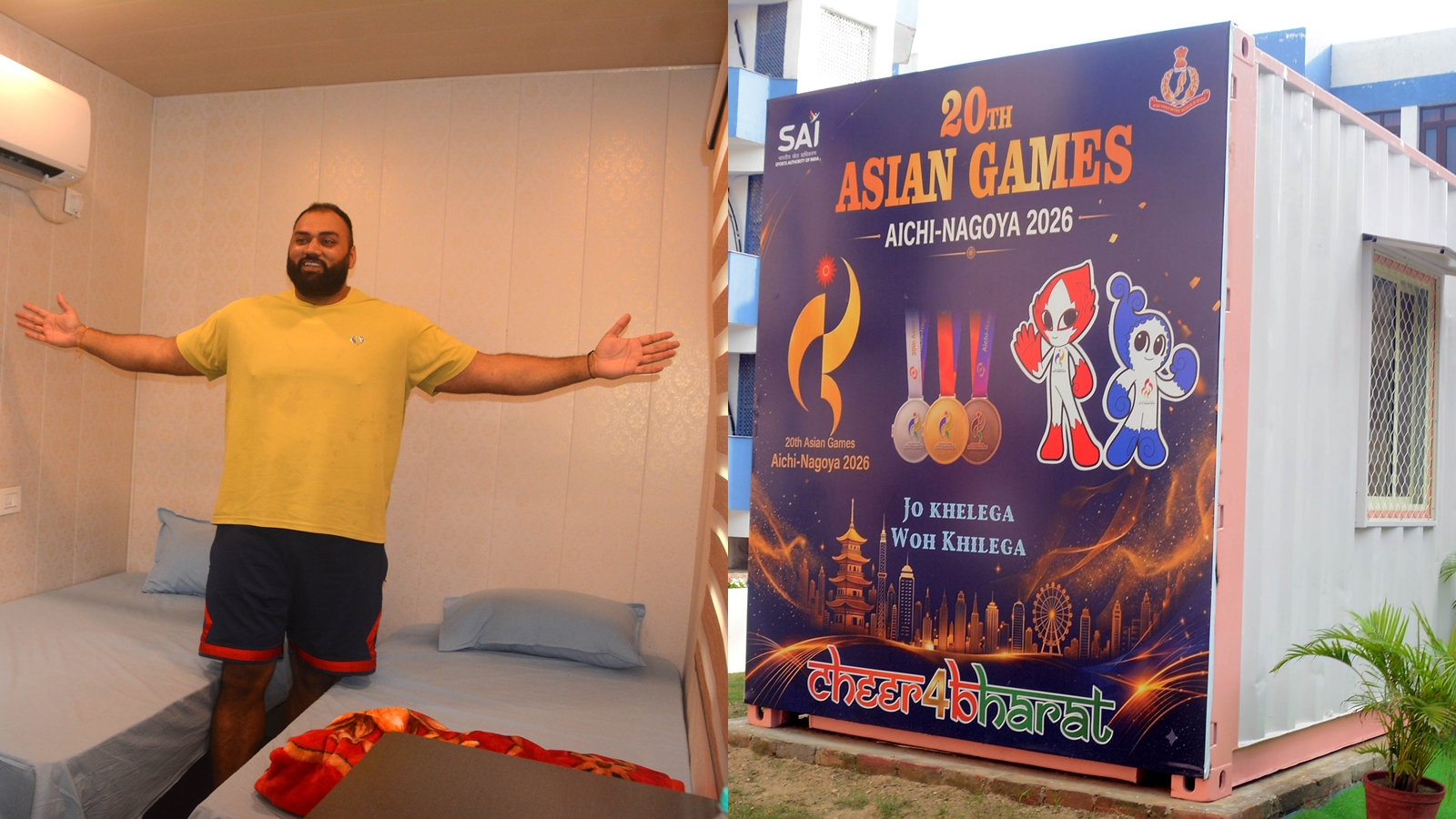
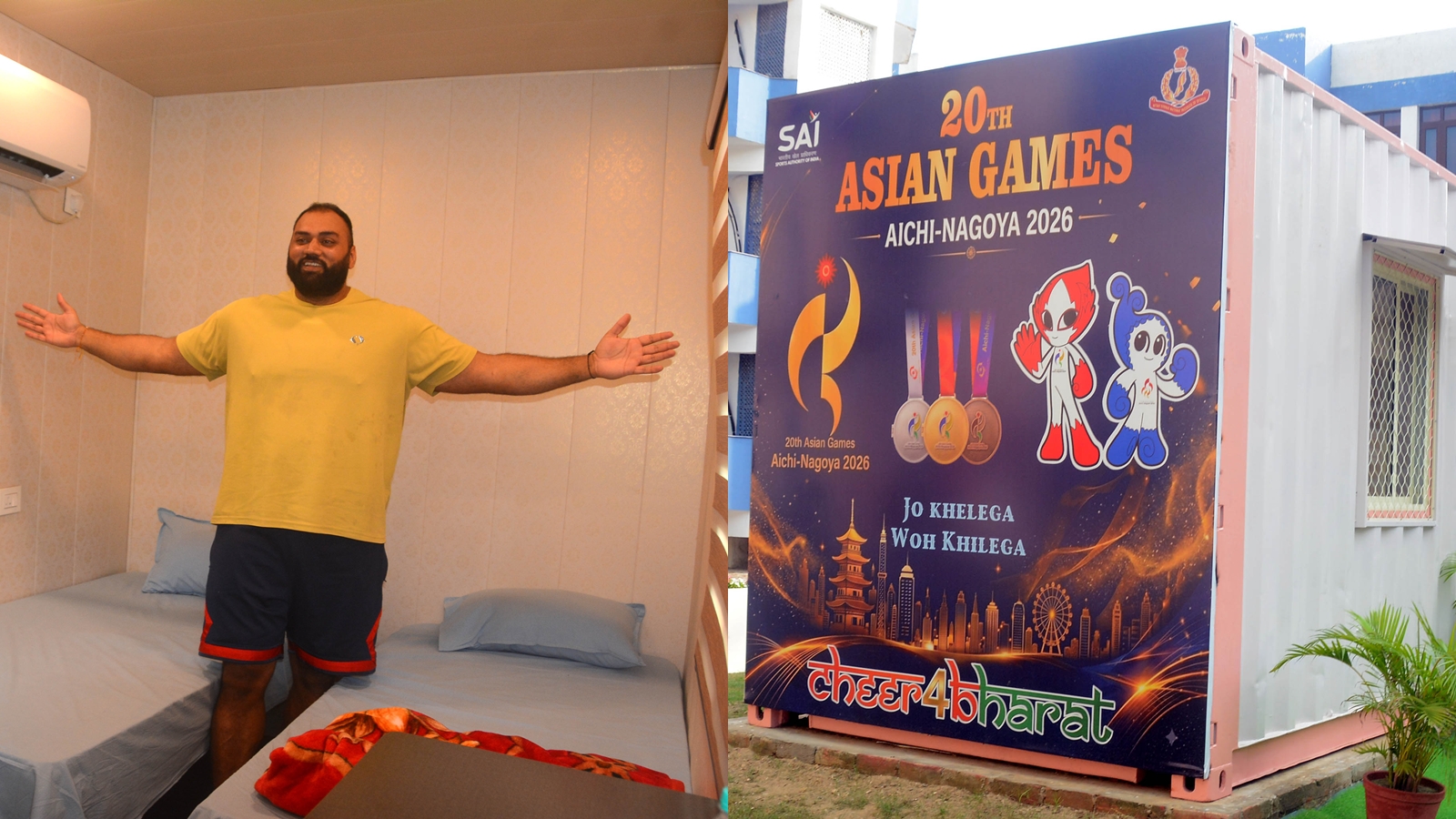
Not all surprises are pleasant. The Indian contingent for the Asian Games, held in Japan’s Aichi-Nagoya from September 19, is doing all it can to avoid one. At the Sports Authority of India training centres in Patiala (Punjab) and Bengaluru, athletes have been spending time in 40-by-8-foot shipping containers to familiarise themselves with the accommodation in Nagoya. And to prepare their palates, there’s, of course, sushi.
In a bid to keep costs low, the organisers of the Aichi-Nagoya Games have done away with a conventional ‘athletes village’. Instead, the 17,000-odd athletes taking part will be provided with three accommodation options — a cruise ship, hotel rooms, and containers.
For this, the National Institute of Sports (NIS) in Patiala utilised containers it procured during the Covid pandemic to store equipment, while the Bengaluru centre bought two containers last year. These modified two-room containers are equipped with air conditioners, a pantry, a washroom and beds.
“Nine players have stayed in these containers so far. According to the roster, more players will spend time in containers. During COVID, the two containers were used for storing athletics and weightlifting equipment in Patiala. We took the decision to convert these two containers to accommodation facilities, similar to what athletes will get in Japan,” said Vineet Kumar, Senior Executive Director and Deputy Director General of NIS.
India will field 503 athletes with 256 support staff and officials accompanying them. One of them will be Commonwealth Games bronze medalist Seema Kaliraman, a discus thrower, who is among those who got first-hand experience of staying in a container.
“A thrower needs more space to sleep, but the container has constraints. I could not sleep well on the first night. Then I got accustomed to it. I thought the Asian Games were such a big event and there would be an athletes’ village. But we have to adjust. Our main focus is to win medals,” Seema said.
Shot-putter Tajinder Pal Singh Toor, who is six feet and four inches tall and just about fits on a standard-sized bed, said the containers reminded him of his hostel days.
Story continues below this ad
“As a young athlete, I would stay with four or five other shot-putters in one room, sleeping on mattresses in Punjabi University, Patiala. We did this to save money. The space in the containers reminded me of those days. For a tall and well-built athlete like me, space can be a problem. We have the training gear too. But preparing the mind ahead for such challenges helps any sportsperson, and that’s what we are doing by getting accustomed to sleeping in containers here at NIS,” he said.
Refurbishing the shipping containers into living spaces took more than 45 days. SAI officials had earlier travelled to Japan for a recce.
At the 2023 Asian Games in Hangzhou, China, India won a record 107 medals, including 28 gold. This time, as India aims for a bigger medal haul, no effort is being spared to eliminate a curveball when it comes to stay and food.
India’s deputy chef de mission and two-time Asian Games medallist in table tennis, Sharath Kamal, said talks were on with the organising committee to ensure Indian athletes were comfortable not only with accommodation but also with the food. “We are in touch with the organisers with regard to the menu at the dining hall. We are trying to put in place a team that can coordinate with the athletes and take care of their requirements, said Kamal.
Story continues below this ad
At the SAI centre in Bengaluru, Sushi is now a staple in the canteen, under the watchful eye of chef Jeyaraj.
SAI Bengaluru Regional Director Vishnu Sudhakaran said: “We decided to come up with the Japanese menu in January. But once the squad list was announced in July, we launched it completely. The idea is that our athletes don’t get surprised when they see food in Japan.”
Pole Vault national record holder Sindhusree G, a first-timer in Japan, adjusted to the Japanese food after the first few days. “For two to three days, the food didn’t suit my palate, but eventually I got used to it. It is important for us to know what we will get once we reach Japan,” she told this paper.
Before adding Japanese food to the menu, athletes and the nutritionist were consulted. Jeyaraj’s team is also preparing energy bars for the athletes. “The athletics team, especially our racewalkers, asked for the energy bars, which help them in healthy snacking. These bars also contain chai and flax seeds,” Jeyraj said.
With inputs from Mihir Vasavda
