




Trump hits Canada with 50% US tariffs, Carney vows ‘dollar for dollar’ retaliation

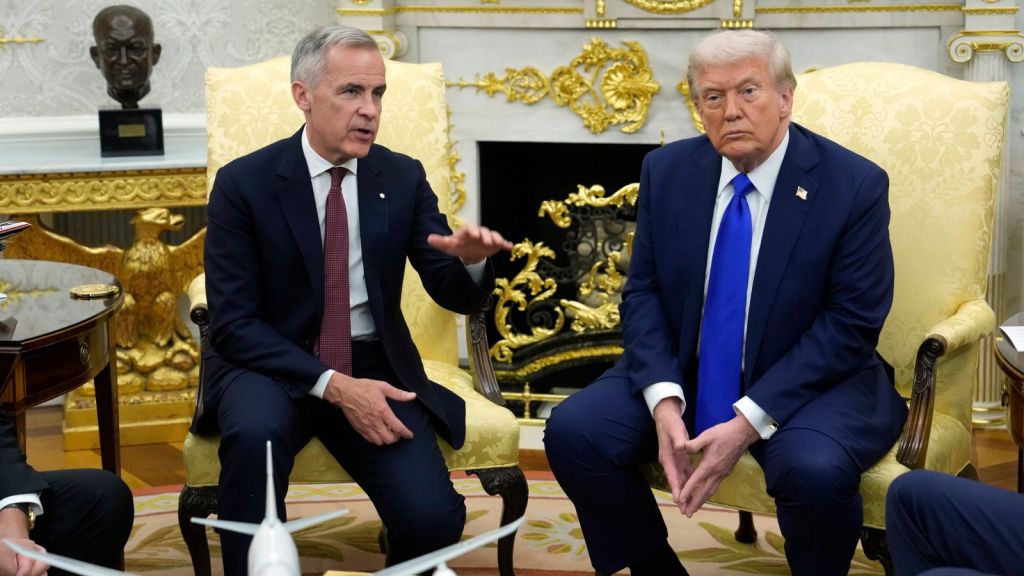
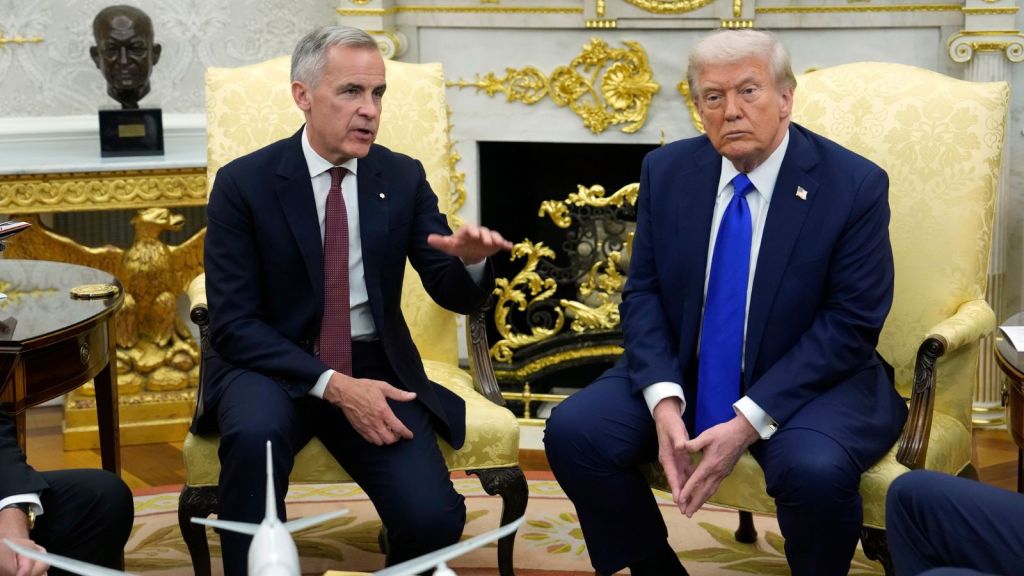 Canada Prime Minister Mark Carney and President Donald Trump hold a press conference at the White House. (Photo/AP)
The US is set to impose 50 per cent tariffs on $20 billion worth of Canadian imports after the two long-standing allies failed to reach a deal at the last minute.
The new tariffs will come into effect at 12:01 am on Saturday (local time) on hundreds of items that Washington imports from Ottawa, including plywood, liquor, electrical equipment and hockey gear, Associated Press (AP) reported.
The two sides were locked in negotiations for weeks and had worked on a draft deal that included reducing tariffs on certain Canadian steel and aluminium to 25 per cent and cutting duties on Canadian autos to 15 per cent.
How did Canada respond?
Prime Minister Mark Carney said he had suspended negotiations and ordered Canada’s negotiating team to return to Ottawa. In a statement, he said: “I have decided to suspend trade negotiations with the US and have directed Canada’s negotiators to return to Ottawa.” He added that Canadian negotiators had “worked hard, in good faith, to defend the interests of Canadians throughout these negotiations up until the very last minute,” but that “last-minute changes in the US proposed terms were unfair, uneconomic, and called into question the reliability of any deal.”
My statement on Canada-U.S. trade negotiations: pic.twitter.com/65OuQH40ra
— Mark Carney (@MarkJCarney) August 22, 2026
Carney confirmed Canada would “match those tariffs dollar for dollar to protect our workers and businesses,” and said his government would announce further support for Canadian workers and businesses in the coming days. No further talks have been scheduled.
Why did talks collapse?
Canada had been seeking relief from existing US tariffs on steel, aluminium, autos and lumber, which the US was unwilling to provide, a senior Trump administration official told reporters.
Story continues below this ad
US Trade Representative Jamieson Greer said in a statement read to reporters shortly before midnight: “Tonight, Canada declined to finalize the trade deal under the terms agreed earlier this week.” He said new demands and reversals from Canada had disrupted the balance reached in recent days, despite what he called a US offer giving Canada the best treatment of any major exporter to the US market. Greer described the offer as “forward-looking” and said it included “a historic economic and national security partnership.”
