




Trump’s H-1B visa double whammy: Why Indians could feel the heat


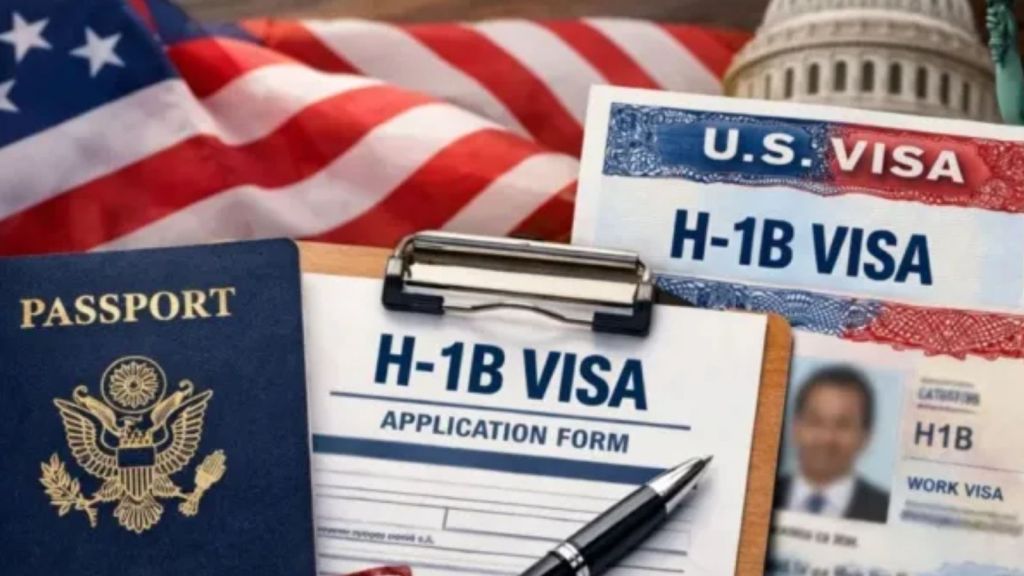 Indian H-1B families are likely to feel the brunt of this impact. (File Photo)
The cost of sponsoring some new H-1B workers could exceed $200,000 if two separate Trump administration measures ultimately apply to the same case. The Department of Homeland Security has proposed a $103,265 fee for H-1B petitions subject to the annual cap, while a separate $100,000 payment introduced last year has been blocked by a federal court and remains under appeal.
The administration argues that the higher cost would discourage employers from using H-1B workers where qualified US workers are available. Critics, including immigration and business groups, argue the fee could severely restrict the programme.
What is the H-1B visa, and who uses it?
The H-1B programme allows US employers to hire foreign workers in specialty occupations, generally for up to six years. The annual cap is 85,000, 65,000 regular places and 20,000 for qualifying advanced-degree holders from US universities, with a selection process when demand exceeds the limit.
- Amazon leads the latest corporate H-1B approvals, with 9,337 approved workers, followed by Apple with 3,879, Google with 3,180 and Meta with 2,563, according to USCIS data.
- Universities rely heavily on the programme too: Stanford has 284 H-1B workers, the Mayo Clinic 276, and Washington University in St. Louis 219.
- Immigration group FWD.us estimates 730,000 visa holders are currently in the US, plus 550,000 dependents.
What it means for indians
India is by far the largest source of H-1B workers, accounting for around 71% of all approvals, according to government data cited by Business Standard, with China a distant second. That means any fee increase falls overwhelmingly on Indian applicants and the Indian IT firms that sponsor them.
When the $100,000 payment was introduced in September 2025, it was equivalent to roughly ₹88 lakh at the exchange rate at the time. The payment was not an annual charge.
Story continues below this ad
A federal court blocked that fee in June, and an appeals court declined to revive it in July, leaving Indian applicants in a holding pattern. Analysts have called it relief “for now” rather than a lasting win, since the government is still appealing and the new $103,265 charge is a separate proposal moving forward regardless of that case’s outcome.
Who supports the higher fee, and why?
Some American workers back the change, arguing it levels the playing field. Benjamin Wolf, a technology professional in Reston, Virginia, told the department in a public comment that the lower cost of sponsoring foreign labour has “repeatedly put American candidates at a disadvantage.”
Alvester Johnson III, an IT professional in Phoenix, made a similar case, saying cheap visa fees make it “artificially cheap for employers to prefer foreign speciality labour over investing in or retaining US workers.”
Who is against it, and what do they say?
Universities, hospitals and business groups argue the fee will do far more harm than good.
Story continues below this ad
- Shev Dalal-Dheini of the American Immigration Lawyers Association told USA Today the combined fees are “just one of the many nails in the coffin of legal immigration in this country.”
- The University of Michigan estimated the original fee alone would have cost it $9 million a year, according to a court filing from vice president Arthur Lupia and international centre director Judith Pennywell, who called it “a new tax on bringing some of the best minds to America.”
- David Bier of the Cato Institute wrote that the new charge “will crush the H-1B program, resulting in the loss of hundreds of thousands of talented workers.”
What about doctors and hospitals?
Health systems warn the fee threatens patient care. St. Jude Children’s Research Hospital has 199 H-1B workers, the Cleveland Clinic 158, and Massachusetts General Hospital 135.
Anantha Shekhar, former dean of the University of Pittsburgh’s School of Medicine, said in a court filing that research into disability, artificial intelligence and vision science “will be hampered” without H-1B staff. Edwin Zhang, a hospital worker who submitted public comment, said international medical graduates are “a large, essential portion of our clinical workforce,” warning the fee could “worsen existing national physician shortages” in rural and underserved areas.
Where does the legal fight stand?
A federal judge in Massachusetts ruled the original $100,000 fee “unlawful” in June, finding it “arbitrary and capricious.” The government has appealed, and the fee remains uncollected while that plays out. The Justice Department argues the charge regulates immigration rather than raising revenue, giving the president authority to impose it without Congress.
Separately, the newly proposed $103,265 fee is going through public comment, open until 24 September, and has already drawn more than 5,000 responses.
Story continues below this ad
The Department of Homeland Security says the new fee would raise $8.8 billion over a decade to fund immigration agencies, courts and vetting systems. Economists are split on whether it would actually raise that much, given how sharply applications fell under the first fee. For now, employers, universities and hospitals, along with millions of Indian workers hoping to build a career in the US, are watching the courts and the comment period closely.
